How to Watch a Flamengo Match at the Maracanã: Tickets, Transport and Safety
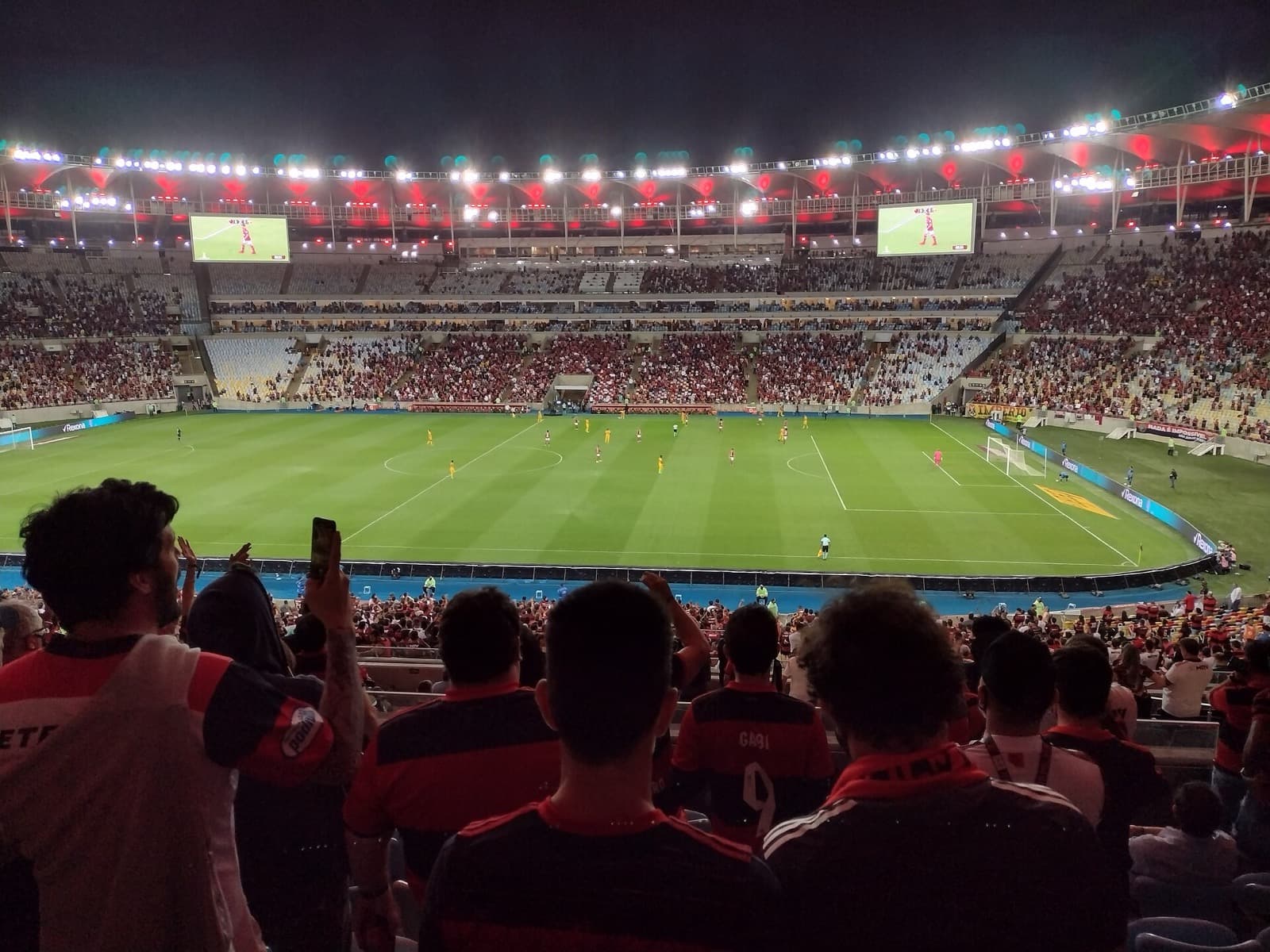
Some travelers come to Rio for the beaches, some for Carnival. And then there are the ones who land wanting one very specific thing: Flamengo at the Maracanã. Fair. Flamengo has, by most counts, the biggest torcida (fan base) in the country, and on a good night it pours more than 60,000 people into a stadium that hosted the deciding match of the 1950 World Cup and the 2014 final. The wall of red and black bouncing behind the goal is one of the great sights in world football, and it happens most weeks of the year.
The honest part: going to a game here now takes a little more planning than showing up and pointing at a ticket window. Brazilian stadiums moved to facial-recognition entry, tickets are sold in stages on the club's site, and the Maracanã sits well away from the beach neighborhoods where you are probably staying. None of it is hard once you know the steps, so here they are, in order.
TL;DR
Register your facial biometrics with your passport first, then buy on the official site; the general sale usually opens a few days before kickoff
In mid-2026, regular sectors ran R$120–R$220 (about US$23–43) for a normal league game
First match? Sit in Leste Superior. Want the full storm? Norte, standing
Go by metro (Line 2, Rei Pelé/Maracanã or São Cristóvão station), never by car
No rival colors, phone in a front pocket, leave with the crowd
When can you catch a Flamengo match at the Maracanã?
Brazilian football barely stops. The Campeonato Carioca, Rio's state championship, opens the year from mid-January to March. The Brasileirão, the national league, runs from late January all the way to early December in 2026, and the Copa do Brasil and the Libertadores fill midweek nights in between. In practice, Flamengo plays at the Maracanã every week or two for most of the year. The one dead zone in 2026 was the World Cup break, from the end of May to mid-July, and by late July the league was back at full speed.
Two quirks to plan around. First, kickoff times spread from 4pm to around 9:30pm, with weekend games in the afternoon and early evening and cup games at night. Second, exact dates and times are often confirmed only two or three weeks ahead, when TV schedules settle, and a "Saturday" fixture can slide to Sunday. Check the fixture list on the club's official site, and do not build a whole trip around one specific match until its date and hour are locked in.
How do you buy Flamengo tickets?
For Flamengo's sectors, there is exactly one legitimate channel: the club's official ticket site, ingressos.flamengo.com.br. Sales open in waves, first for the Nação Sócio-Torcedor membership tiers, then for the general public, usually less than a week before kickoff. Regular league games rarely sell out, so a general-public ticket bought two or three days ahead is very doable. Derbies, finals and Libertadores knockout nights are another story: those can vanish inside the member windows.
As of July 2026, general-public prices for a normal Brasileirão home game ran from R$120 (about US$23) in the ends up to R$220 (about US$43) on the main-stand side, with the premium Espaço Fla+ at R$300 (about US$58) and the hospitality-style Maracanã Mais seats around R$700 (about US$140). The half prices you will see listed (meia) are legal discounts for Brazilian students, seniors and similar categories; as a visitor you pay the full inteira price.
Two warnings we give every friend who visits. Do not buy from scalpers or "ticket guys" outside the stadium: every ticket is personal, tied by name and face to the buyer, and a resold one cannot get you past a camera checking for somebody else's face. And if you are following the visiting club, their allocation is sold separately through FutebolCard, and it puts you in the away pen, not among Flamengo fans.
The facial biometrics step (do this before the sale opens)
Under Brazil's sports law, big stadiums now use facial-recognition entry, and the Maracanã is fully on it. Before you can complete a purchase, each person attending registers at biometria.flamengo.com.br: a quick selfie from your phone camera plus photos of an ID document. The club's match announcements are explicit that foreigners register with a passport, so you do not need a Brazilian CPF number. The portal is in Portuguese; your browser's translate function handles it fine.
Do the registration before tickets go on sale, calmly, at your accommodation. On match day your face is effectively your ticket at the turnstile, but carry the same passport you registered with: the club requires an original photo ID, and spot checks happen. We know, we know, our Rio safety guide tells you to leave your passport at the hotel. Match day is one of the few legitimate exceptions. Keep it zipped in a front pocket or an inside pocket, and take it straight home afterwards.
If the site refuses your international card at checkout, which some visitors report, the stadium's own ticket windows sell in person in the days before the game and on match day itself, passport in hand, while stocks last.
Which sector should you sit in?
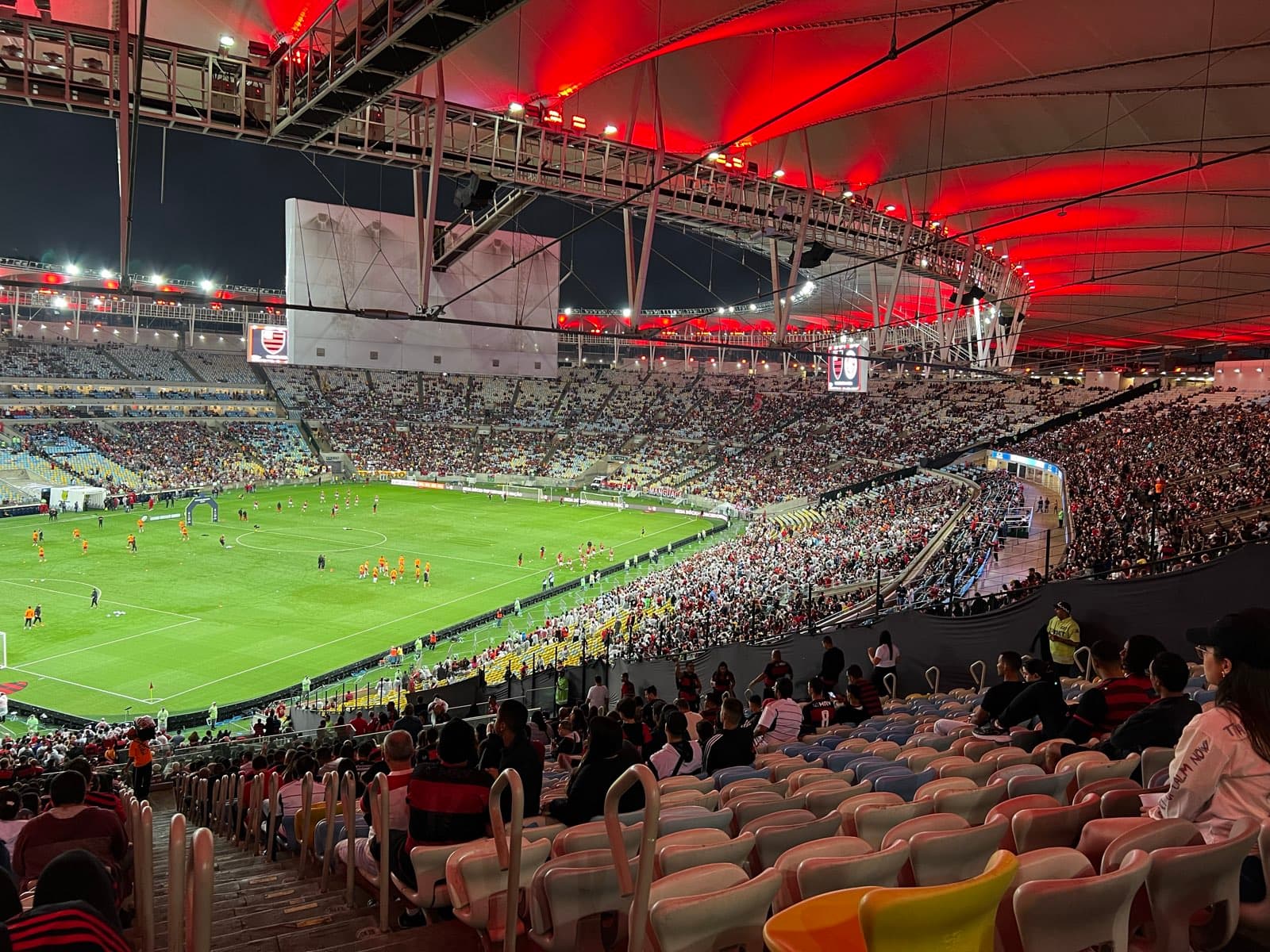
The Maracanã is a bowl of just under 79,000 seats split into four named sides, and your experience changes a lot depending on which one you pick:
- Norte: the end behind the goal where the torcidas organizadas (organized supporter groups) mass with drums, flags and banners. Cheapest tickets, most intense atmosphere, and nobody uses the actual seats: you will stand and sing for 90 minutes. We love it, but it is not for a relaxed first visit or for small kids.
- Sul: the opposite end. Calmer than Norte, similar prices, still behind a goal. Know that when the away club gets an allocation, its fans are boxed into a separated block of Sul, so double-check what you are buying. Afternoon sun hits this end hard; bring sunscreen for 4pm kickoffs.
- Leste: the long side facing the TV cameras. Leste Superior is our pick for a first match: you see the whole pitch, you get the full panorama of the Norte end bouncing across the bowl, and it is the best value of the side sectors. Leste Inferior puts you closer to the grass for a bit more money.
- Oeste: the main-stand side and the priciest regular seats, plus the premium areas (Espaço Fla+ sits within Oeste Inferior and Leste Inferior, and Maracanã Mais is the padded-seat hospitality tier). Comfortable, central, and the tamest crowd; good for families who want maximum calm.
Seats are assigned on your ticket everywhere, and in Leste and Oeste people broadly respect them. In Norte, treat your seat number as a suggestion about which staircase to use.
How do you get to the Maracanã?
Metro, no contest. The stadium has its own Line 2 stations: Rei Pelé/Maracanã station, renamed in May 2026 and still the stop everyone calls Maracanã, serves gates A, B and C (the Oeste and Sul sides), and São Cristóvão station serves gates D, E and F (Leste and Norte). Your gate letter is printed with your ticket. From Copacabana or Ipanema, ride Line 1 toward Centro and continue onto a Line 2 train; on some days trains run through directly and on others you change at Estácio, so give yourself 30 to 45 minutes from Zona Sul and check the MetrôRio app on the day. You can tap a contactless bank card straight at the turnstile, no local transit card needed. After big games the metro runs a reinforced operation, and the queues, while long, move fast and are well policed.
The SuperVia commuter train also stops at its own Maracanã station and adds extra departures after matches, but it mainly helps if you are near Centro; for visitors staying in the beach neighborhoods, the metro is simpler. If you are still picking where to stay, anywhere near a Line 1 station makes match night easy, something we factor into our guide on where to stay in Rio.
Skip cars entirely. Streets around the stadium close hours before kickoff, traffic locks up, and after the final whistle ride-hailing prices surge while drivers cannot reach you anyway. If you absolutely must use one, agree on a pickup point a 10 to 15 minute walk from the stadium, and expect to wait.
What is match day actually like?
Gates usually open two hours before kickoff, sometimes three for the biggest nights; the club posts exact times with each match announcement. Arriving 60 to 90 minutes early is the sweet spot: the streets around the stadium are already a party, with vendors grilling churrasquinho (meat skewers), coolers of drinks, flags and shirt stalls (those shirts are cheap knockoffs; official ones live in the club stores around town and in the malls). Lines at the turnstiles thicken in the last half hour. Do not cut it fine in the other direction either: entry can be refused after the second half starts, with no refund.
At the gate you will pass a search. The rules are what you would expect: no bottles, cans or glass, no outside food or drink, no coolers. Small bags are fine, sunscreen and repellent in plastic packaging are fine, and a power bank is fine. If rain threatens, bring a raincoat rather than an umbrella.
Inside, after years of a statewide ban, beer is sold again, in plastic cups. As of 2026 expect around R$15–R$20 (about US$2.90–3.90) for a beer and R$25–R$35 (about US$4.80–6.80) for stadium snacks, paid by card or contactless at the counters, international cards included; do not count on cash. Then find your seat and enjoy the part no guide can transmit: the roar when the team walks out, tens of thousands singing the club anthem a cappella, the drums of the Norte end never stopping. Even a mid-table Tuesday game here out-noises most finals elsewhere.
Is it safe to go to a Flamengo match?
Inside and immediately around the stadium, match day is one of the most policed environments you will find in Rio, and tens of thousands of ordinary families do this every single week. The realistic risk is not violence, it is petty theft in dense crowds. The habits that cover you:
- Phone in a front or zipped pocket, especially in the pre-game crush and on the packed metro;
- No dangling jewelry, no back-pocket wallet; carry one card and a little cash;
- Never wear the visiting club's colors outside the away block. Neutral clothes are completely fine, and a Flamengo shirt makes instant friends;
- For a derby like Fla-Flu or Flamengo x Vasco, expect a more charged atmosphere and more police. Trouble, when it happens, is between organized groups away from the family sectors; picking Leste or Oeste keeps you far from it;
- Keep an eye on the essentials list in our Rio safety guide; everything there applies doubled in a crowd of 60,000.
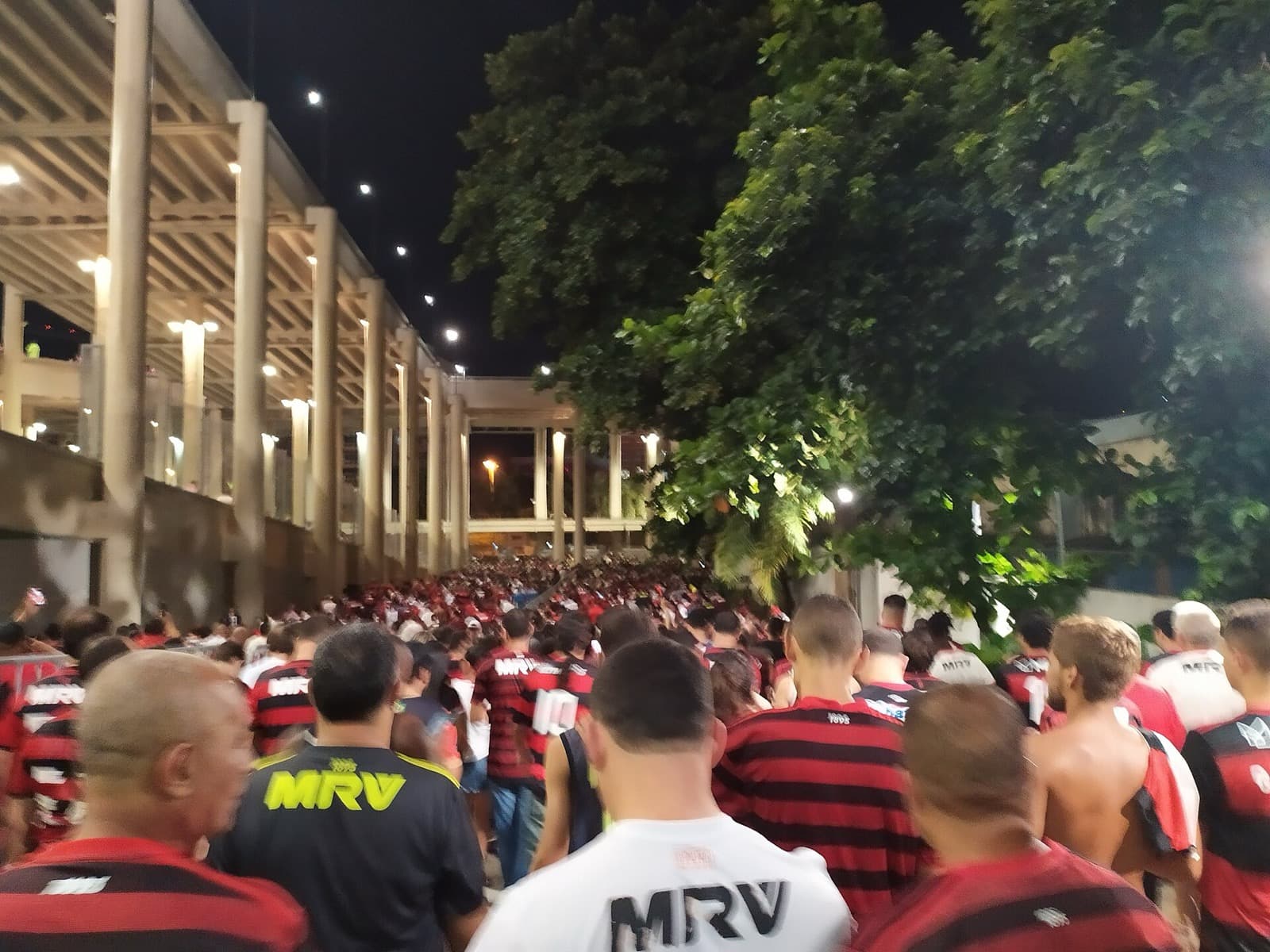
Leaving is the one moment to be deliberate. Move with the main flow straight to your station and onto the train; do not wander off into the emptying side streets of the surrounding neighborhood, which is not an area to explore on foot at night. If the crush at the exits looks heavy, wait ten minutes in your seat watching the stadium empty (honestly a great sight) and walk out with the second wave.
What if there is no match during your trip?
Book the Maracanã Tour. It runs daily from 9am to 5pm (last entry 4:30pm) and takes you through the dressing room, the players' tunnel and pitchside. In 2026, full-price entry is R$94 (about US$18), bookable at tourmaracana.com.br or at the Gate A box office. On match days the last tour ends five hours before the gates open, so a game-day morning visit plus the match itself is a genuinely great double.
And remember the Maracanã has two tenants: Fluminense, Flamengo's Fla-Flu rival, plays its home games there too, with tickets on its own channels and the same biometric setup. If Flamengo is away during your dates, a Fluminense night at the same stadium is a very worthy plan B.
Football is the fastest shortcut into Brazilian culture that we know. You will queue with grandmothers in full kit, hear a stadium explain itself to you in song, and walk out having understood something about Rio that no beach day teaches. Pick a game, register that face of yours, and go sing badly in Portuguese with 60,000 new friends. Pra cima deles, Mengão!
Want more honest, local guidance for your Brazil trip? Join our newsletter below.