Is São Paulo Safe? Honest Safety Tips for Visitors
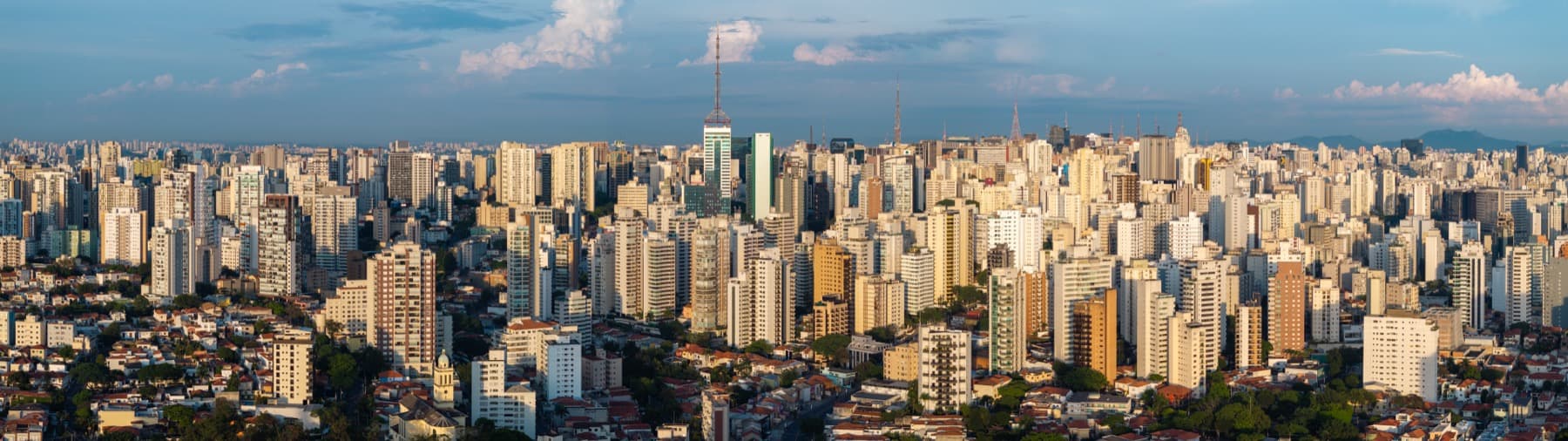
São Paulo is the largest city in the Americas, and it carries a reputation to match. Ask around before your trip and someone will have a scary story ready. We are Brazilian, we spend a lot of time in São Paulo for food, shows and friends, and our honest answer is calmer than the reputation: for a visitor who sticks to a few local habits, São Paulo is mostly fine. Violent crime rarely touches tourists here. What touches tourists, constantly, is phone theft.
That is really the whole guide in one line: treat your phone like cash in the street, and most of your São Paulo safety problem is solved. The rest of this article is the remainder.
One honest note first, the same one we make in our Rio safety guide. São Paulo is a city of deep inequality, and it is a very different place depending on who you are and where you sleep. We are not going to romanticize that away. But this guide is about visiting, and the visitor's experience of São Paulo is overwhelmingly one of eating too well, walking leafy streets and losing track of time in bars, not of danger.
TL;DR
Violent crime rarely reaches visitors; phone theft is the real risk, so keep yours out of sight in the street
Stay around Paulista, Jardins, Pinheiros, Vila Madalena or Itaim Bibi and daytime walking is easy
Do the historic Centro in daylight with your phone put away; skip the blocks around Luz after dark
The metro is safe and runs 4:40am to midnight; at night take an Uber or 99 door to door instead of walking
Keep bags on your lap in bars and your phone off the table, especially at sidewalk seating
If you are robbed, never resist: hand it over, then lock everything and report it at the tourist police or online
So, how safe is São Paulo really?
Here is the picture the numbers paint, and it surprises most first-time visitors. For lethal violence, São Paulo consistently ranks among the safest state capitals in Brazil. For theft, it is the opposite: in 2025 the city registered around 160,000 stolen or robbed phones, roughly one every three minutes. Even the specialized tourist police say phones are the main thing visitors lose.
The detail that actually matters for you: across São Paulo state, quiet thefts (pickpocketing, bag dips, phones grabbed off tables) now outnumber violent robberies, and robberies fell again in 2025. Crime here mostly wants your phone, not a confrontation. Deny it the phone and you have removed yourself from almost every statistic that involves tourists.
So no, you do not need to be scared of São Paulo. You need to do what Brazilians call ficar esperto, to get smart: aware, a little streetwise, phone in your front pocket instead of your hand.
Which neighborhoods are safe in São Paulo?
The areas where you will almost certainly stay and spend your evenings are the easy part:
-
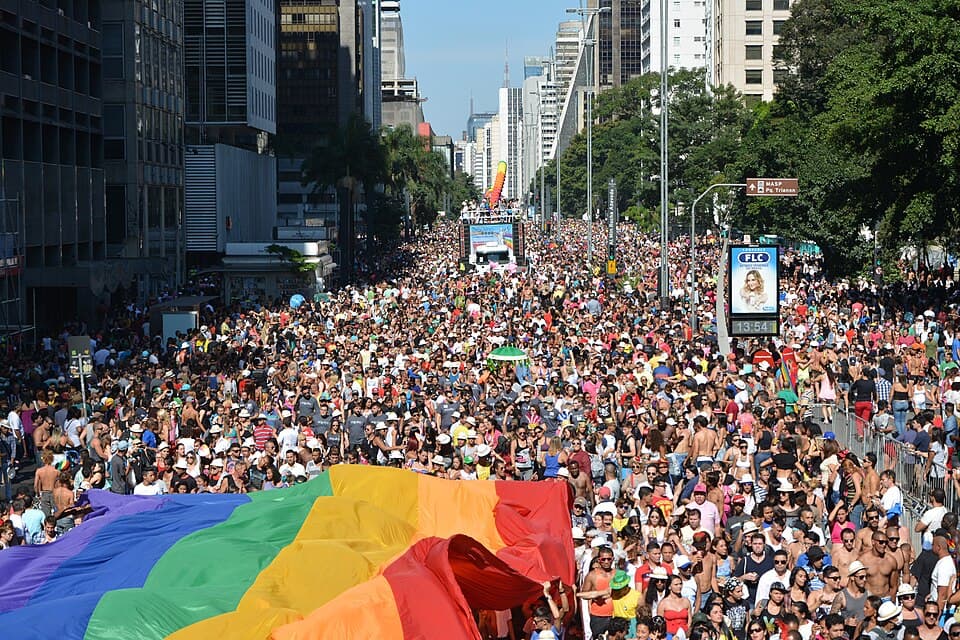
Around Avenida Paulista (Jardins, Cerqueira César, Consolação, Higienópolis): busy at almost every hour, well policed, and walkable by day and on the main streets in the evening. Our favorite version of it is Paulista Aberta, when the avenue closes to cars on Sundays and holidays from 9am to 4pm and fills with families, buskers and bikes. It is the single most relaxed way to feel the city.
-
Pinheiros and Vila Madalena: the bar-and-restaurant west side, lively into the night. The crowds are your friend; the one habit to keep is your phone off the table at sidewalk seats, and half an eye on it when you are photographing the murals at Beco do Batman.
-
Itaim Bibi and Vila Olímpia: business by day, nightlife by night, generally calm streets.
-
Liberdade: the historic Japanese-Brazilian neighborhood is a daytime favorite of ours, especially during the weekend street fair. It empties once the shops close, so treat it as a daylight-and-early-evening place and ride back at night.
Wherever you are, the after-dark rule that locals apply without thinking: if the street is empty, you should not be walking on it. São Paulo at night is a city of busy pockets (a bar street here, a restaurant strip there) connected by dead blocks. Walk freely inside the pockets, and take an Uber or 99 between them, door to door.
Is downtown São Paulo safe?
The historic Centro (Sé, República, and around) is genuinely worth your time: the Theatro Municipal, the Martinelli and Copan buildings, the Mosteiro de São Bento, the view from Farol Santander, and the Mercadão, the big municipal market. Go in daylight, go with a plan, and keep your phone in your pocket rather than in your hand; this is where snatch thefts are most concentrated. Weekdays are best, when the working crowds are out. After dark the Centro empties fast, and empty is exactly what you do not want, so have dinner elsewhere and ride door to door if you are going to a show.
Two specific notes. Rua 25 de Março, the famously cheap shopping street, is fun and chaotic and absolutely crawling with pickpockets, so bring nothing you would cry about losing. And the blocks around Luz, Santa Ifigênia and Campos Elíseos were known for years for Cracolândia, the open-air drug scene. A large police operation dispersed the fixed concentration in 2025, but smaller groups still move around those blocks and the area can feel tense; it is a humanitarian crisis more than a threat to visitors, and still not somewhere to wander. None of this should keep you from the Pinacoteca museum or a concert at Sala São Paulo, both in that region and both very much worth it: go in daylight or straight to the door by metro or app ride, and head somewhere else afterwards.
How do you protect your phone in São Paulo?
The habits below are what separate visitors who lose a phone from the huge majority who do not. Paulistanos (the city's locals) do all of this on autopilot:
-
Keep it out of your hand in the street. Need a map or a message? Step into a shop, a bakery, a lobby. A phone held out on the sidewalk is the target here, and thieves on foot or on bikes are fast.
-
Front pocket or zipped bag, never the back pocket. And never on the table at a bar or restaurant, especially outdoors; passing grabs at sidewalk tables are a classic. If you are carrying a backpack, swing it round and wear it on your chest in any crowd, on the metro and in the street markets. It looks touristy for about a second, until you notice how many paulistanos are doing exactly the same thing. The point is that the zips stay where your eyes are, and nobody has an innocent reason to be pressed up against them, so treat anyone who drifts in that close as your cue to move rather than someone to be polite to.
-
Standing still is when it happens. Waiting at a crossing, at a bus stop, in a stopped car with the window down: that is when phones get snatched. Keep the windows up whenever you are in a car, taxis and Ubers included, and not only when the traffic slows.
-
Lock down the inside of the phone before your trip. Strong passcode (not your birthday), app locks on banking and email, notification previews off. If the worst happens, a locked phone is a lost object instead of an open wallet.
-
Give it a leash on big days. For crowded events like Pride, Carnival blocos or a match, a phone strap or tether sounds dorky and works.
Is the metro safe? And how do you get around at night?
The metro is one of the best things about São Paulo, and it is safe: clean, monitored, heavily used. It runs daily from about 4:40am to midnight, and as of mid-2026 some lines run through Saturday night into Sunday, a trial currently scheduled to last through September 2026. The risk on board is the rush-hour pickpocket, so keep your bag in front of you and your phone zipped away in a crush. If you can, skip the peak crushes entirely (roughly 7 to 9am and 5 to 7:30pm).
At night, default to Uber or 99. They are cheap by international standards, they are everywhere, and door to door beats a dark ten-minute walk every single time. Check the plate before you get in, sit in the back, and keep the windows up the whole way, not just when the traffic slows. Keep the phone down while you are moving, too: a lit screen behind a window at a red light is one of the easiest things to spot from a motorbike, and a passenger absorbed in it is the one who does not see anyone coming.
Arriving at the airports, ignore anyone who approaches you offering a taxi or a transfer inside the arrivals hall at Guarulhos or Congonhas; that is a hustle at best. Use the official taxi stands or the signed app-pickup areas. If something goes wrong at either airport, both have a tourist police post (the Congonhas one operates 24 hours).
A local preference of ours, for daytime runs and for arrivals: in São Paulo we often take a taxi rather than an app car. As of 2026, a licensed taxi carrying a passenger is allowed into the exclusive bus lanes and corridors, and an app car is not, which on a jammed avenue is the difference between crawling and simply going. They are also simply less hassle at the door. The rank at Guarulhos, at Congonhas and at the Tietê bus terminal sits right outside the arrivals doors, while the app pickup point is usually a walk away and sometimes a floor up, which you feel with luggage after a long flight. You pay for the privilege, and on a long crosstown haul that gap is real, but for a short hop we think it is fair enough. At night we still open the app first, for the simple reason that the trip is recorded and you can send the status to someone.
What scams should you watch out for?
São Paulo's scams are mostly unglamorous. Three worth knowing:
-
The "broken screen" card machine: you go to pay, the card reader's display conveniently "does not work", and a much bigger amount gets typed in. Always see the value on the screen before you tap or insert your card, and if you cannot, do not pay. Paying by phone with your own eyes on the amount is safest; our guide on paying and tipping in Brazil covers the normal way things work.
-
The distraction bump: something gets spilled on you, or a stranger gets oddly close at a door or an ATM, while a partner works your pockets. Keep moving, and sort yourself out inside a shop.
-
The spiked drink: known in Brazil as Boa noite Cinderela ("good night, Cinderella"). It is not an epidemic, but it happens in nightlife everywhere in the country, so keep your glass in sight and be slow to accept drinks from strangers. More on this in the next section.
Safety tips for women traveling solo
São Paulo is one of the easier Brazilian cities to travel solo as a woman: there are people out at all hours in the main neighborhoods, and nobody looks twice at a woman eating or drinking alone. A few habits from the women in our lives here:
-
Watch your drink, and your friends' drinks, at bars and parties; Boa noite Cinderela is the local name for spiking for a reason.
-
At night, app rides door to door, every time. Share the trip status with someone, sit in the back, and if a driver gives you a bad feeling, cancel and call another; do not be polite about it. Once you are moving, keep half an eye on the route in the app: drivers do take their own shortcuts around traffic here, but a car steadily going somewhere the map is not is worth a question out loud, and then a request to stop somewhere busy. And if the ride feels off, call someone and stay on the line, or at least make a convincing show of it. A driver who can hear that somebody knows exactly where you are behaves differently from one who has decided you are alone in a city you do not know.
-
Rush-hour trains and metro cars get very packed, and groping in crowds unfortunately exists here like in any megacity. Trust your elbows, move cars if someone is off, and flag station staff; that kind of harassment is a crime in Brazil, and staff are the fastest people to get on your side.
-
If you feel unsafe anywhere, Brazilian women are famously quick to close ranks around a stranger. Walk into a shop or up to a group of women and say you need a hand.
Is São Paulo safe for LGBTQ+ travelers?
São Paulo is often called the queer capital of Latin America, home to the biggest Pride parade on the planet and an enormous everyday scene around Rua Frei Caneca, Bixiga and the west side. In the central neighborhoods, same-sex couples holding hands are part of the scenery. Like anywhere, dial the public affection to the street you are on: what is unremarkable on Frei Caneca at midnight deserves more judgment on an empty block far from the scene.
The one specific caution we repeat from our Rio guide, because the worst cases reported by local news have involved fake profiles on queer dating apps: meet in public first, tell someone where you are going, and be suspicious of a match who pushes hard for a private address on night one.
What should you do if something happens?
First, the rule that matters more than all the others: if you are robbed, do not resist and do not chase. Hand it over. Phones, wallets and watches are replaceable, and every Brazilian will tell you the same thing.
Then, in order:
-
Kill the phone's value. From another device, lock it remotely and mark it lost (Find My on iPhone, Find Hub on Android), contact your carrier to block the SIM and IMEI, freeze your banking apps and change your main passwords.
-
Report it. In an emergency, call 190 (our emergency numbers guide has the full list to save). For a theft that is no longer urgent, you can file the police report (boletim de ocorrência) online through the state police's Delegacia Eletrônica, which has an option for visitors from abroad, or in person at the tourist police station, the DEATUR at Rua da Cantareira, 390, right next to the Mercadão, open 8am to 8pm with officers used to dealing with foreigners.
-
Paper for the insurance. Your travel insurance will want that police report, so file it before you fly home, even for a "small" theft.
Here is the thing we want you to leave this page with: São Paulo pays you back for a very small amount of street smarts with what we think is the best food scene in South America, nightlife that does not really end, and more culture than you could clear in a year of Sundays. Keep the phone in your pocket, take the ride at night, and go have an absurdly good time. The city grows on everyone who gives it a chance, and we are pretty sure it will grow on you.
Want more São Paulo guides like this one? Sign up and we will let you know when they land.