Specialty Coffee in São Paulo: Best Cafés and Where to Drink It
São Paulo exists because of coffee. The railways, the industry, the fortunes that built the mansions of Avenida Paulista: all of it was paid for by beans rolling downhill to the port of Santos. And yet, for most of that history, drinking coffee here meant something dark, sweet, and gulped standing at a counter, because the best lots were always shipped abroad.
That has flipped. Over the last two decades São Paulo has turned into the specialty coffee capital of Brazil, which is to say of the largest coffee-producing country on Earth. The first Brazilian to win the World Barista Championship is from here, one of the city's cafés sits on the world's-best list, and every June the coffee industry takes over an entire pavilion in Ibirapuera Park. The good stuff finally stays home.
This guide covers how to drink it like a local: what to order, the cafés we actually send friends to, and the old-school counters where the city still takes its coffee the way it did decades ago.
Why is São Paulo Brazil's coffee capital?
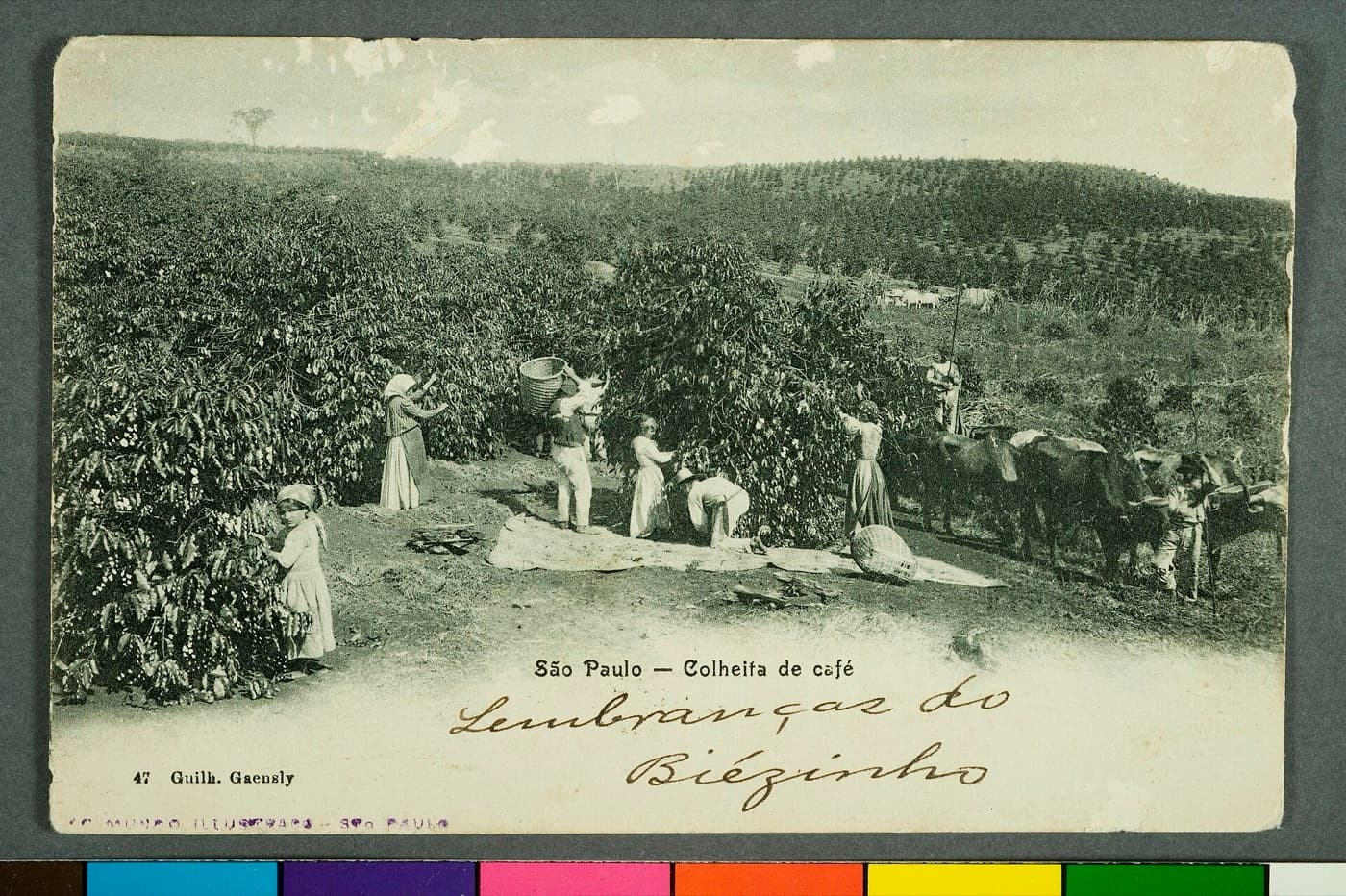
Coffee is what made São Paulo rich. In the second half of the 19th century, farms spread across the state's red-earth highlands, the railways were built to carry the harvest down to the port of Santos (still the world's leading coffee port), and the barons turned a modest town into Brazil's metropolis. It even shaped who lives here: waves of Italian, Japanese, and other immigrants first came to work the fields, and their descendants made São Paulo the food capital it is today. The coffee growing regions are still close by, from the Alta Mogiana in the northeast of the state to the farms of Sul de Minas just over the line. What has changed nowadays is the destination: instead of all shipping abroad, the best microlots now get snapped up by roasters in the city, igniting the farm-to-cup movement.
What to order (and how to ask for it)
São Paulo runs on two parallel coffee cultures, and you should try both.
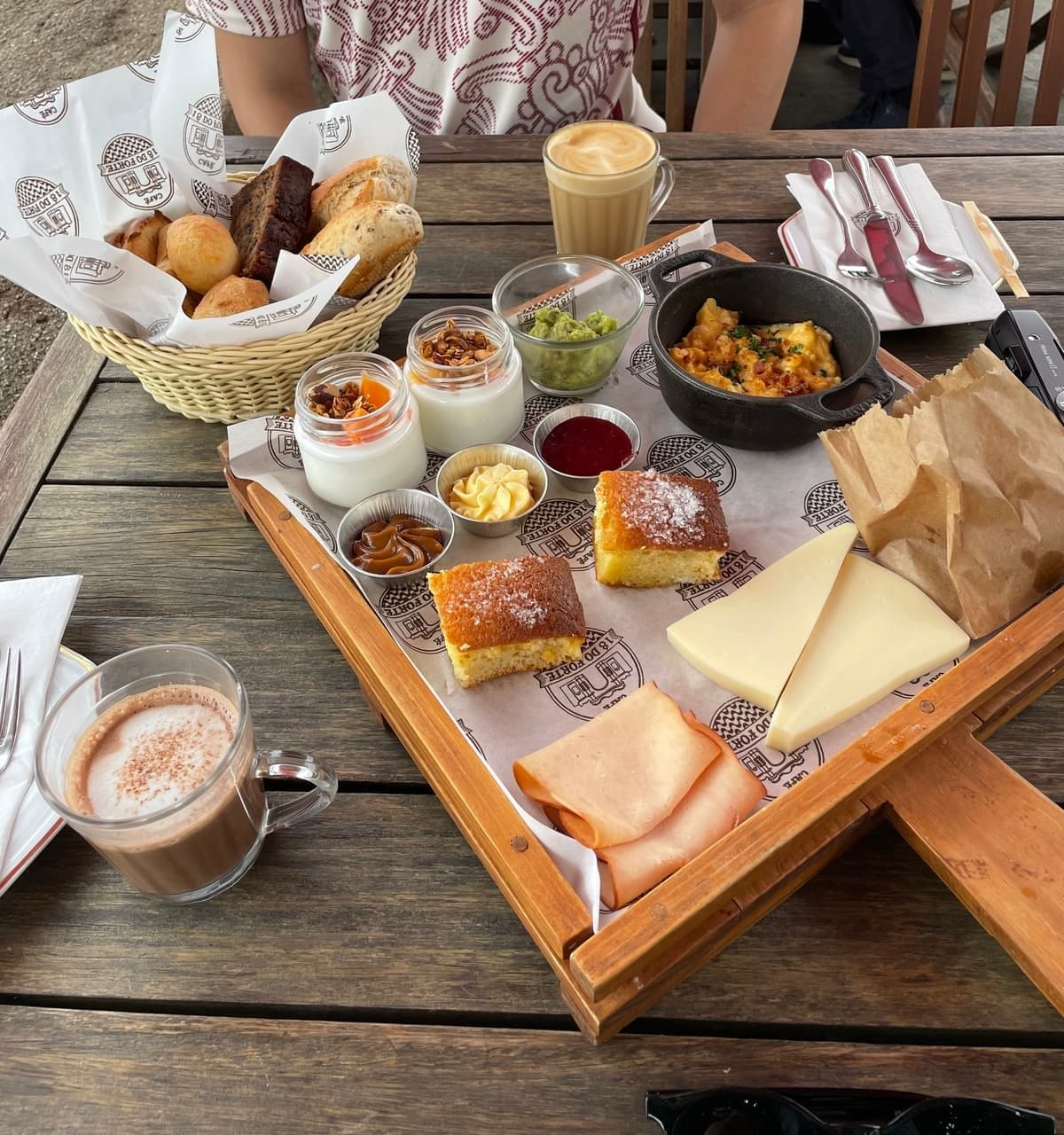
The everyday one lives in the padaria, the corner bakery that doubles as the city's diner. The classic order is a pingado (a tall glass of hot milk "stained" with coffee) and pão na chapa (a pão francês split, buttered, and pressed on the griddle). It costs a handful of reais, it's ready in two minutes, and eaten at a marble counter at 7am it is one of the most paulistano experiences there is. The small, strong, often pre-sweetened cafezinho is everywhere too, and frequently free after lunch.
The specialty scene is the other world. There you'll order:
- Filter coffee (coado): the heart of Brazilian specialty. Most good cafés brew single origins as V60, Kalita, or AeroPress, and the menu will tell you the farm, the region, and the tasting notes. This is where you taste what the country actually grows.
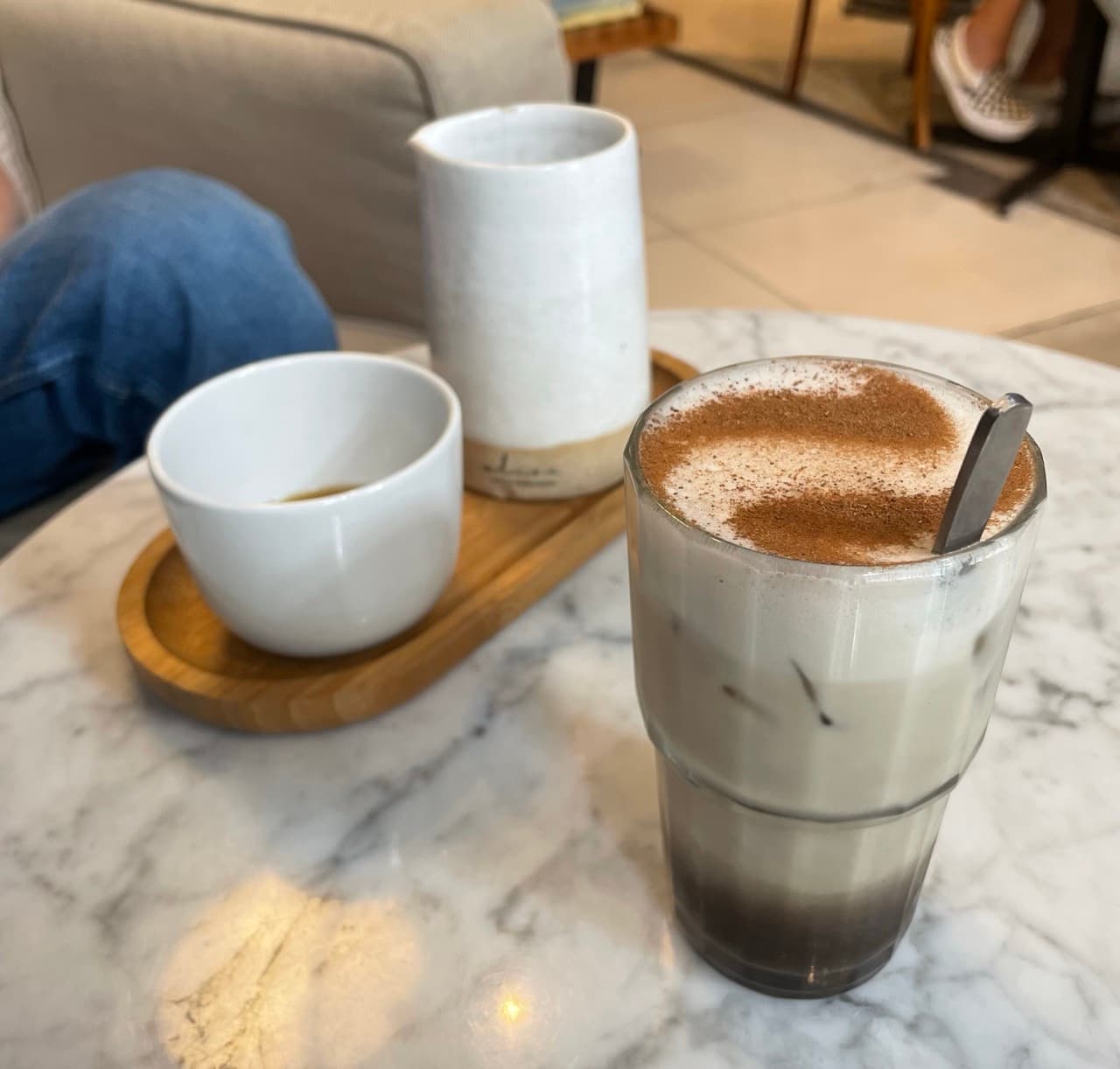
- Espresso-based drinks: espresso, cappuccino, flat white. São Paulo baristas are obsessive about milk texture, and a flat white made with a sweet Mogiana espresso is a thing of beauty.
Two phrases that unlock everything:
- "Qual é o coado do dia?" ("What's the filter coffee of the day?") Every serious café has one, and it's usually the best value on the menu.
- "Me vê um pingado e um pão na chapa, por favor." ("A pingado and a buttered grilled roll, please.") Say this at a padaria counter and you'll pass for a local.
The best specialty cafés in São Paulo
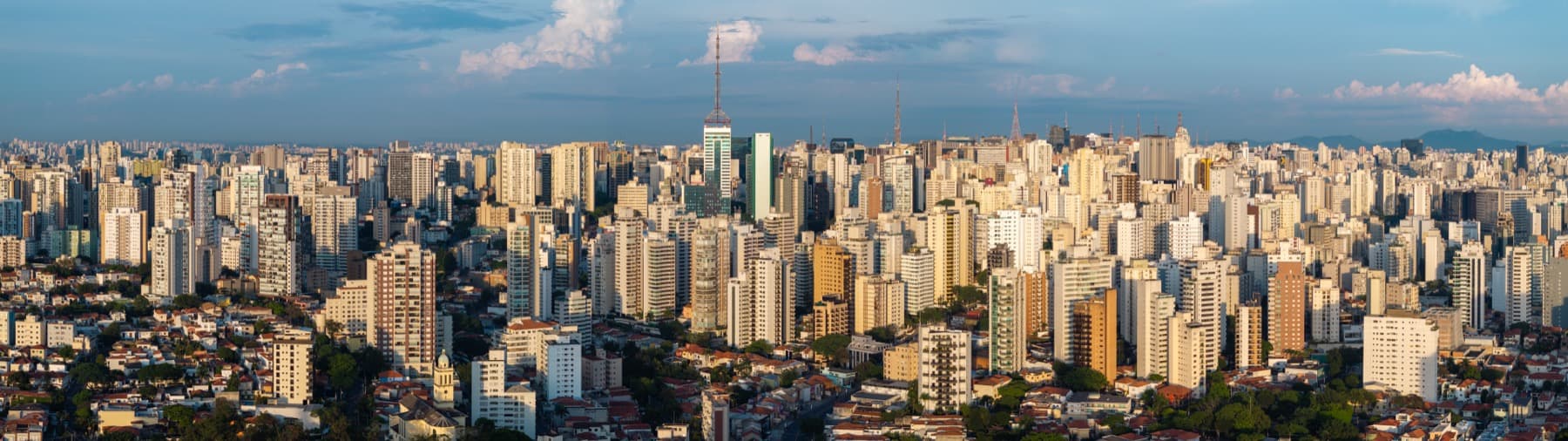
The scene clusters west of the center, in Pinheiros and Vila Madalena: leafy, walkable neighborhoods on the yellow metro line where you can do a full café crawl on foot. But great cafés are spread across the central neighborhoods too, from Consolação to Santa Cecília to the historic downtown. These are our picks.
Coffee Lab
This is where it all started. Barista and roaster Isabela Raposeiras opened Coffee Lab in 2004, years before most of Brazil had heard the words "specialty coffee," and built it as exactly what the name says: part café, part roastery, part barista school that trained a generation of the city's coffee professionals. Today it pours traceable microlots at two relaxed houses, one in Vila Madalena and one in Pinheiros. Come for a guided tasting and you'll understand the whole scene better.
Cupping Café
Proof that specialty doesn't have to be solemn. This Vila Madalena café, run by Gabriel Penteado and Mayara Kelly since 2017, roasts its own beans, bakes its own pastry, and keeps the vibe so welcoming that you might not notice it sits at number 81 on The World's 100 Best Coffee Shops list, the best-ranked of the two Brazilian cafés on it. Their whole philosophy is that great coffee can be simple. We love them for it.
Pato Rei
The hottest name in town right now. "The King Duck" started in 2018, roasts rare microlots and experimental fermentations, and serves them at a proper brew bar where you can watch every V60 being poured. The food menu leans Japanese (the cupim sando, a braised-hump-steak sandwich, is famous), the Pinheiros original has a cozy kissaten feel, and the newer Berrini branch brings the same obsessive brew bar to the office district. Playful on the surface, deadly serious in the cup, it's one of the most talked-about coffee names in the city right now.
Futuro Refeitório
A café-restaurant hybrid in a converted parking garage in Pinheiros, run by chef Gabriela Barretto. The coffee is roasted on site, the bread comes out of their own bakery all day, and the brunch is one of the best in São Paulo. Come hungry on a weekday if you can; weekend brunch draws a crowd, and deservedly so.
Urbe Café Bar
One of the originals. Urbe opened in 2011, when specialty coffee was barely a thing in São Paulo, and helped pioneer the city's farm-to-cup approach: the founder's family grows coffee, so the journey from plant to cup is unusually short. It's as much a bar as a café, which fits its home in the Rua Augusta area of Consolação, the spine of the city's nightlife. Come for a well-pulled espresso and brunch by day, or a coffee cocktail and a beer late at night, since it stays open past midnight and into the small hours on weekends. Not the place for a silent cupping, very much the place for coffee with a pulse.
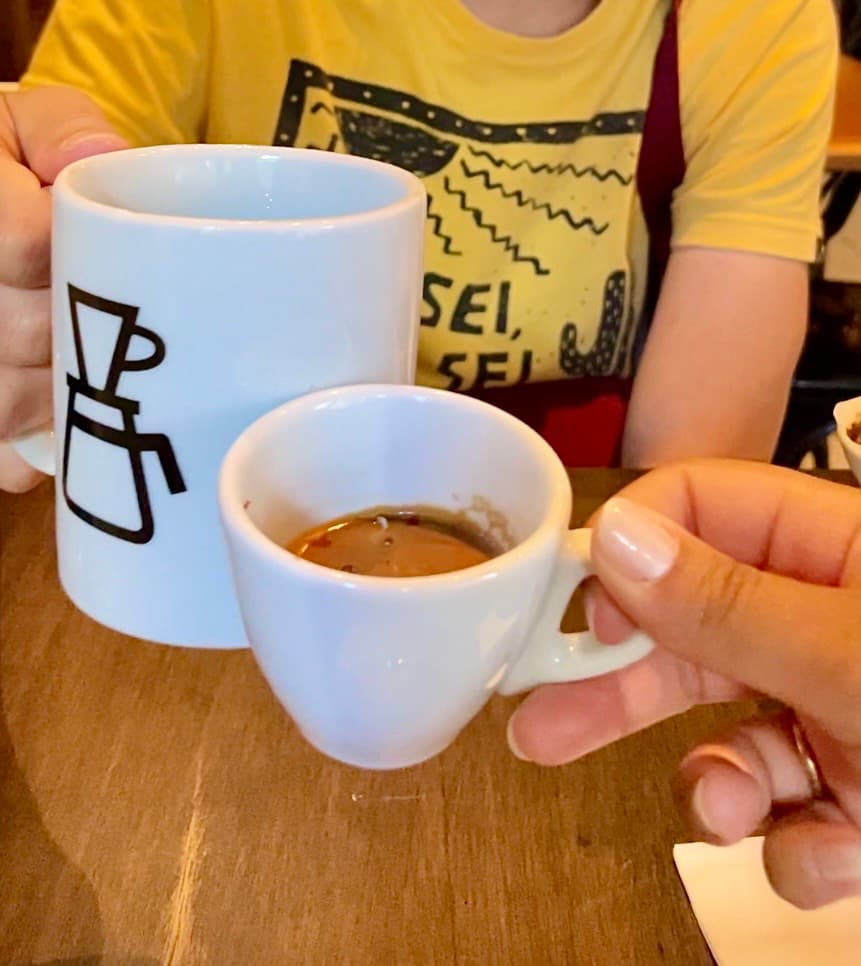
FFV Café
The most unusual stop on this list, and proof of how much range the scene has. FFV (short for Festival de Filmes Vencidos, "Expired Films Festival") started in Belo Horizonte in 2019 as an analog-photography project and grew into a café crossed with a film lab. At the São Paulo branch, in Santa Cecília, you can drop off a roll to be developed, browse cameras and film, and listen to vinyl while you drink. The coffee is specialty, brewed as espresso or pour-over, and the kitchen leans into Minas comfort food: stuffed pão de queijo, brioche, and a good slice of carrot cake. Come here when you want coffee with a side of culture rather than a quick shot on the way somewhere.
Two more we love, for very different reasons:
- KOF (King of the Fork): a café crossed with a cycling clubhouse, sitting right on the Pinheiros bike lane. Well-made specialty coffee, hearty sandwiches, and it opens early on weekdays, which is rarer than it should be in this scene.
- Por um Punhado de Dólares: a spaghetti-western homage in Consolação (the name means "For a Fistful of Dollars") that goes against every third-wave fashion: their house coffee, grown for them on a single farm in Minas, is deliberately dark, bitter, and proud of it. The bean's name is not printable on a family travel site, which tells you everything about the attitude. Open every day until 10pm, with craft beer and cachaça for when you're done with caffeine.
Padarias and the historic center: old-school coffee
Don't let the V60s make you skip the traditional side. Padarias are everywhere, open from before sunrise, and they are where the city actually drinks most of its coffee: quick, milky, standing up, with the espresso machine hissing nonstop. No tasting notes, plenty of soul.
For the full time-machine version, head downtown. Café Girondino stands at the corner of Rua São Bento and Boa Vista, facing Largo São Bento. The name goes back to an 1875 café in the old historic triangle; that original closed in the 1930s, and the Girondino was revived under the name in 1998, all dark woodwork, antiques, and memorabilia from the coffee-boom years. It closed briefly and reopened in late 2024 under new management, with an all-day menu. The coffee is solid rather than cutting-edge, but you're here for the atmosphere: it's the closest you'll get to drinking coffee in the São Paulo that coffee built, and it pairs perfectly with a visit to the Mosteiro de São Bento next door.
Practical tips for coffee in São Paulo
- Base your crawl in Pinheiros and Vila Madalena. Most of the cafés above are within a short walk of the Fradique Coutinho metro station on the yellow line, so you can hit three or four in an afternoon without ever getting in a car.
- Mind the hours. Specialty cafés here mostly run roughly 9am to 6pm and get busy on weekends. Padarias cover the early mornings, and Girondino and Por um Punhado de Dólares cover the evenings.
- Expect the highest prices in Brazil, which are still a bargain. Roughly R$8–R$12 (about US$1.60–2.40) for an espresso and R$15–R$30 (about US$3.00–6.00) for a single-origin filter, depending on the lot. It's pricier than the rest of the country and still far cheaper than the same cup in London or New York.
- Time your trip for June if you're a real coffee nerd. The São Paulo Coffee Festival takes over the Bienal pavilion in Ibirapuera Park every June (June 26 to 28 in 2026), with tastings, workshops, and well over a hundred coffee and food brands under one roof.
- Buy beans before you fly home. Every café above sells its own roast. Look for the region (Alta Mogiana, Sul de Minas, Cerrado Mineiro) and a recent roast date on the bag, and you'll carry home coffee that never reaches export markets.
- Cards and Pix work everywhere. Even tiny padarias take cards; a little cash is only nice to have for the very old-school counters. For the details, see our guide on paying and tipping in Brazil.
- Continuing to Minas? Belo Horizonte has a brilliant, cheaper scene of its own: see our guide to specialty coffee in Belo Horizonte. And Rio finally drinks well too: here's our guide to specialty coffee in Rio de Janeiro.
For a hundred years São Paulo grew the world's coffee and kept almost none of the good stuff for itself. Now the city finally drinks as well as it grows, and you can taste the whole story in a single day: a pingado at a padaria counter at sunrise, a world-class V60 in Pinheiros after lunch, and an evening espresso surrounded by relics of the boom that built the place. Find a counter, ask what's in the grinder, and let the city that coffee built show you what it learned.
Want more practical tips for Brazil? Join our newsletter and get notified of our latest posts.