Iguazu Falls: How to Visit Both Sides from Foz do Iguaçu
Some links in this guide are affiliate links: if you buy or book through them, we earn a small commission at no extra cost to you. It never changes what we recommend. Here’s how we make money.
Every Brazilian grows up seeing Iguazu Falls on classroom walls and calendar pages, and the first visit still flattens us. Nearly three kilometers of canyon edge where the Iguazu River shatters into something like 275 separate falls (the count honestly changes with the water), throwing up a column of mist you can see from the plane. No photo prepares you for the sound.
The planning mistake almost everyone makes is treating "Iguazu Falls" as one attraction. It is two national parks in two countries, each a UNESCO World Heritage site, with two tickets, two currencies, and an international border in between. This guide covers how to split them, what each side costs in 2026, how the border day trip actually works, when to go, and where to base yourself in Foz do Iguaçu, the Brazilian city that makes the whole thing easy.
TL;DR
Two parks, two countries: Brazil is the panorama (half day), Argentina is the walkways over the falls (full day). Do both
Give it two full days, based in Foz do Iguaçu
In 2026: R$134 (about US$27) to enter the Brazilian park (timed online ticket), 60,000 Argentine pesos (roughly 40 US dollars) for the Argentine one
Fly into Foz (IGU); bus 120 or a cheap Uber covers the park run
Crossing to Argentina: carry your passport, get stamps in both directions, and ask the bus driver to stop at the Brazilian post
Stay a day longer than the falls need: Itaipu Dam, Parque das Aves, and the city's food are worth it
Which side of the falls is better, Brazil or Argentina?
This is the first question everyone asks, and the honest answer is that they are not competing versions of the same thing.
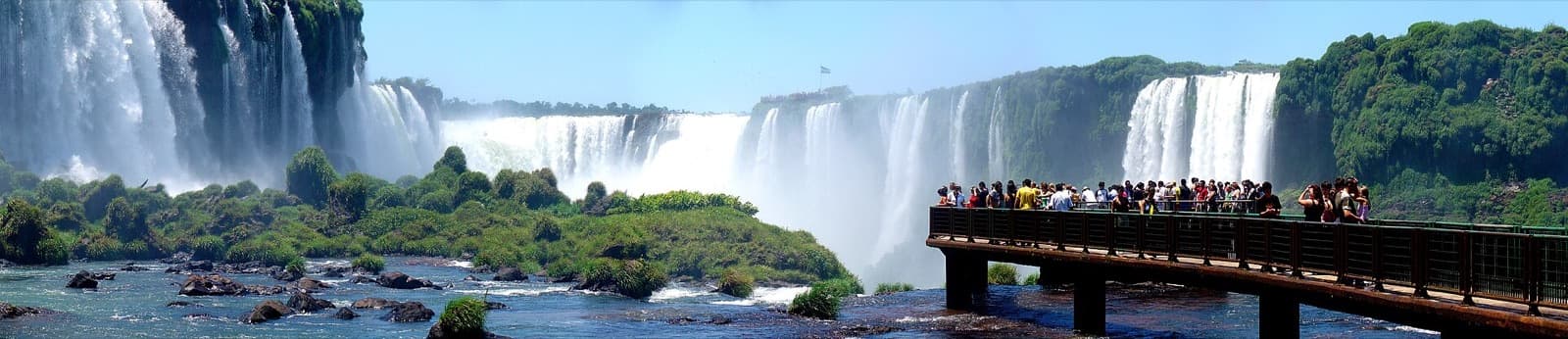
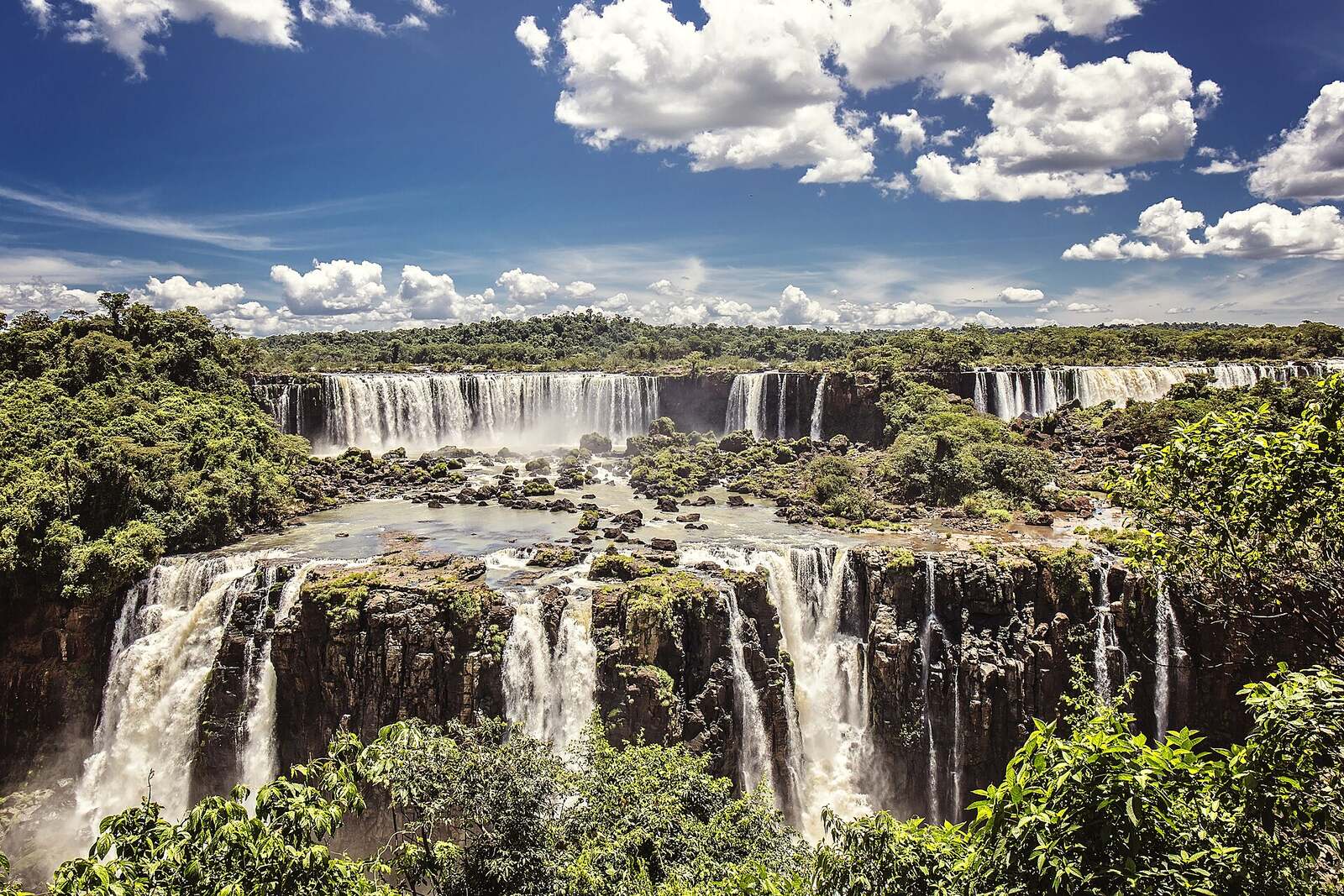
- The Brazilian side is the panorama. The park has one main walking route facing the Argentine wall of falls, so you spend the whole visit looking at the widest possible view of the system, ending at the Garganta do Diabo (Devil's Throat), the giant U-shaped cauldron at the center. Half a day covers it properly.
- The Argentine side is immersion. Most of the falls are physically in Argentina, and the park's circuits run over the top of them and along their base. You do not look at the falls so much as walk around inside them. It needs a full day.
If you only have time for one and want to understand what Iguazu is, the Brazilian side shows you the whole thing at once. If you want to feel it in your chest, Argentina. Our recommendation, and the order we would book: Brazilian side first for the overview, Argentine side the next day for the close-up. After the panorama, the walkways mean more.
How many days do you need at Iguazu Falls?
For the falls alone, budget at least two full days: a half day for the Brazilian park, a full day for the Argentine one. If you only want one side, a single day does it, but then you are choosing which Iguazu you get.
Can you do both sides in one day? Technically. The parks are around 40 minutes apart plus border formalities, the Brazilian side opens at 8:30am on weekends and 9am on weekdays, and the Argentine side stops letting people in at 4pm. So yes, a dawn start on the Brazilian trail and a taxi across the bridge can just about work. We have watched people do it. They looked like they were completing an errand, not visiting one of the natural wonders of the world. Give it two days.
Here is the part first-timers underestimate: Foz do Iguaçu is not just a car park with a waterfall behind it. Three more things earn real time on the itinerary, and together they justify a third and even fourth day:
- Itaipu Dam, the largest hydroelectric plant in South America, which is a genuinely strange and impressive thing to stand next to.
- Parque das Aves, a bird park good enough to convert people who do not like bird parks.
- The city itself, which eats better than its reputation suggests.
We cover all three further down. Four days in Foz is not padding, it is the difference between ticking off the falls and actually enjoying the trip.
How do you get to Foz do Iguaçu?
Fly. Foz do Iguaçu International Airport (IGU, also called Cataratas) has direct flights with LATAM, GOL, and Azul from São Paulo, Rio de Janeiro, and a handful of other Brazilian hubs (around eleven destinations as of mid-2026). From São Paulo it is roughly a two-hour flight. If you are building a first-trip route, Iguazu slots naturally between Rio or São Paulo and anywhere further south; our guide on the best time to visit Brazil helps with the season math.
The airport sits conveniently on the road between the city and the national park, about 13 kilometers from the center, which makes arrival logistics almost suspiciously easy:
- Bus 120 (Aeroporto/Parque Nacional): the workhorse city bus linking the downtown Terminal de Transporte Urbano (TTU), the airport, and the park gate, every 20 minutes or so from 6:30am to around midnight, for about R$5 (about US$1.00). Center to park takes 35 to 40 minutes.
- Uber: works well in Foz and costs R$30–R$50 (about US$6.00–10) from the center to the park entrance, traffic and surge depending. Taxis run R$55–R$65 (about US$11–13) on the same route.
One note for people combining Iguazu with Argentina proper: Puerto Iguazú has its own airport (IGR) with flights to Buenos Aires, so you can enter from one country and leave from the other.
How does the Brazilian side work?
The Brazilian park, Parque Nacional Iguaçu, runs on a timed-ticket system operated by the Urbia Cataratas concession. In 2026 entry costs R$134 (about US$27) for foreign visitors and R$121 (about US$24) for Brazilians and Mercosur residents (both include a small voluntary conservation contribution). Buy online in advance and pick a time slot; the park is open every day of the year, 9am to 4pm on weekdays and from 8:30am on weekends.
Your ticket includes the panoramic buses that shuttle everyone from the visitor center to the trailhead. From there the Trilha das Cataratas (Falls Trail) runs about 1.5 kilometers along the canyon rim, and it is merciless in the best way: every bend is a better viewpoint than the last, until the path drops you at the Garganta do Diabo walkway, a boardwalk extending over the river with the falls' biggest cataract roaring on three sides. You will get wet. Buy a poncho, or accept your fate and dry off in the sun afterwards (a dry bag for the phone is the one piece of gear we insist on). A panoramic elevator takes you back up to the plateau at the end. Count on three to four unhurried hours for the whole visit.
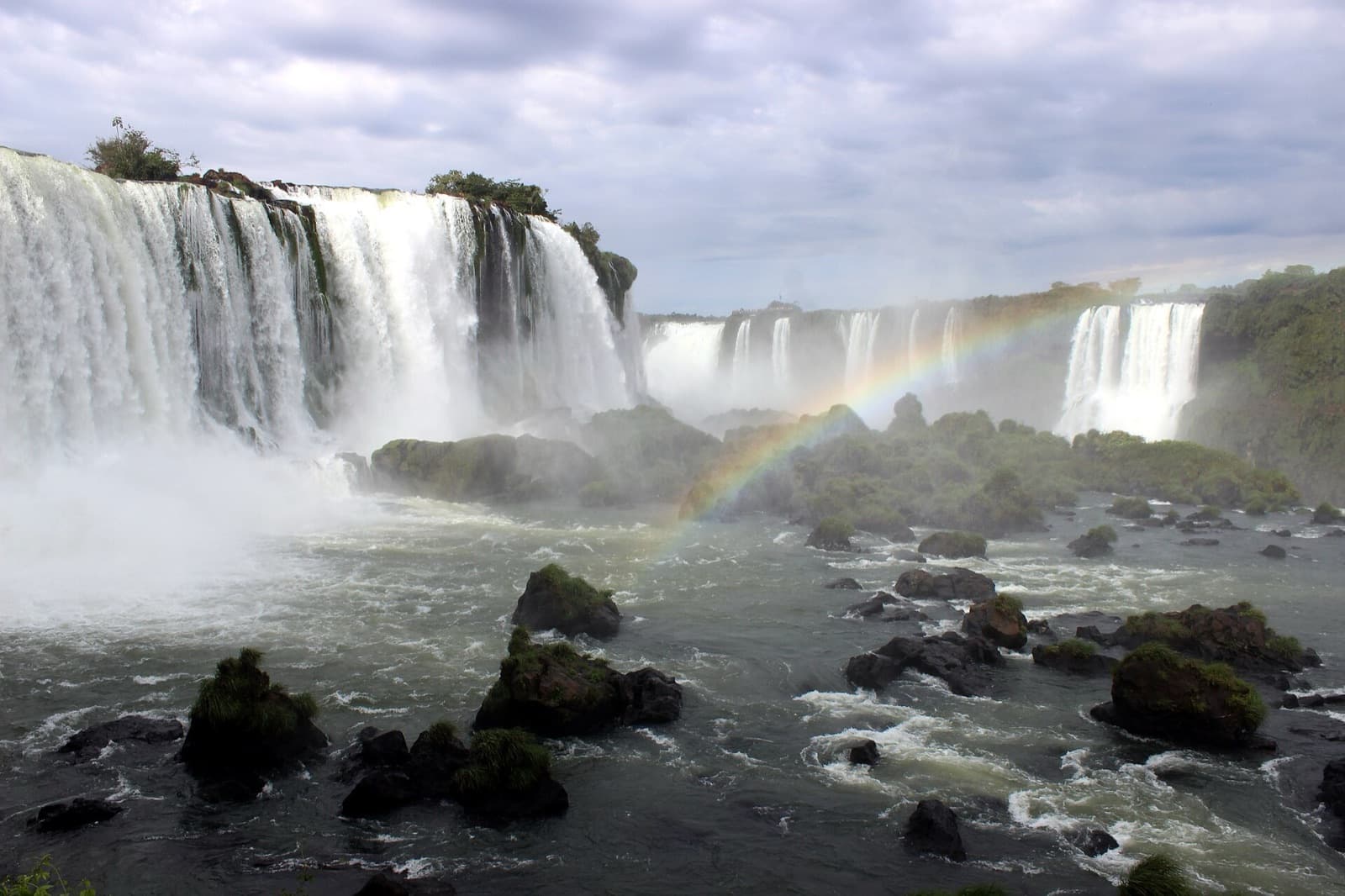
The park's famous add-on is the Macuco Safari, a jungle-truck ride and speedboat run that finishes with the boat driving straight into the spray under one of the falls. It costs R$384 (about US$77) in 2026 (separate from park entry, kids 6 and under free, 7 to 11 half price), takes about two hours door to door with 25 to 30 minutes on the water, and leaves you as wet as it is possible for a clothed person to be. Boats leave every 20 minutes, so you do not need to fix a time in advance. We loved it. It is also completely skippable if being water-cannoned by a river is not your idea of a holiday.
Treat yourself to breakfast at the Hotel das Cataratas. This is our favorite piece of advice in the whole guide, and you do not have to be a guest. The Belmond hotel inside the park opens its breakfast to visitors on weekday mornings, roughly 7:20am to 10:30am, from around R$225 (about US$45) per person booked ahead (park admission is separate). What you get is an absurd buffet: fresh tropical fruit, cold cuts and cheeses, eggs done every way, a wall of desserts, proper coffee, juices, and sparkling wine, served in a five-star colonial dining room inside a national park. The service and the setting are on a completely different level from anything else out there. It is not cheap, and it is worth it. Book it for the morning you are doing the Brazilian side and you will be at the trailhead, fed and unhurried, while the day crowd is still queueing at the gate.
How does the Argentine side work?
Across the river, Parque Nacional Iguazú is the bigger park with the longer menu. As of mid-2026 entry costs 60,000 Argentine pesos for non-Mercosur foreigners, which works out at roughly 40 US dollars or 35 euros. Treat both numbers as a snapshot: the peso price rose in June 2026 and Argentine prices move faster than we can edit this page. Buy through the national parks' official channel or at the gate, where cards are accepted. The park opens daily from 8am to 6pm, with last entry at 4pm. One genuinely useful trick: before you leave, have your ticket revalidated at the exit and a second consecutive day costs 50% off, which turns a return visit from extravagance into a no-brainer.
Inside, the free Rainforest Ecological Train connects three stations and the three headline circuits:
- Garganta del Diablo: the train's last stop, then a catwalk of roughly a kilometer across the wide, glassy river to the balcony hanging on the lip of the Devil's Throat. This is the single most overwhelming viewpoint at Iguazu, full stop. The last train out to it leaves at 3:30pm; do not cut it close.
- Upper Circuit (Circuito Superior): walkways along the crests, where the water slides past your feet and disappears over the edge.
- Lower Circuit (Circuito Inferior): stairs and boardwalks at the base of the falls, with the best rainbow-hunting in the park. The Argentine counterpart to the Macuco boat, Gran Aventura, also runs from inside the park if one soaking was not enough.
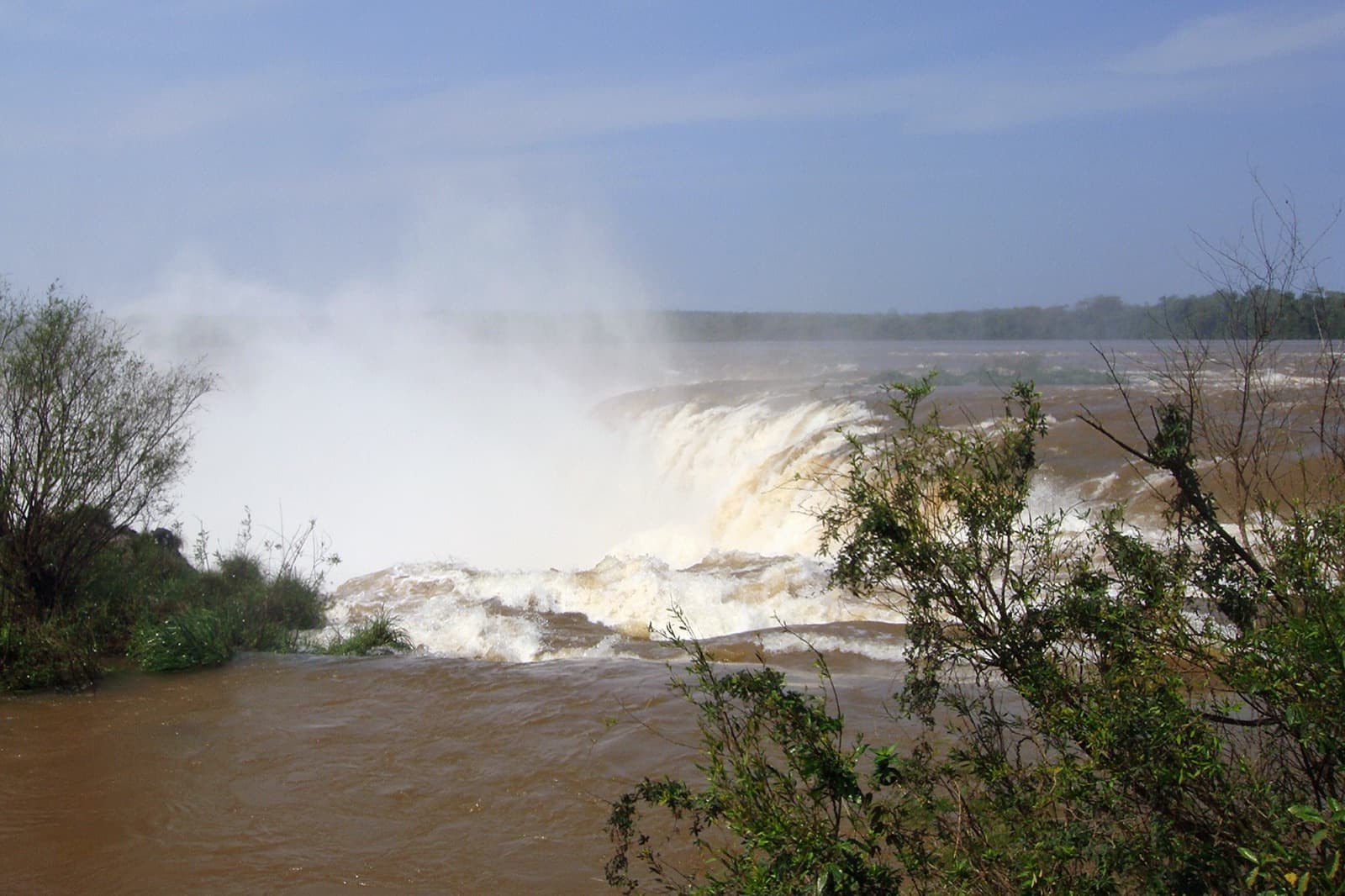
If your dates cooperate, the park also runs the Paseo de Luna Llena, a guided night walk to the Garganta del Diablo under the full moon, five nights a month in up to three departures around 7:45pm to 9:15pm. It costs 95,000 pesos as of mid-2026 (roughly 65 US dollars or 55 euros) and sells out ahead of time, so book on the official site as soon as your dates firm up. Walking those catwalks by moonlight, with the roar arriving out of the dark, is the kind of thing you describe at dinner parties for years.
How do you cross the border for the Argentine side?
Foz do Iguaçu and Puerto Iguazú are 30-ish minutes apart across the Tancredo Neves bridge, and you have three ways to make the hop:
- Guided day tour or private transfer: the no-thought option every Foz hotel arranges. The driver handles the border stops. Costs more, worth it if your day is tight.
- Taxi: drivers are used to the run and wait at immigration. Agree the price before leaving. Note that Uber does not cross the bridge.
- Public bus: Rio Uruguay and Crucero del Norte buses leave the downtown TTU terminal roughly hourly from about 7am to 7pm, around R$40 (about US$8.00) each way as of early 2026.
Whatever you ride, the rule is the same: this is a real border, and you need exit and entry stamps in both directions. The trap on the public bus is that locals do not need Brazilian immigration, so drivers often only stop at the Brazilian post if a passenger asks. Ask. Get off, get stamped, and hop the next bus with the same ticket if yours has moved on. Skipping a stamp feels consequence-free right up until you try to leave the country weeks later and meet the fine.
On paperwork: many nationalities (EU, UK, US, Canada, Australia among them) enter Argentina visa-free as tourists. For Brazil, since April 2025, US, Canadian, and Australian passport holders need the eVisa, 80.90 US dollars as of mid-2026; it is multiple-entry, so bouncing to Argentina for the day and back is exactly what it is built for. Check your own nationality's current rules before flying.
Visa-free does not mean document-free, and this is the one thing we would tattoo on a first-time visitor: carry your actual passport every time you cross, even for a few hours. A photo on your phone, a driver's licence, or a photocopy will not get you stamped, and Brazilian and Argentine officials both check. Leaving it in the hotel safe because "it is only a day trip" is the single most common way people turn a morning at the falls into an afternoon at immigration. One small mercy: Foz and Puerto Iguazú currently share the same clock (Brazil scrapped daylight saving in 2019 and Argentina does not observe it), so the 4pm last entry is 4pm on your phone, no mental math required.
When is the best time to visit Iguazu Falls?
The good news: Iguazu does not really have a wrong season, it has trade-offs. The falls run on rain that falls upstream across the Paraná basin, not on the weather over your head, so the river's mood is only loosely connected to your forecast.
- January to March: the falls at their fullest (and muddiest brown) after the summer rains, with the region at its hottest (35°C days are normal) and most crowded. Maximum spectacle, minimum comfort.
- June to August: mild, often gorgeous walking weather, and the thinnest crowds outside Brazilian school holidays in July. The flow is usually lower, which actually improves the view for some: less mist wall, more visible rock and green.
- March-April and September: the balance points, with strong water, bearable heat, and shoulder-season prices. September is our pick, and it lines up with the best month for a first Brazil trip generally.
- Any rainy day: the falls are one of the few Brazilian headliners that rain cannot cancel. You are getting wet at the Garganta do Diabo anyway.
Two calendar warnings. Brazilian long weekends fill the parks with domestic tourists, so check our public holidays guide before locking dates. And after truly extreme storms the parks occasionally close catwalks for safety (the Argentine Garganta del Diablo walkway was rebuilt after the 2023 floods), so if you are visiting in a biblical-rain week, check the parks' channels the night before.
What else is worth doing in Foz do Iguaçu?
Foz has quietly become one of Brazil's most complete tourist towns. Three things genuinely earn a slot on the itinerary, and a fourth is worth an evening.
Itaipu Dam
Itaipu is the largest hydroelectric plant in South America and, for a long stretch, the most productive on Earth: 20 generating units, 14,000 megawatts of installed capacity, and enough output to cover roughly 9% of everything Brazil consumes and about 86% of Paraguay's electricity. It is binational in the most literal way, jointly owned and jointly run, with the border passing straight through the machine hall. The American Society of Civil Engineers put it on its 1994 list of the seven wonders of the modern world, alongside the Panama Canal and the Channel Tunnel, and standing on the mirante looking down the spillway, you understand the pick.
What makes it a good visit rather than a dutiful one is the scale. The dam runs more than seven kilometers across the river and stands 196 meters high, and those numbers stop being abstract when a bus drives you along the top of it. Pick your depth:
- Itaipu Panorâmica: the standard bus tour of the external route, R$63 (about US$13), about an hour and ten minutes, daily 8:30am to 4pm. Right choice for most people.
- Itaipu Especial: the same plus the inside of the plant, including the control room where two countries' grids meet on one desk. R$185 (about US$37), around two and a half hours, limited slots, book ahead.
- Itaipu Iluminada: the dam lit up at night with live music, R$50 (about US$10), about two hours, Fridays and Saturdays at 7pm. The one we would pick for a second visit.
- Refúgio Biológico and the Ecomuseu: the conservation side of the project, R$48 (about US$9.60) for the wildlife refuge and free for the museum. Both closed Tuesdays.
If the spillway is open, go. Seeing that much water released on purpose, a few kilometers from where the river does it by itself, is a strange and excellent pairing.
Parque das Aves
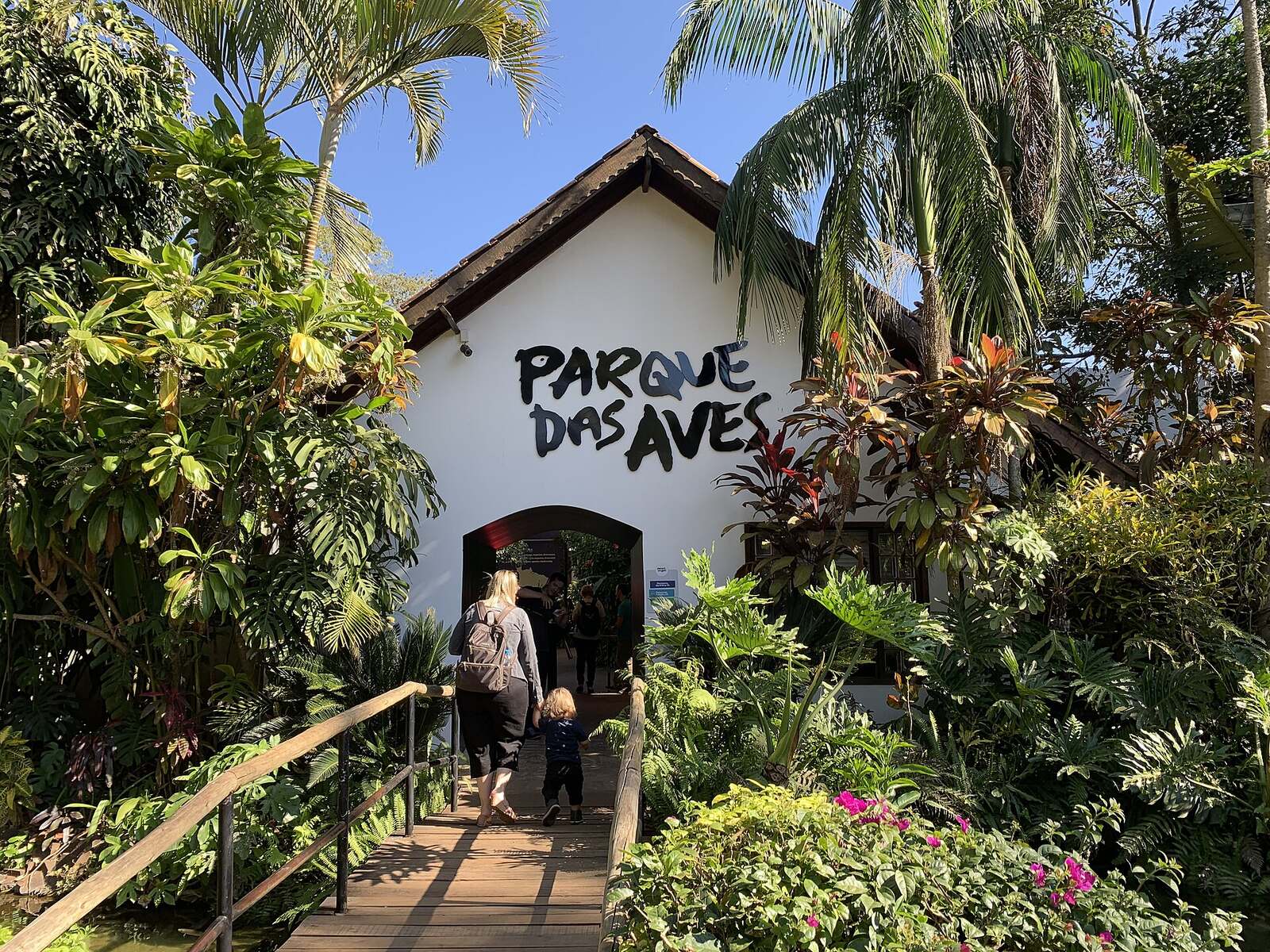
Here is our pitch for the people who are already thinking "I do not do zoos": neither do we, particularly, and this one is different. Parque das Aves is a conservation institution first, home to over 1,300 birds from around 150 species, more than half of them rescued from trafficking, injury, or seizure and unable to go back to the wild. It sits right at the national park's entrance in a patch of restored Atlantic Forest.
The reason it converts skeptics is the design. Instead of looking at cages, you walk through five immersion aviaries, along a 1.6 kilometer trail, with the birds in the space around you: toco toucans clacking past at head height, red-and-green macaws arguing overhead, flamingos, and a harpy eagle that will recalibrate your sense of how large an eagle can be. Entry is R$110 (about US$22) on the table published through November 2026, free for kids up to 8, open daily from 8:30am, and 90 minutes to two hours covers it comfortably.
It pairs perfectly with your Brazilian-side morning, and it is the best bird encounter you will have in Brazil without a telephoto lens and a lot of patience.
Eating in Foz
Foz eats like what it is: a Paraná city on a triple border, with Paraguayan and Lebanese cooking folded into daily life alongside the southern Brazilian staples. A few dinners here are genuinely part of the trip:
- Churrasco: Foz takes its grills seriously, from long-running institutions like Churrascaria Búfalo Branco (going since 1989, in the center) and Rafain Churrascaria Show, to neighborhood places doing picanha by the kilo. If you have not yet done a proper Brazilian rodízio, where waiters keep bringing skewers until you flip the card to red, this is a fine city to lose an evening to it.
- Pinhão: the seed of the araucária, Paraná's iconic pine, boiled and eaten warm out of the shell like a chestnut. It is seasonal, roughly April through June, so this one is a winter-trip bonus rather than a year-round promise.
- Chipa: the Paraguayan cheese bread sold warm from baskets and roadside stands. It is a cousin of pão de queijo, chewier and cheesier, and it is what the border actually tastes like.
Marco das Três Fronteiras
The Marco das Três Fronteiras is the obelisk where Brazil, Argentina, and Paraguay meet at the junction of two rivers, rebuilt as an evening attraction with food and a folkloric show. Entry costs just over R$70 (about US$14) after a June 2026 increase, and it opens in the afternoon, Tuesday to Sunday. Touristy? Completely. Standing at a spot where you can see three countries still lands.
Ciudad del Este, the Paraguayan shopping city across the Friendship Bridge, gets asked about a lot. Honest take: unless chaotic electronics markets are your thing, it is skippable on a first falls trip, and if you do go properly into Paraguay, check entry and vaccination requirements first.
Where should you stay?
Base yourself in Foz do Iguaçu for a Brazil-side trip. Two areas make sense:
- Centro: the downtown grid around the TTU terminal, with the widest spread of hotels, restaurants, and bus connections (including the Argentina bus). Best for doing everything by public transport.
- Along the Avenida das Cataratas: the road running out toward the airport and park gate, lined with resorts and family hotels with pools. Quieter and greener, but you will Uber everywhere.
The splurge that is actually worth the sentence: Hotel das Cataratas, the Belmond property that is the only hotel inside the Brazilian national park. Guests walk the falls trail before the gates open and after they close, when the panorama belongs to a few dozen people instead of a few thousand, and park entry is included in the rate. If there is one place in Brazil to torch the budget on a room, this argument is hard to beat. And if the room is out of reach, its breakfast is the cut-price version of the same trick.
Puerto Iguazú works as a base too, especially for an Argentina-heavy itinerary, but for the Brazilian side of the trip everything (flights, buses, Parque das Aves, Itaipu) is simpler from Foz.
What should you know before you go?
Good news first: this is one of the easiest trips in Brazil. Foz lives on tourism and feels calm and organized, both parks are well run and well signposted, and normal city sense downtown at night is all the caution the place asks of you. So this is a packing-and-habits list, not a warning list, and the most likely thing to go wrong on your trip is a raccoon relative stealing your lunch:

- The coatis will rob you. Locals call them quatis: adorable, striped, and utterly shameless around food. Do not feed them, do not walk around with an open snack, and keep zippers closed; they scratch and bite when a sandwich is at stake. Both parks are papered with warnings for a reason.
- Waterproof the electronics. Between the Garganta do Diabo walkway, the boats, and surprise wind shifts in the mist, a dry bag earns its space in your pocket.
- Respect the heat. In summer, do the trails early, carry water, and treat sunscreen as equipment. The walkways are exposed and the humidity is real.
- Yellow fever vaccine: Brazil's health ministry recommends it for the Iguazu region, and it needs to be taken at least 10 days before travel, so talk to a travel clinic when you book, not when you pack.
- Money: cards work almost everywhere in Foz, and on the Argentine side you can pay by card too; carrying a little cash for buses and kiosks never hurts. Our paying and tipping guide covers the details. And if you rely on mobile data, note that hopping the border can flip your phone onto Argentine roaming: our SIM card guide helps you set that up in advance.
There is a friendly argument you will hear on both sides of the bridge: the falls belong to Argentina, but the view belongs to Brazil. Spend your two days there and you will understand why neither country will drop it, and why it stops mattering the moment you are in the middle of a walkway, soaked, grinning, unable to hear yourself think. Book the flight, pack the dry bag, and let the river do the talking.
Want more practical tips for Brazil? Join our newsletter and get notified of our latest posts.