Carnival in Salvador: Trios Elétricos, Circuits, and How to Choose Your Way In
Rio gets the postcards, but Salvador throws the biggest street party on the planet. There is no stadium here and no stage waiting for you to find your seat: the whole city becomes the venue, and the show drives past you on a truck. We have chased those trucks ourselves, and Salvador is the most physically intense thing we have ever done at Carnival. That is both a recommendation and a warning.
This guide explains how the festival actually works: what a trio elétrico is, how the three official circuits differ, the three very different ways to join (and what each cost in recent years), where to stay, and the survival lessons we learned the sweaty way.
If you are still deciding between cities, start with our honest comparison of where to spend Carnival in Brazil and come back when Salvador wins.
TL;DR
Salvador's official Carnival 2027 runs February 4 to 9, with warm-up events from the end of January
Three circuits: Dodô (Barra to Ondina, the stars), Osmar (Campo Grande, the tradition), Batatinha (Pelourinho, the roots)
Three ways in: paid bloco with an abadá shirt, a camarote stand, or the free pipoca crowd
We don't recommend the pipoca as your default: it can feel genuinely unsafe. A camarote is the safest, most comfortable option
In 2026, day abadás ran roughly R$240–R$2,150 (about US$48–430); camarotes from a few hundred reais to over R$4,000 (about US$800)
Sneakers, sunscreen, and as few valuables as possible. No exceptions
Book your bed months ahead; Barra, Ondina, and the Vitória corridor are the classic bases
What makes Salvador Carnival different?
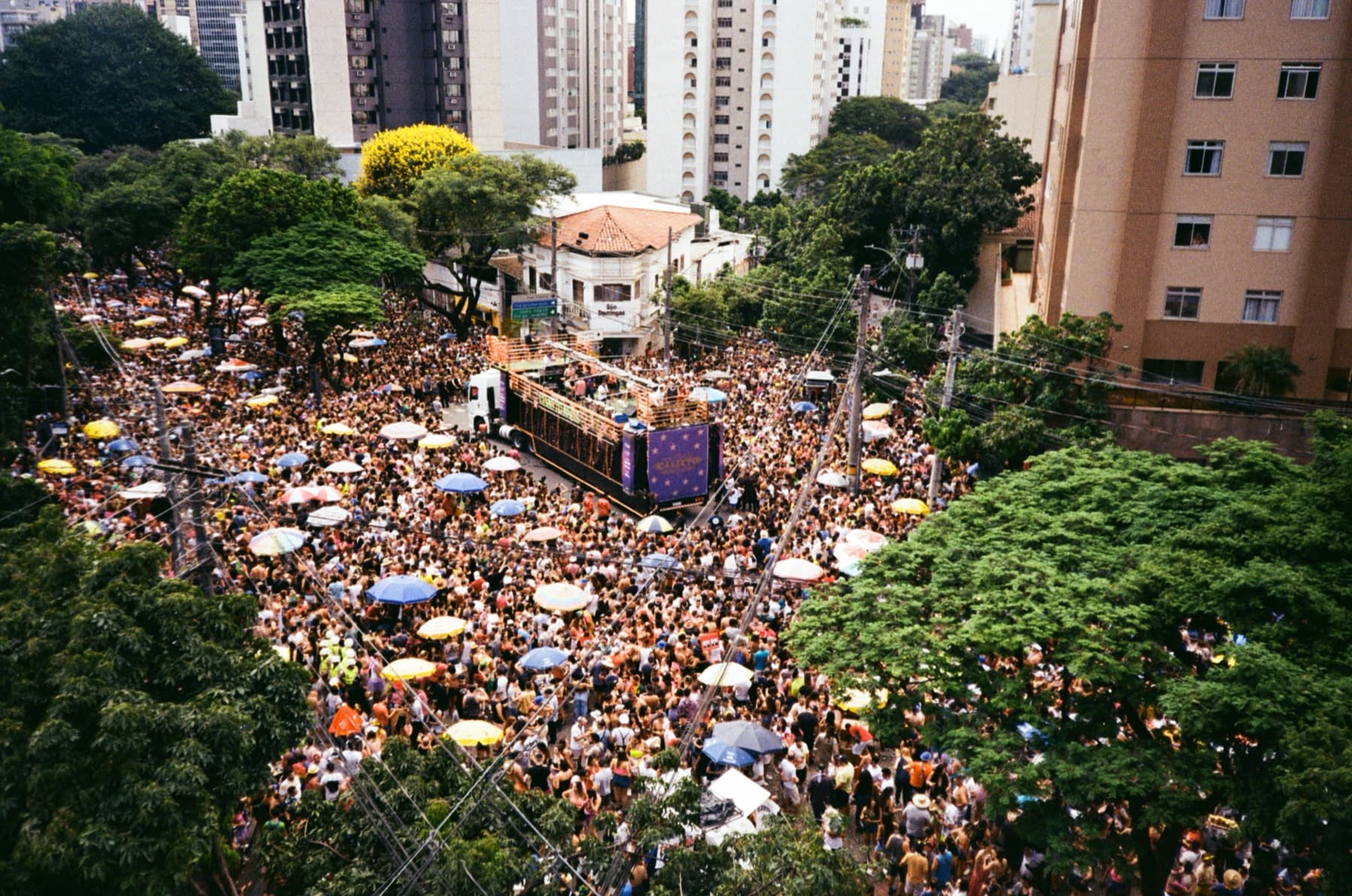
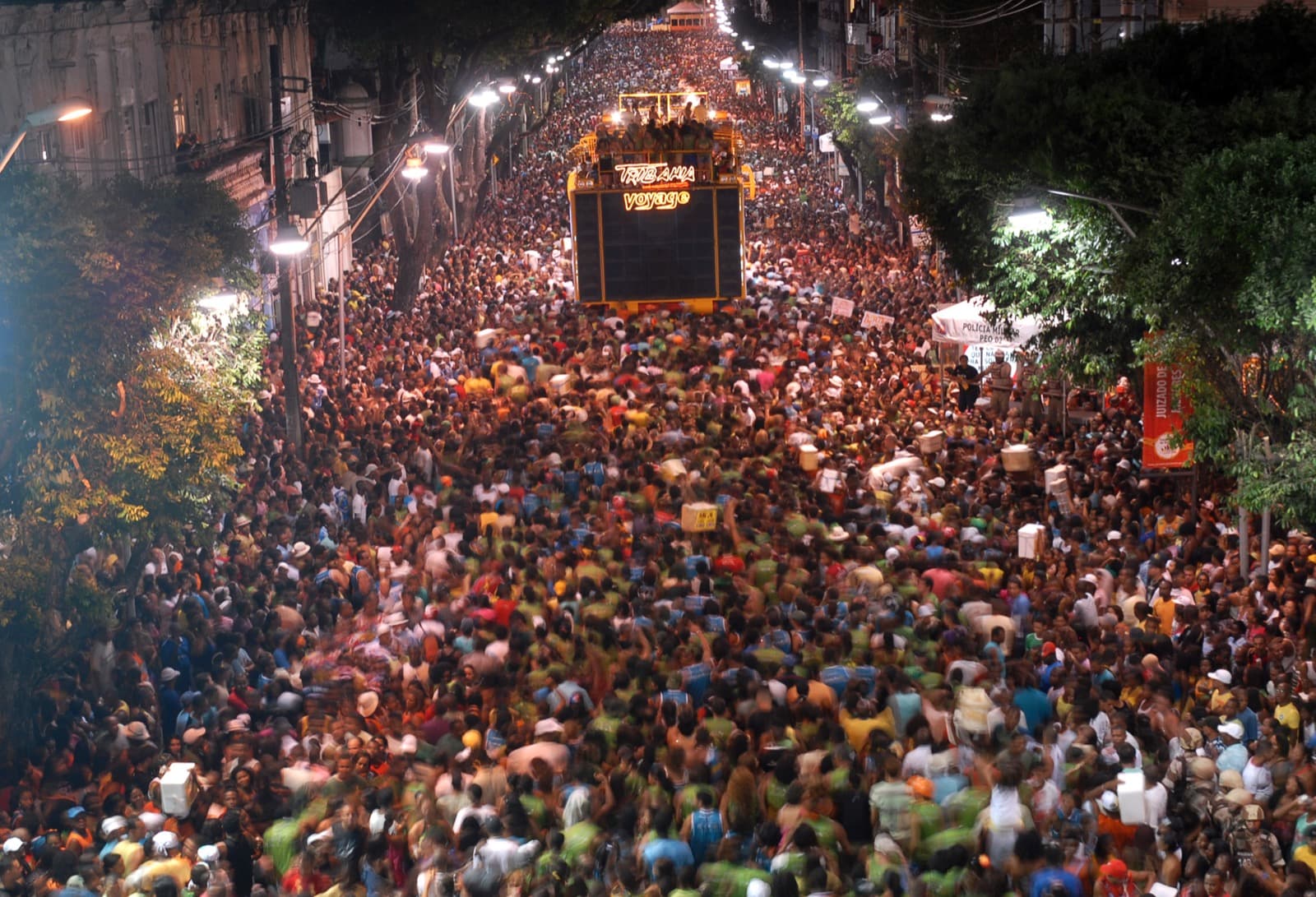
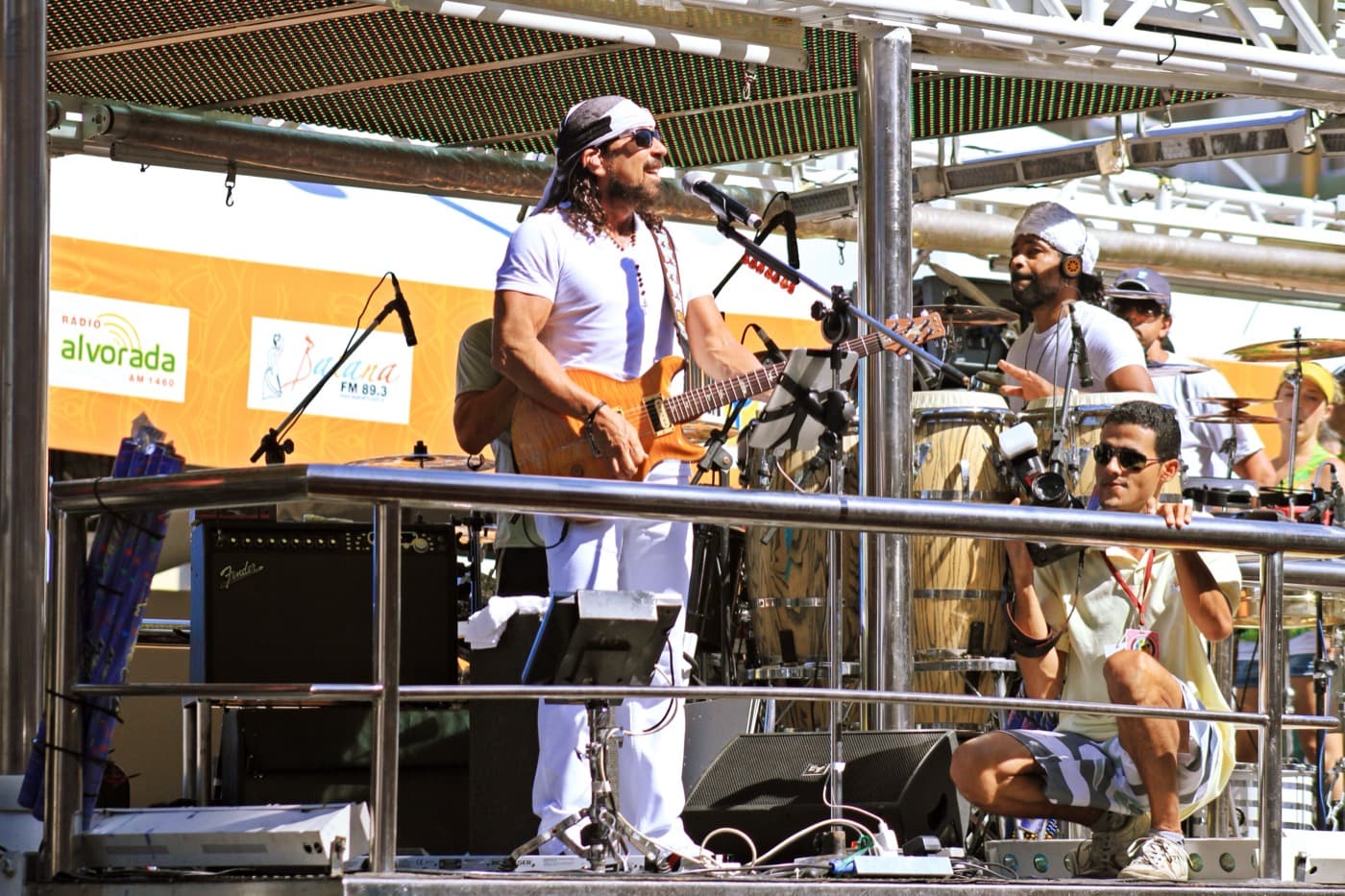
Everything in Salvador revolves around the trio elétrico: a huge truck rebuilt as a rolling stage, stacked with speakers from bumper to roof, with a live band on top. The trios crawl along fixed routes for hours while a sea of people dances behind, beside, and in front of them. When one passes, the sound physically pushes against your chest. The party simply goes where the trucks go, and it takes the whole street with it.
The invention is a local point of pride. In 1950, two musicians named Dodô and Osmar mounted their electrified instruments and amplifiers on a 1929 Ford nicknamed the fobica and drove it through the streets playing for whoever followed. The crowd followed. Everything since, from the giant trucks to the fact that two of the circuits carry their names, grew out of that one ride.
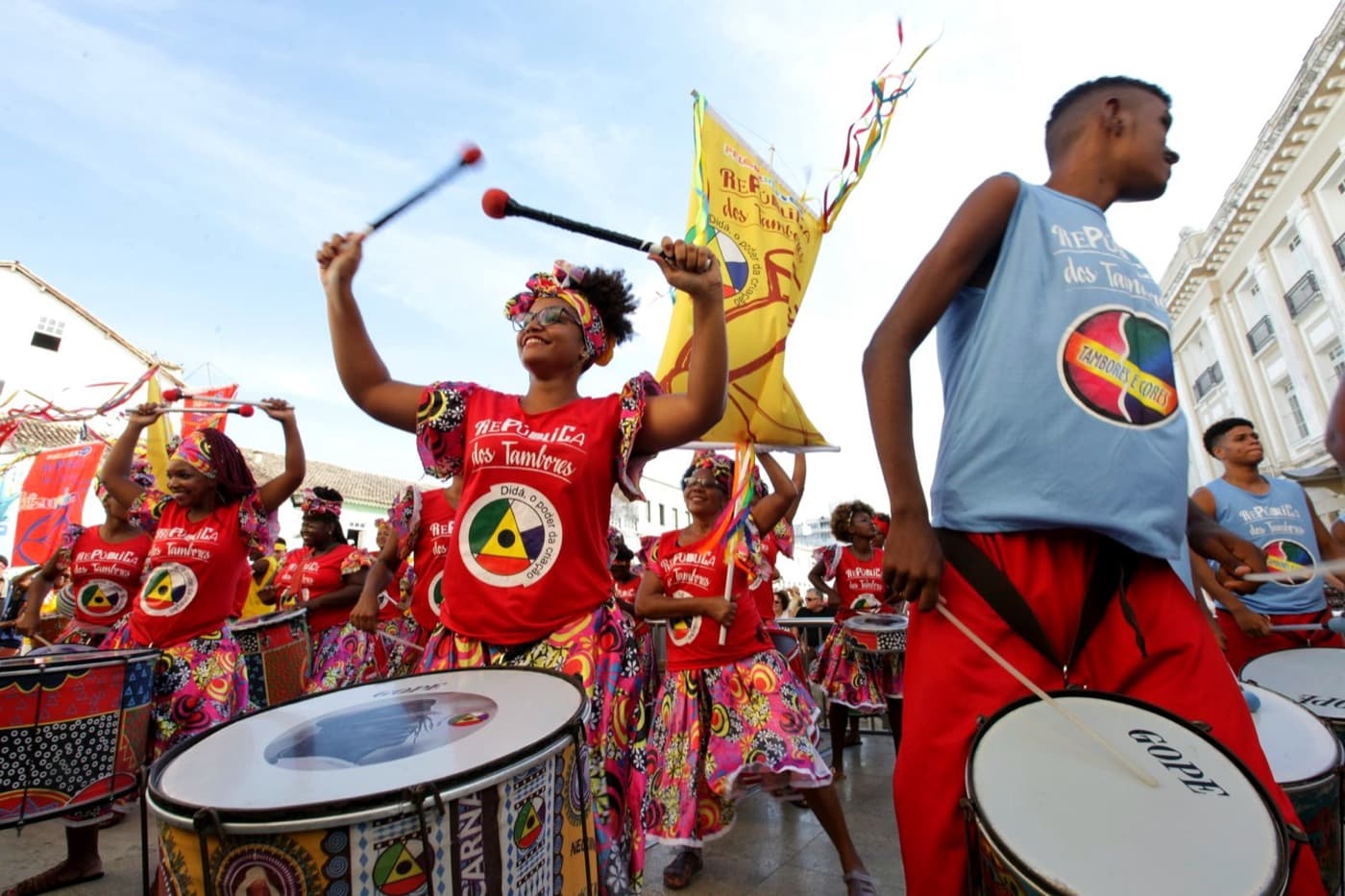
The scale is hard to overstate. Estimates put the crowd past two million people out on the streets, and Guinness has recognized Salvador as the largest street carnival in the world. In 2026 the trio elétrico was even declared part of the city's official cultural heritage. Rio's Carnival is bigger business; Salvador's is bigger crowds, and it all happens in the open, for anyone. If it is the stadium spectacle you are after, our Carnival in Rio survival guide is the one to read instead, and if you want a street party at a fraction of the cost, that is Belo Horizonte.
When is Salvador Carnival 2027?
Carnival follows the Christian calendar, so the dates move every year. In 2027, Salvador's official Carnival runs from Thursday, February 4 to Tuesday, February 9, a day longer than usual, and the city has announced a farewell arrastão (a final sweep of trios parading without ropes) on Ash Wednesday, February 10.
Salvador also warms up earlier than anywhere else. The city's announced 2027 pre-Carnival calendar starts with the Pipoco show on January 29, followed by the Furdunço and Fuzuê street previews, and the Festa de Iemanjá in Rio Vermelho on February 2, a beautiful festival of the sea goddess that is worth planning around even if you skip everything else. If you can arrive a week early, do it.
One planning note: those are the dates announced by the city government as of mid-2026. Salvador has adjusted its Carnival calendar before, so double-check the official programming once you book. For how the holiday itself works across Brazil, see our guide to public holidays in Brazil.
The three circuits: Dodô, Osmar, and Batatinha
The party runs along three official routes, and choosing between them shapes your whole trip:
-
Circuito Dodô (Barra to Ondina): about 4.5 km along the seafront, from the Farol da Barra lighthouse up Avenida Oceânica to Ondina. This is the glamorous one: the biggest stars, most of the camarotes, and the highest concentration of tourists. It leans late afternoon into the small hours, with the ocean right there the whole time. Best for: first-time visitors who want the headline acts and the postcard setting.
-
Circuito Osmar (Campo Grande): the original downtown route, roughly 4 km around Campo Grande square and along Avenida Sete de Setembro toward Praça Castro Alves. This is where Salvador's Carnival was born, and it still feels more local and more traditional, with smaller and older blocos in the mix. Best for: travelers who want the classic, more democratic street party rather than the celebrity strip.
-
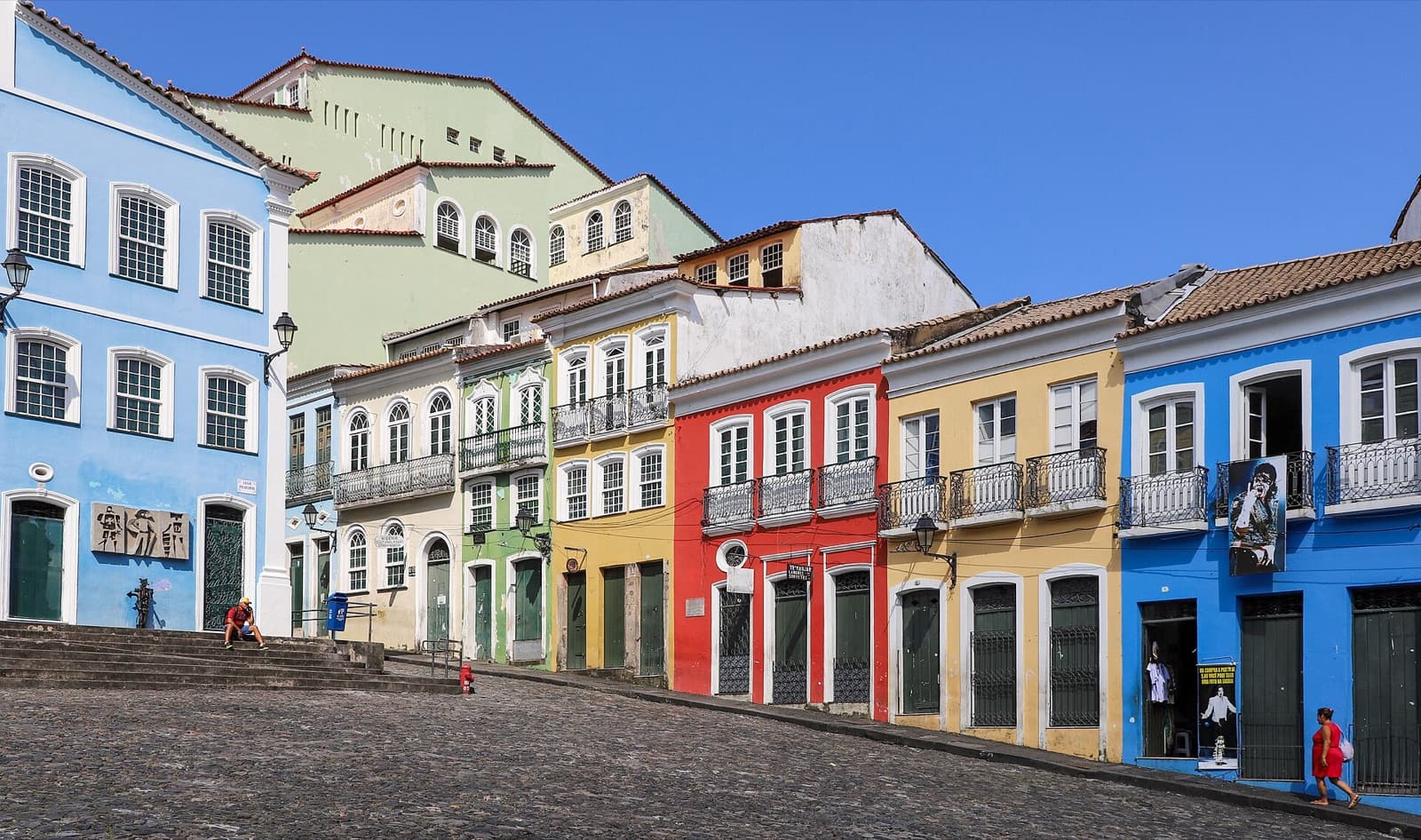
Circuito Batatinha (Pelourinho and the historic center): no giant trucks fit in the narrow colonial streets, so this circuit belongs to percussion groups, afoxés (processions rooted in Afro-Brazilian religious tradition), samba, and families. It is calmer, gorgeous in the daytime, and the most cultural of the three. It honors Batatinha, one of Bahia's great samba composers. Best for: daytime wandering, kids, and anyone who wants roots over decibels.
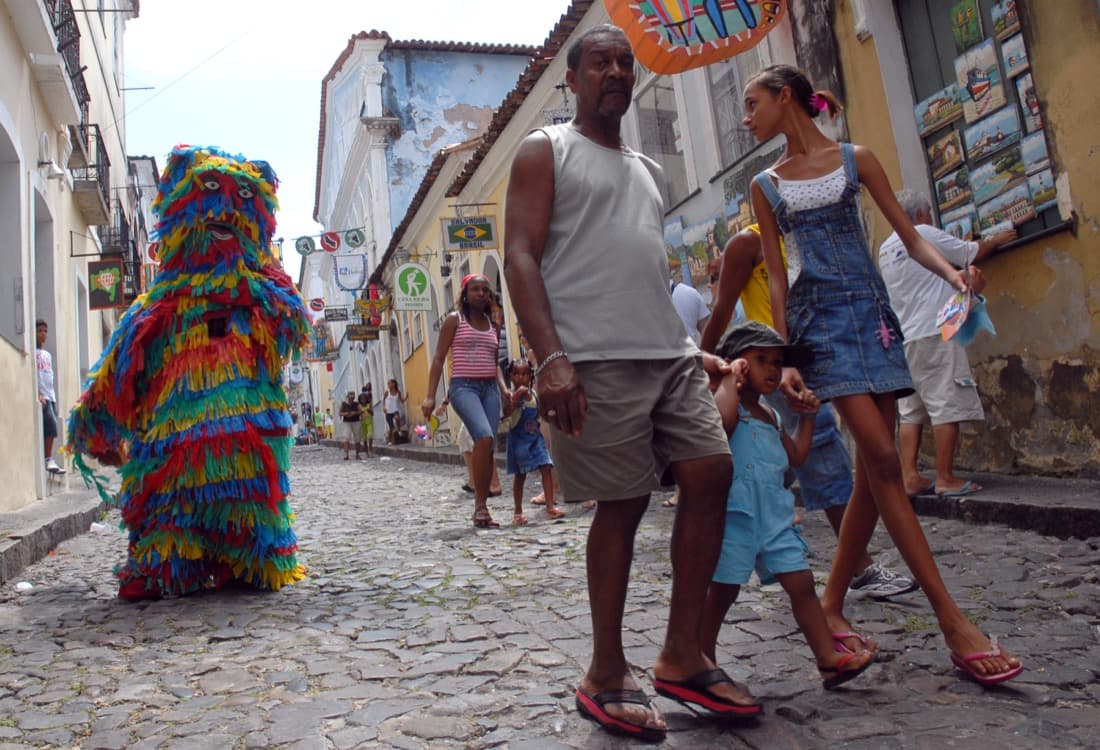
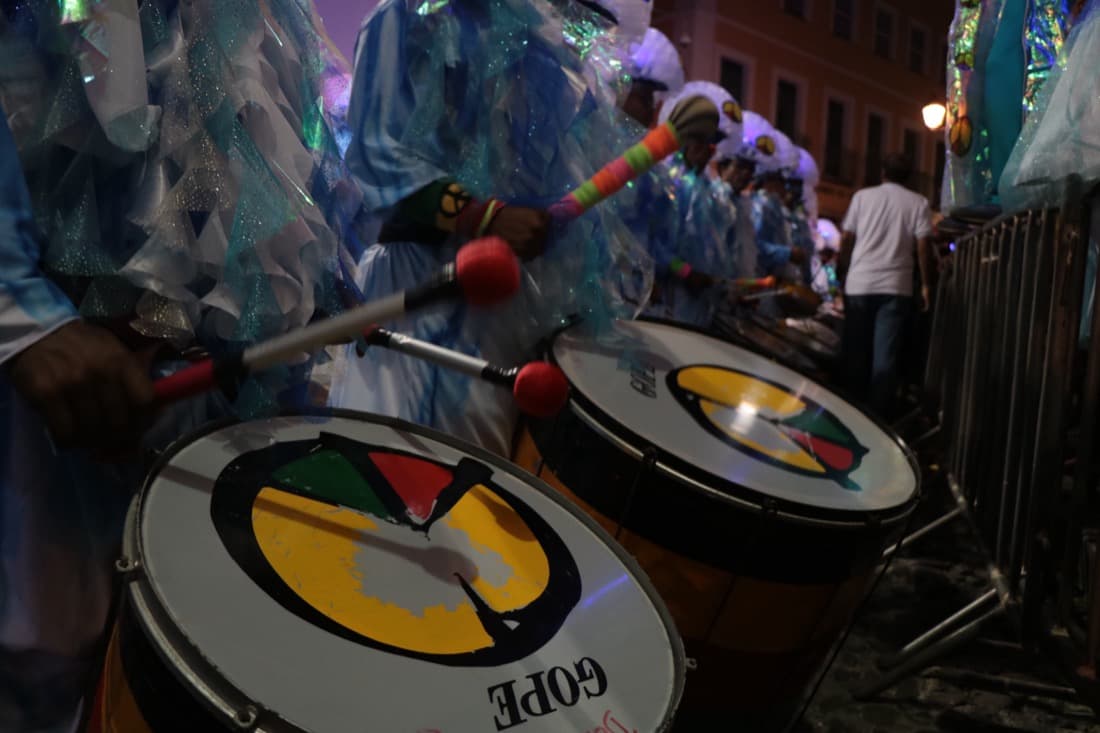
You do not have to marry one circuit. Our favorite rhythm is Pelourinho in the daytime, then Campo Grande or Barra as the sun drops.
Abadá, camarote, or pipoca: how do you join the party?
This is the decision that defines your budget and your experience, and it works day by day: you can do a different option every day of the festival.
- Bloco with an abadá: you buy a specific bloco's shirt (the abadá), which gets you inside the roped-off area moving with that artist's trio. Inside the ropes you get more space, security staff, and support cars with water and bathrooms. For Carnival 2026, day abadás ranged from R$240 (about US$48) for smaller blocos to R$2,150 (about US$430) for the most famous ones, like Bell Marques's Camaleão, with popular names like Léo Santana and Daniela Mercury in between. The trade-off: it is the priciest way to be in the middle of it, and you are tied to one artist for that day.
-
Camarote: a private stand along the avenue, mostly on the Dodô circuit, with bathrooms, a safe place to exist, and a view over the whole river of people; many include open bar and food. Prices in 2026 ran from a few hundred reais to over R$4,000 (about US$800) per day at the most famous ones. The trade-off: you watch the trios pass rather than move with one, and the good ones are not cheap. For most visitors we think it is worth it: this is the safest and most comfortable way to experience Salvador Carnival, and it is what we recommend for at least part of your trip.
-
Pipoca: the free crowd outside the ropes. The name means popcorn, for the way everyone bounces and pops around loose. It is the rawest and most democratic way in, and Bahians are rightly proud of it. But we will be blunt: we do not recommend the pipoca as your default plan. It gets crushingly dense, pickpocketing is constant, fights break out in the squeeze, and when a big trio passes it can feel genuinely unsafe, especially at night, especially alone, and especially if you do not speak Portuguese and cannot read the crowd.
If you do want to taste the street for free, do it on purpose, not by default. Our two exceptions, from our own Carnivals: follow BaianaSystem, whose Navio Pirata trio parades without ropes as a matter of principle and draws a crowd that is intense but there for the music, or Chiclete com Banana, the band whose name is practically a synonym for the trio elétrico era, when they are on the year's lineup (they sat out 2026 over sponsorship costs, so check the current programming before you plan around them). Go in a group, go with nothing you cannot lose, and step out to the edges when the density stops being fun.
Abadás and camarote tickets are sold online months in advance through official channels and resellers, and the famous blocos genuinely sell out. If a specific artist is the reason you are coming, buy early. Prices for 2027 are announced closer to the festival, so treat the numbers above as a calibration, not a menu, and the dollar and euro conversions as approximations at mid-2026 exchange rates.
Our honest advice for a first-timer: build your days around a camarote and one abadá day with an artist you love, and save the free street for a deliberate BaianaSystem or Chiclete moment with your group, in daylight, valuables at home.
If those numbers are the sticking point rather than the crowds, it is worth knowing that the same idea exists for nothing. Belo Horizonte runs hundreds of free street blocos with no ropes to be inside or outside of and nothing to buy, and it is where we send friends when the budget is what decides the trip.
Axé, blocos afro, and the music you will hear
The soundtrack is axé, the high-energy pop that Bahia invented in the 1980s by fusing frevo, reggae, samba, and Afro-Brazilian rhythms. Even if you think you do not know axé, you will recognize half the choruses by day two, because the same twenty songs will be tattooed on your brain. Learning a few before you fly changes everything: singing along with a hundred thousand people is the whole point.
The deeper layer, and for us the most moving one, belongs to the blocos afro and afoxés that carry Salvador's Black culture through the festival:
- Filhos de Gandhy: the most famous afoxé, founded by dockworkers in 1949 and named for Mahatma Gandhi. Thousands of men in white robes and turbans with blue-and-white beads flooding the street is one of the most beautiful sights in any Carnival on Earth.
- Olodum: the Pelourinho institution whose drummers created samba-reggae in the 1980s. If their rhythm sounds familiar, you may know it from their recording with Michael Jackson.
- Ilê Aiyê: founded in the Liberdade neighborhood in 1974 as Brazil's first bloco afro, and still a statement of Black pride and gorgeous drumming every year.
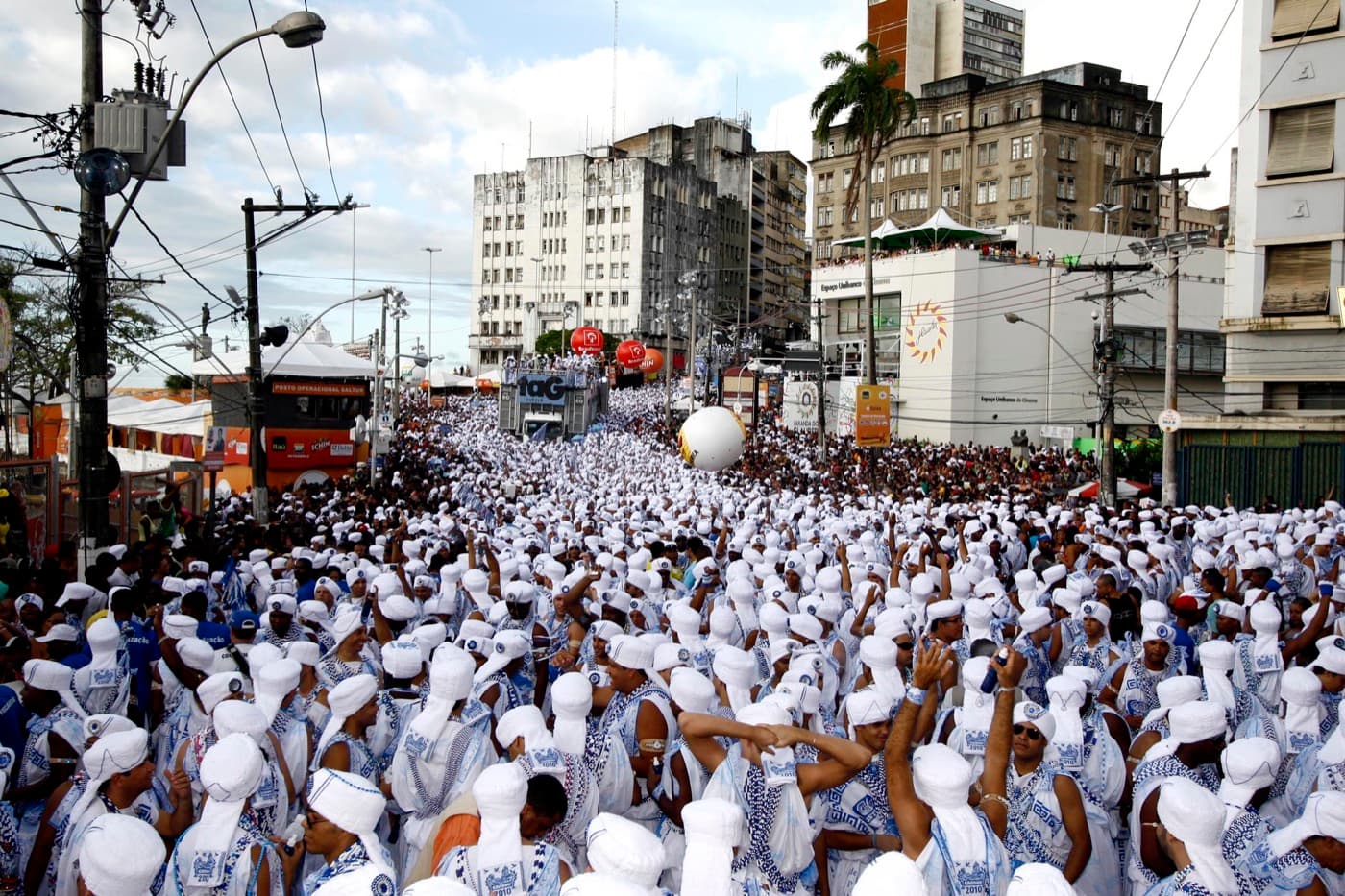
If you catch one cultural moment on purpose, make it one of these groups passing. It reframes the whole festival from a party into a living tradition.
Where should you stay in Salvador for Carnival?
Rooms near the circuits sell out months ahead and prices multiply, so book as early as you possibly can. The classic bases:
- Barra: inside the party. You can walk home from the Dodô circuit, which at 3am is worth a lot. The flip side is noise, crowds at your door, and peak pricing. Our pick if you are going all in.
- Ondina: the hotel strip at the far end of the Dodô circuit. Slightly removed from the densest stretch, with bigger beach hotels.
- Corredor da Vitória: the leafy avenue between Campo Grande and Barra. Close to both main circuits and a notch calmer than either. A very sane compromise.
- Rio Vermelho: Salvador's bohemian nightlife neighborhood, a short ride from Ondina. Not on a circuit, which is exactly why some people love staying there: restaurants, bars, and the option of actual sleep.
- Pelourinho and the historic center: beautiful and right on the Batatinha circuit, but rooms are scarce, and we would not wander its emptier side streets alone late at night.
How do you get around during Carnival?
Accept this early: near the circuits, you will walk. The avenues along the routes close to traffic, and the crowds close everything else.
- Metro: Salvador's two metro lines do not reach Barra or Ondina, but they are useful for the Campo Grande side: Lapa and Campo da Pólvora stations put you within a walk of the Osmar circuit and the historic center. The system usually runs extended hours during Carnival; check the current schedule closer to the date.
- Uber and taxi: they work well the rest of the year and remain the best tool during the festival, but drivers can only drop you at the edge of the closed zone. Plan for surge prices and a final stretch on foot.
- The airport: Salvador's airport is roughly 30 km from Barra. Outside Carnival that is a 40 minute ride; during the festival, give yourself a very generous buffer, especially for the flight home.
And a warning from experience: phone signal dies in the densest crowds. Agree on a fixed, unmovable meeting point with your group before you enter a circuit, and sort your connectivity before you land with our guide to SIM cards in Brazil.
Survival tips we learned the sweaty way
Salvador in February is hot, loud, and long. Six days of trio-chasing is an endurance event, and the people having the most fun on day five are the ones who respected that on day one.
- Sneakers, always. The pipoca is no place for flip-flops: feet get stepped on constantly and there is glass on the ground by nightfall. This is the single most repeated piece of advice among Brazilians, because it is true.
- Sunscreen and water, aggressively. The sun is brutal even on cloudy days, and you will sweat more than you think. Street vendors sell water everywhere; buy it every time you think of it, not just when you are thirsty.
- Carry almost nothing. A little cash, one card, your phone in a front pocket or money pouch, ideally waterproof. Leave jewelry, watches, and your good sunglasses at home. In the pipoca, assume anything loose can vanish.
- Pace yourself. The festival runs nearly a week, plus warm-up days. Build in a slow morning, a beach hour, or a Pelourinho afternoon between big nights.
- Respect consent. Flirting at Brazilian Carnival is direct, but não é não: no means no, always. The same campaign slogans you see in Rio apply here.
- Ask locals which blocos are worth it. Lineups are announced in the months before Carnival and change every year, so we are deliberately not printing a schedule that would rot. Bahians are proud of their party and will happily point you to the right trio for your taste.
Here is the truth we tell friends: Salvador Carnival will wreck you a little. Your feet will hurt, your voice will go, and at some point in a two-million-person crowd you will wonder what you were thinking. Then the next trio rolls in, the ground shakes, everyone around you sings the same chorus at the same second, and you understand why Bahians call this the greatest party on the planet. Go, surrender to it, and let Salvador show you what a street can do.
Want more practical tips for Brazil? Join our newsletter and get notified of our latest posts.