Morro de São Paulo: The Perfect Addition to Your Salvador de Bahia Itinerary
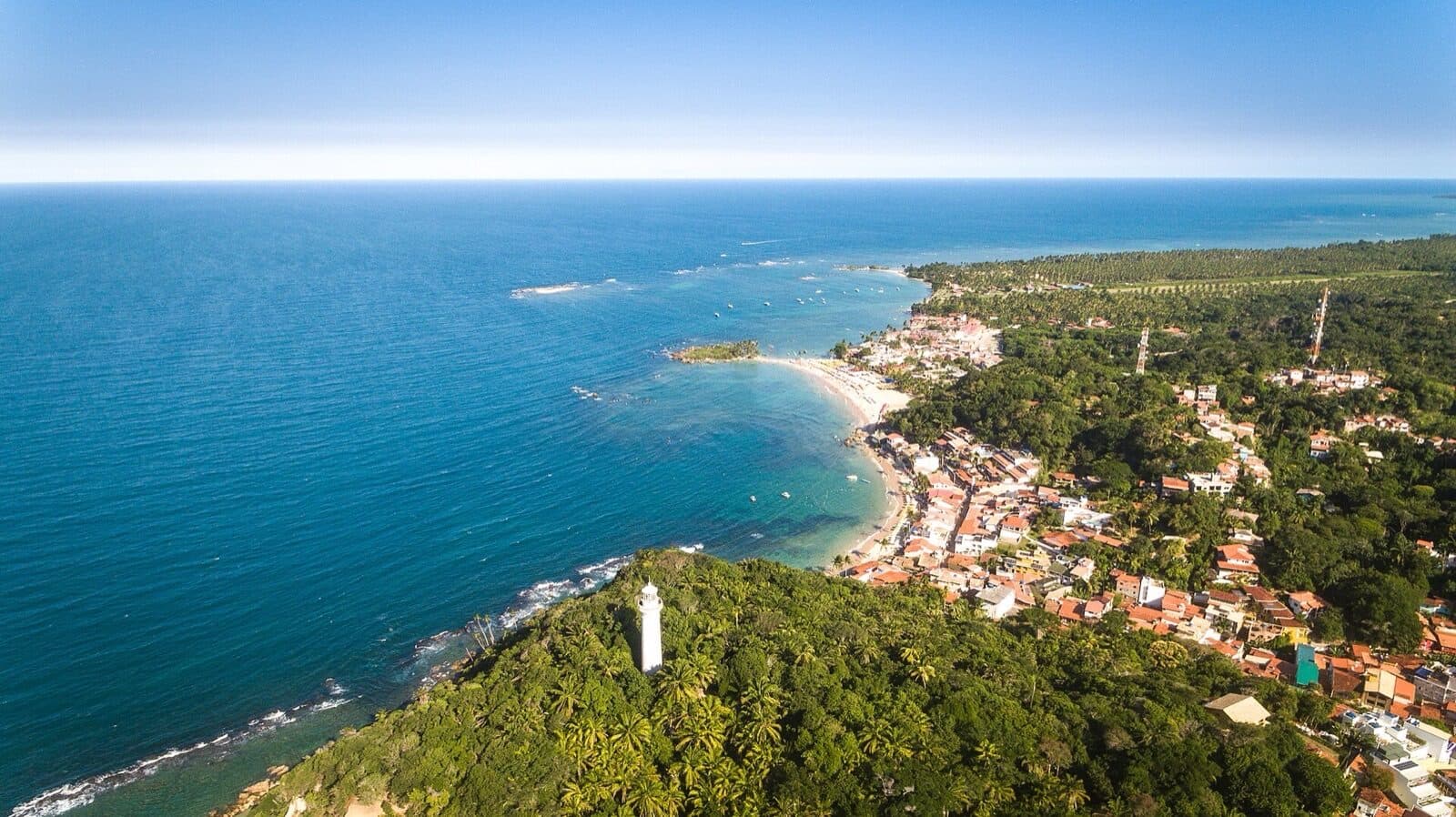
If you are already going to Salvador and have two or three nights spare, we usually tell people to spend them in Morro de São Paulo. It is a village on the tip of Tinharé island, a few hours south of the city, and it works well after Salvador because it is so different. There are no cars, the streets are sand, luggage comes up from the pier in a wheelbarrow, and the beaches are numbered rather than named.
Morro is not a hidden find. In December and January the boats come in full, the village gets crowded, and prices climb with the season. Outside those weeks it is much calmer. Below we cover the three ways to get there from Salvador, when to go, what each of the five beaches is like, what to do besides lie on them, and the practical things that catch first-time visitors out, starting with the entry tax everyone pays on arrival.
TL;DR
Direct catamaran from central Salvador: about 2h30; the last boat back leaves mid-afternoon
Stay 2 to 3 nights; August to November is the best balance of weather and crowds
Everyone pays a one-time entry tax on arrival (details below)
Segunda Praia for action, Quarta and Quinta for quiet; natural pools appear at low tide
No cars and few ATMs: pack light and bring cash
Why add Morro de São Paulo to a Salvador trip?
Salvador has beaches, but they are city beaches, with traffic running along behind them. Morro gives you the other kind: reef pools, coconut palms, and a village small enough to walk across, close enough to reach without booking another flight. If you have read our Ilha Grande guide, the appeal is much the same, with no cars and boats doing the work of roads.
The logistics are simple too, which is not always the case with islands in Brazil. The main connection is one boat, and it leaves from the old town in Salvador. Three or four days in the city plus two or three nights on the island fits into a week without much planning.
The catch is that the village lives off tourism and you can feel it. Segunda Praia has loud music and busy restaurants, prices are higher than on the mainland, and in January it is packed. If what you want is an empty island, you will only find it on the far beaches here, or on Boipeba next door, which is quieter.
How do you get from Salvador to Morro de São Paulo?
There are three ways to do it. Which one suits you mostly comes down to your budget and how well you handle boats.
Direct catamaran (our pick for most people)
Catamarans and fast boats leave from the Terminal Náutico da Bahia, in front of the Mercado Modelo in central Salvador, and go straight to Morro's pier in about two and a half hours. As of mid-2026 the one-way fare is roughly R$140–R$175 (about US$27–34), varying by company and direction. Three companies run the route (Biotur, Ilha Bela, and Farol do Morro), with departures spread between about 8:30am and 2:30pm, and returns from Morro ending around 3pm. Schedules shift with season and sea conditions, so confirm the day before, and book ahead in high season.
Part of the crossing is open ocean, though, and on a windy day the boat rolls a lot. If you get seasick, take a tablet before boarding and sit toward the back. When conditions are bad enough, the companies sometimes move everyone onto the overland route below.
Semi-terrestrial (cheaper, calmer water)
This route combines a ferry from Salvador's São Joaquim terminal to Itaparica island, a van or bus across to the Valença area, and a final speedboat hop of 15 to 30 minutes to Morro. Count on 4 to 5 hours door to door. Agencies sell it as a single ticket for around R$145–R$185 (about US$28–36) plus a boarding fee of about R$20 (about US$3.90), with hotel or airport pickup; doing it on your own with public ferries and buses costs a bit under R$100 (about US$19) in 2026. It takes longer, but nearly all of it is on sheltered water or on the road, so it is the better option if the catamaran has already made you ill once.
Air taxi (fast and scenic)
Abaeté flies small Cessna Caravan planes from Salvador airport to the island's airstrip in about 20 minutes, usually R$550–R$750 (about US$110–140) one way in 2026, with promotional fares sometimes lower. It turns half a day of travel into a short hop over the bay, and the view is worth having. If you can afford it for one leg, we would fly in and take the boat back.
Whichever route you take, do not book a tight connection from Morro to a flight out of Salvador on the same day. Weather can delay or reroute the boats. Leave most of a day spare, or spend your last night back in the city.
When is the best time to visit Morro de São Paulo?
Bahia does not follow the same seasons as Rio and the south, which we go into in our guide to the best time to visit Brazil. For Morro specifically:
- August to November: the best window. The rain eases off, the sea is warm and calm, and the village is busy without being packed. This is when we would go.
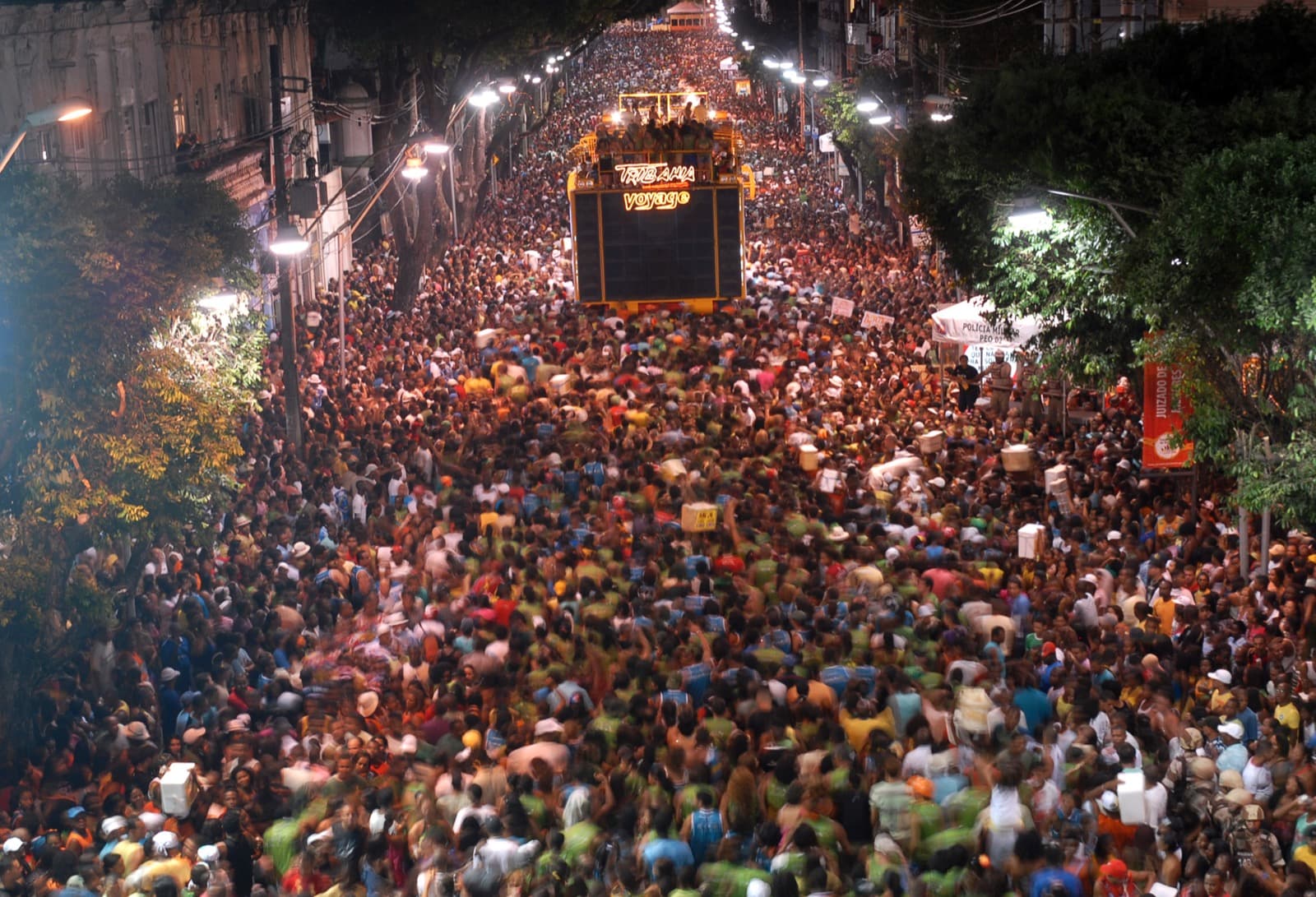
- December to February: the busy season. Beach parties most nights, DJs on Segunda Praia, and the island at capacity. Fine if that is the trip you want, but book boats and rooms well in advance and expect to pay peak prices. A lot of people come straight here after Salvador's Carnival, so the week that follows it is busy too.
- April to July: the wettest months. This is when most of Bahia's rain falls. It rarely rains all day, and the usual pattern is a heavy shower followed by sun, but you will get grey days, more boat trips are cancelled, and the natural pools lose their clarity. Prices are lower to match.
Long national holiday weekends fill the island up whatever the month, so check the Brazilian public holidays calendar before you book dates.
How many days do you need in Morro de São Paulo?
Two to three nights. That is enough for a full day on the beaches and in the pools, another for a boat trip or for the fort and the lighthouse, and a bit of slack in case the weather turns. You can do it as a day trip from Salvador, but the last catamaran back leaves mid-afternoon, so you would spend around five hours on boats for a few hours on the sand. If one day is all you have, we would spend it in Salvador and leave Morro for a trip that can give it a night or two.
What are the five beaches like?
The village sits at the tip of the island and the beaches run south from it in order, so the higher the number, the quieter it gets. You walk between them along the sand, and Primeira to Quarta is a long walk rather than a hike.
- Primeira Praia: a few minutes below the village and the pier. It is small and usually busy, it gets the island's surf, and it is where the zipline drops people into the water. Fine for a swim, less good for a whole day.
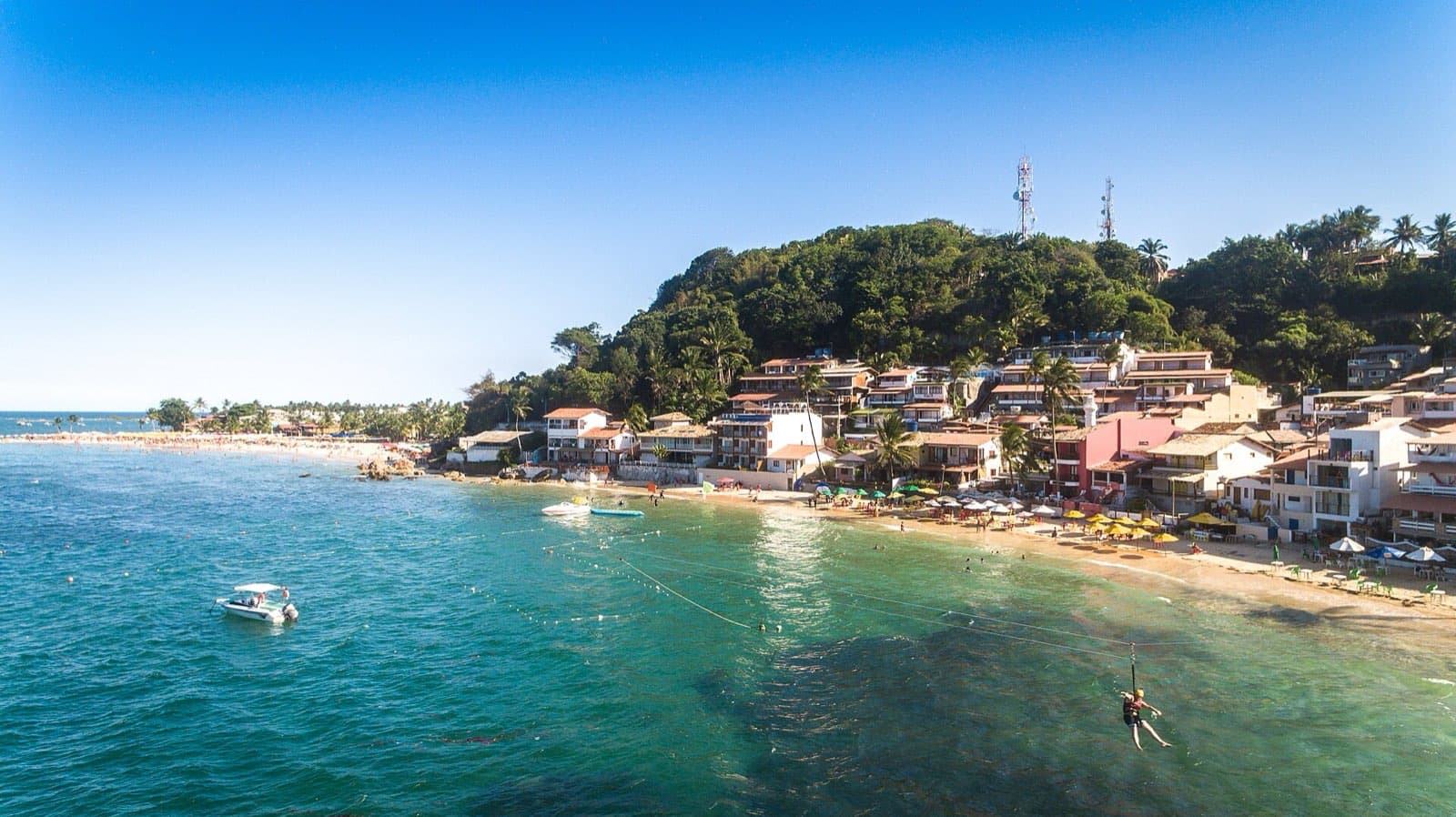
- Segunda Praia: the busiest one, and the one in most of the photos. Restaurants and barracas (beach bars) run along the sand, music plays all day, and the nightlife is concentrated here. The water is calm and shallow for swimming. It is not quiet at any hour.
- Terceira Praia: calmer, with reefs sheltering the water and a row of pousadas (guesthouses) behind it. Most boat trips leave from here. At high tide the sand narrows to almost nothing, which is worth knowing before you book a room on it.
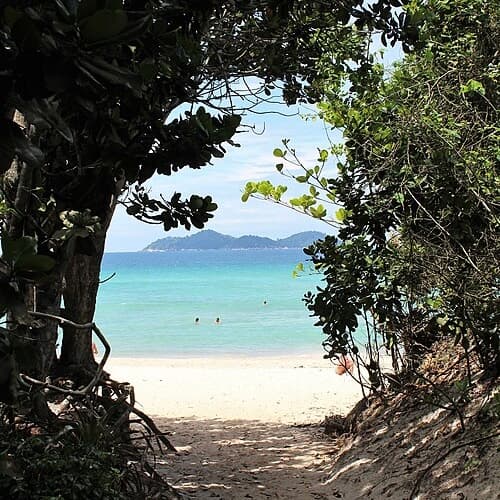
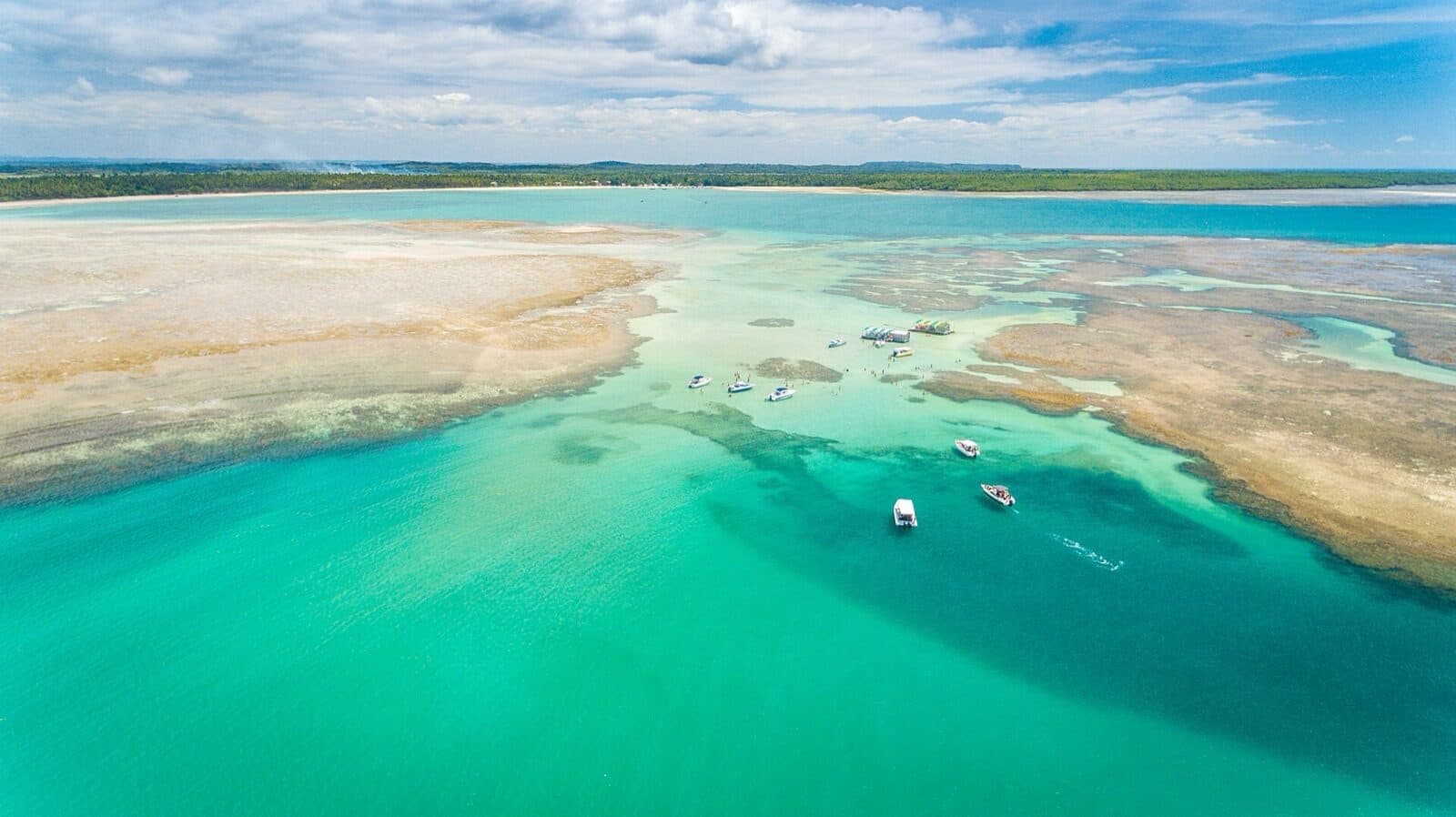
- Quarta Praia: long, quiet, and backed by palms, with the island's biggest natural pools appearing on the reef flats at low tide. This is our favorite for a whole day, but bring water and cash, because there is much less on the beach here.
- Quinta Praia (Praia do Encanto): the last one, reached by carrying on along the same stretch of sand. Almost empty, with mangroves at the edges and a few hotels spread far apart.
Check a tide table (tábua de marés) and plan your pool day around low tide. At low tide the reef flats fill with clear, shallow pools you can stand in; at high tide they are simply underwater. It makes more difference to the day than the month you visit does.
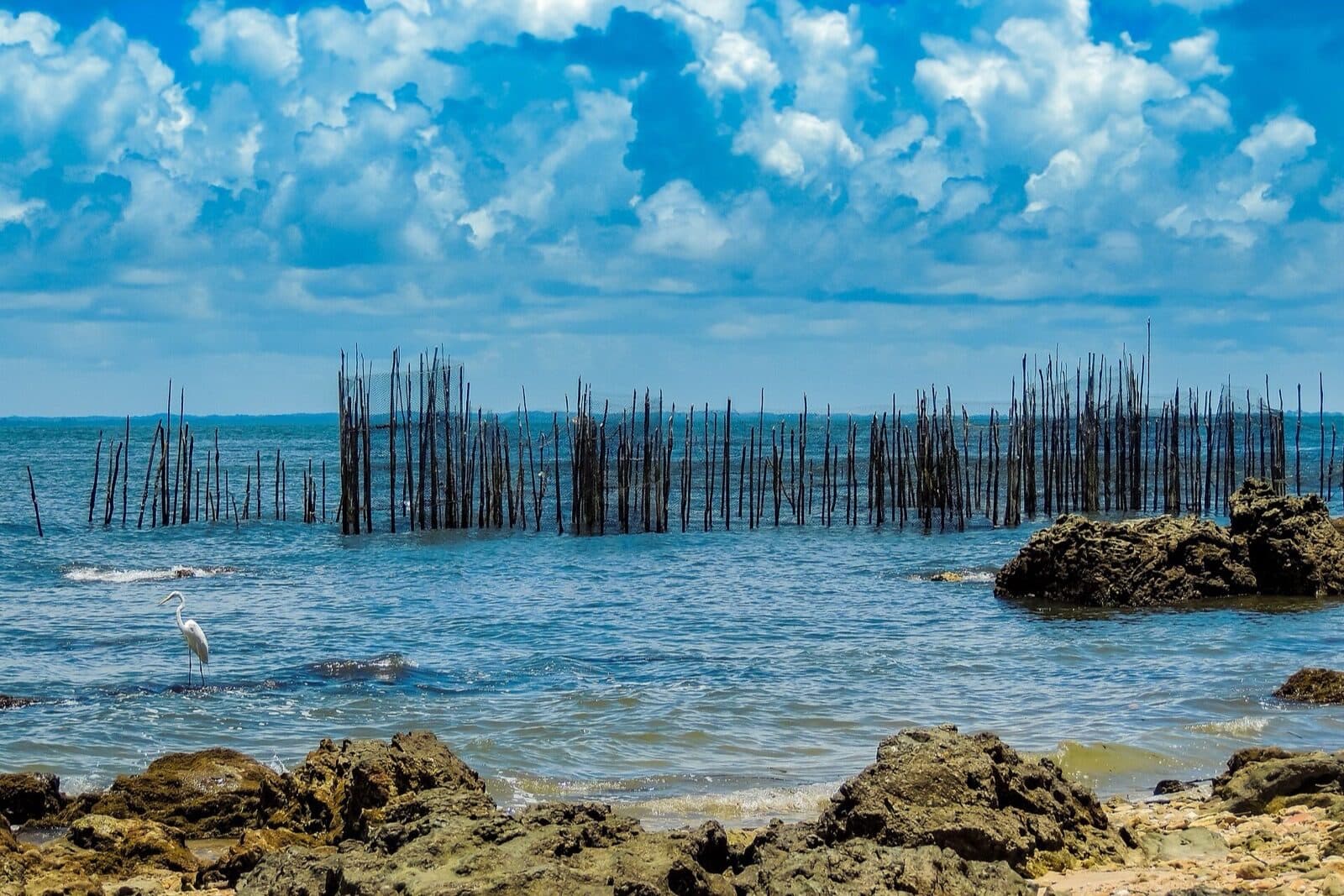
There is also Gamboa, a fishing village on the sheltered side of the island, facing the mainland. You get there by boat from the pier, or on foot around the point at low tide. Ask locally before walking it, because whether the route is passable depends on the tide. The water is calm, the restaurants are simple, and it is more of a working village than anything on the numbered beaches.
What else is there to do besides the beaches?
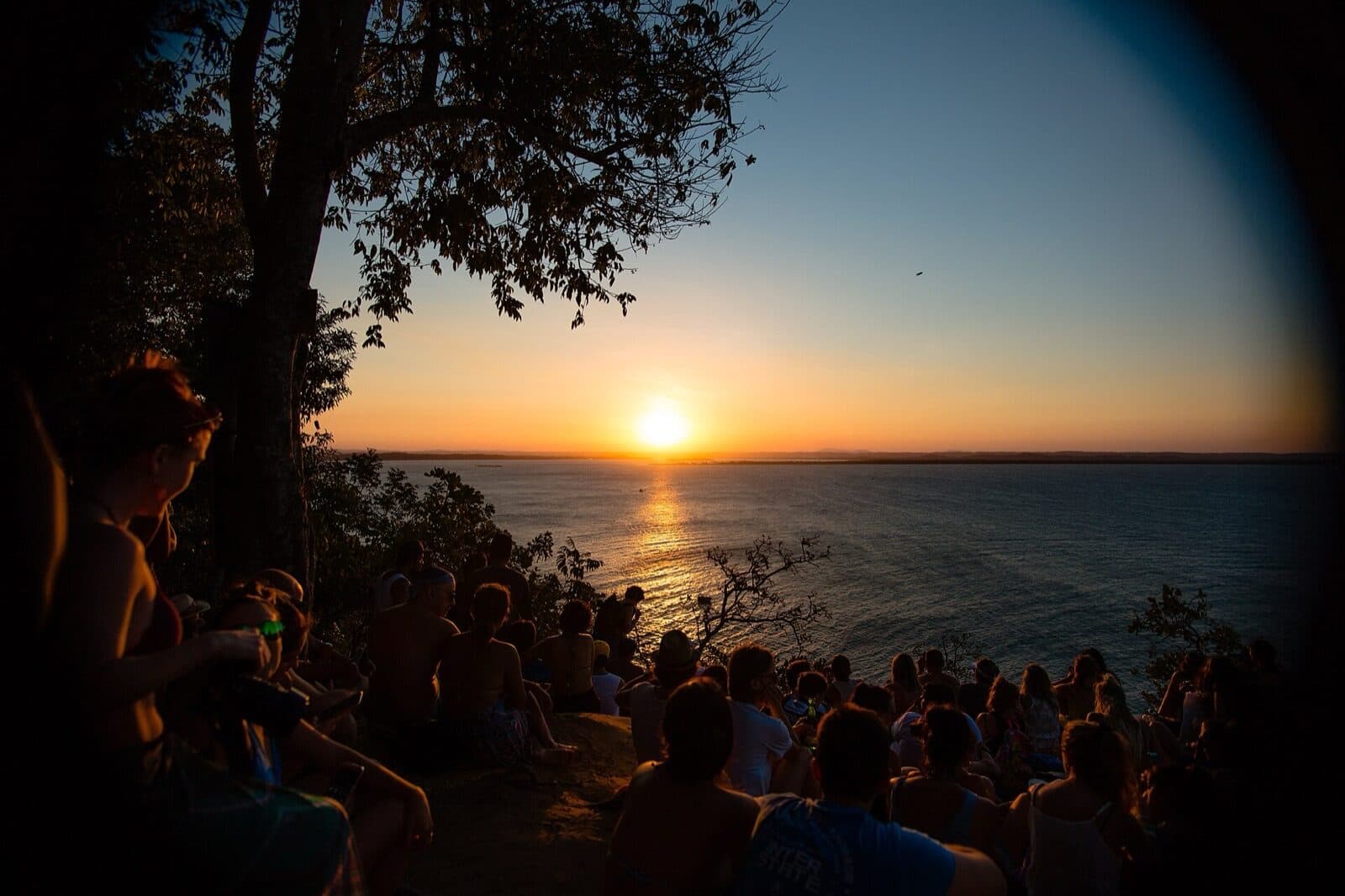
Watch the sunset from the fortress. The Fortaleza de Tapirandú was begun in 1630 to guard the channel, and its ruined walls run along the waterline below the village. Entry is free and you can walk the restored ramparts. In the late afternoon most people end up here or on the hill above it, and we would not skip it.
Ride the zipline off the lighthouse hill. A cable of roughly 300 meters runs from the viewpoint by the Farol do Morro, the island's old lighthouse, down into the sea off Primeira Praia. It costs around R$95 (about US$18) in 2026. The ride itself is over in seconds, but the climb up is worth doing for the view even if you do not go down the wire.
Do the Volta à Ilha boat trip. The full-day tour leaves Terceira Praia at about 9:30am and gets back late in the afternoon, going around the archipelago: the natural pools at Garapuá, time on the beach at Boipeba (the wilder neighbor island), oysters at the floating restaurants in the mangrove channel near Canavieiras, and the colonial village of Cairu with its 17th-century Franciscan convent. In 2026 it costs around R$350 (about US$68) per person, with lunch and the oysters paid separately. It is a long day out. If Boipeba turns out to be the part you like best, it is worth going back for a few nights of its own.
Catch the sunset at Toca do Morcego. A bar built into the cliff on the lighthouse path, with a deck facing the sunset. It opens in the late afternoon and closes on Tuesdays. In 2026 the cover charge runs from about R$20 (about US$3.90) on a quiet day to over R$100 (about US$19) when a big name is playing. It is very touristy, and we still enjoy it.
What should you know before you go?
- Everyone pays an entry tax. The TUPA is a one-time charge for the archipelago, paid at the pier when you arrive or in advance through the official TUPA app. As of July 2026 it is R$70 (about US$14) per person, and Cairu town hall has set an increase to R$90 (about US$17) from August 1, 2026. Children under 5 and travelers over 60 do not pay.
- Luggage goes by wheelbarrow. Porters meet the boats and will take your bags up the hill to your pousada for roughly R$20–R$50 (about US$3.90–9.70), depending on how much you have and how far it is. Agree the price before they start. Pack light if you can, because a hard suitcase is awkward on sand.
- Bring cash. Hotels and restaurants take cards and Pix, but there are only a couple of bank ATMs on the island and they run out in high season. Bring what you expect to need from Salvador, particularly for beach vendors, porters, and the quieter beaches. Our guide on paying and tipping in Brazil covers the rest of the money side.
- You walk everywhere, and the tide sets the timetable. The paths are sand and stone and there is no transport, so plan your days around low tide and sunset rather than fixed times. Bring sandals with some grip for the hill up from the pier.
- It feels safe, but take the usual care. The village is small and full of people who live there year round. Even so, do not leave a phone lying on the sand while you swim, and keep your things close at the night parties.
Salvador and Morro de São Paulo are very different places, which is exactly why they go well together. A few days in the city, then a boat south to a village with no cars in it, is about as much of Bahia as you can see in a week without rushing. Book the catamaran and go!
Want more practical tips for Brazil? Join our newsletter and get notified of our latest posts.