Pantanal Jaguar Tour: How to See Wild Jaguars in Brazil
Some links in this guide are affiliate links: if you buy or book through them, we earn a small commission at no extra cost to you. It never changes what we recommend. Here’s how we make money.
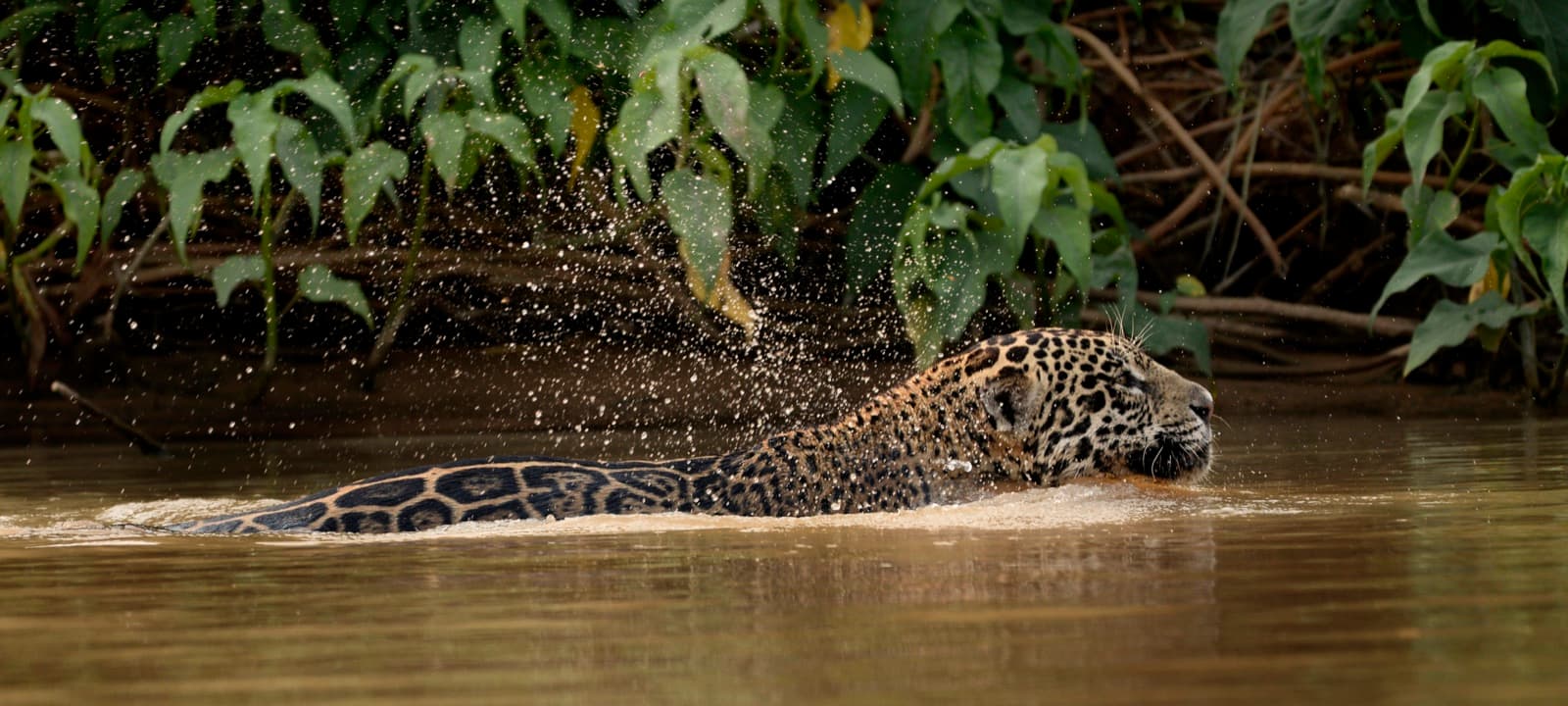
Jaguars are famously hard to see. They are solitary, mostly nocturnal, and spread thin across dense forest, which is why people spend weeks in the Amazon and go home with photos of trees. Then there is the Pantanal, where you sit in a boat with a cold drink and watch one walk along the riverbank in full afternoon sun.
That is not an exaggeration, and it is not luck either. In a narrow stretch of rivers in the northern Pantanal, jaguars hunt capybara and caiman along open banks, they have grown used to boats over twenty years of tourism, and the dry season squeezes them into a few kilometers of water. Sighting rates in season run above 90 percent. The catch is that this is one of the more expensive and logistically committed trips in Brazil: a long dirt road, a short season, and a price tag that surprises people.
Here is how the trip actually works, what it costs, and how to decide if it is your kind of thing.
TL;DR
Go to Porto Jofre, at the end of the Transpantaneira road in the northern Pantanal
Season is everything: July to October, when sighting rates run above 90 percent
Book three nights, which buys you two full days on the boat
Take the transfer from Cuiabá rather than driving yourself, unless budget is tight
All-inclusive packages from Cuiabá ran roughly 1,800 to 2,600 US dollars per person in July 2026
Yellow fever vaccine, no phone signal, and bring cash
Where do you actually go to see jaguars?
Porto Jofre, a tiny cluster of lodges at the southern end of the Transpantaneira road, in the state of Mato Grosso. From there, boats run out onto the Cuiabá, Piquiri, São Lourenço, and Três Irmãos rivers, which wrap around Encontro das Águas State Park, a protected area of roughly 109,000 hectares split between the municipalities of Poconé and Barão de Melgaço.
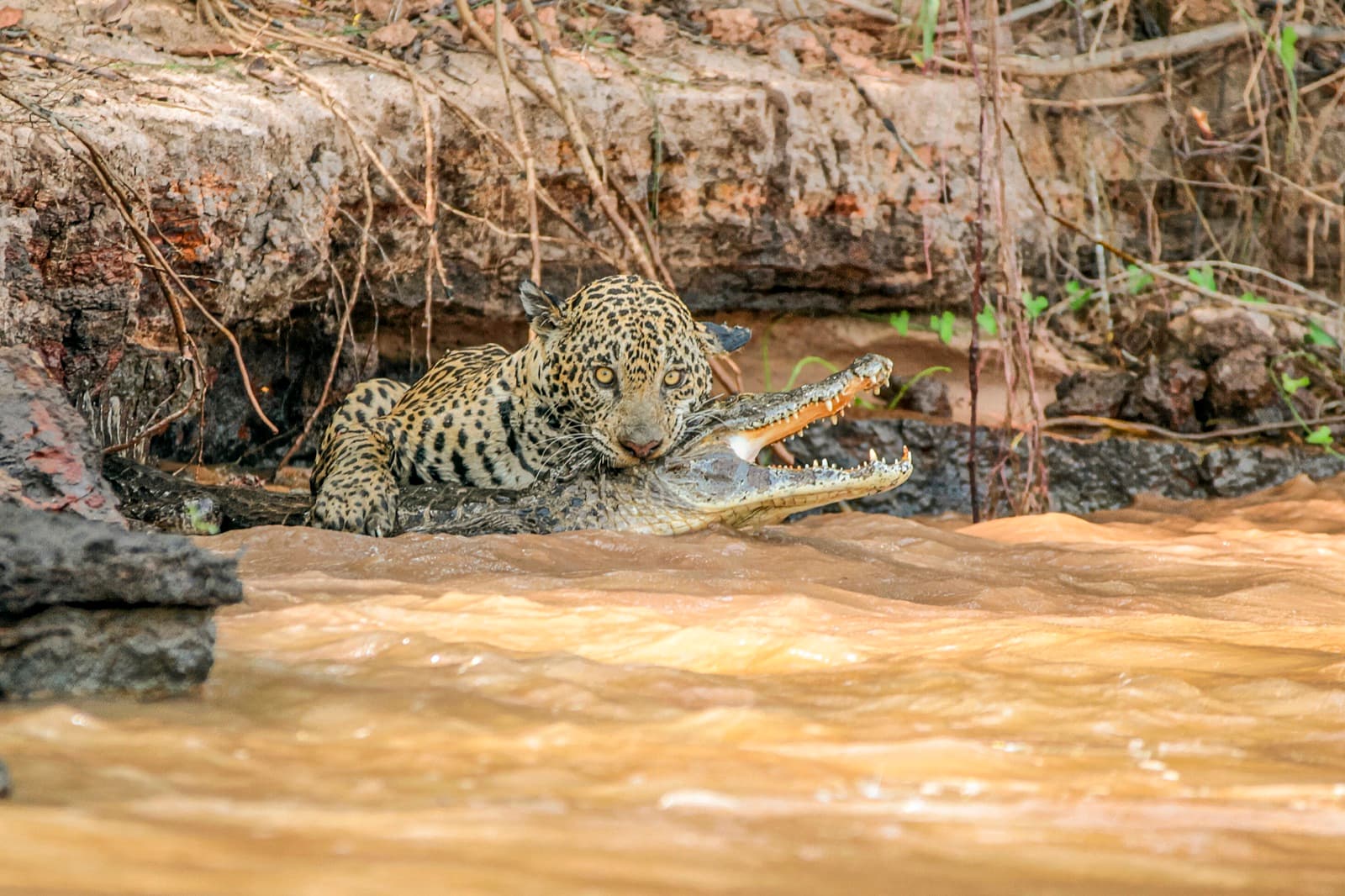
Two things make this the place rather than a place. The first is density: this stretch holds one of the highest concentrations of jaguars recorded anywhere, and researchers with the Jaguar Identification Project have catalogued hundreds of individual cats here since the mid-2000s, identifying them by their spot patterns much the way you would use a fingerprint. The second is habituation. Two decades of boats keeping a respectful distance have produced jaguars that treat a quiet vessel as scenery, so they hunt, swim, and nap without bolting.
It also helps that Pantanal jaguars are the biggest in the Americas. Males here commonly weigh 80 to 100 kilos, well above their Central American cousins, on a diet of capybara and caiman.
One expectation to reset before you book: this is a boat trip. You are not tracking cats on foot through a jungle. You spend your days sitting in a small open boat scanning the banks, often for hours, while a guide reads the water and the radio chatter from other boats. If that sounds tedious, it is worth being honest with yourself now. If it sounds like a very good day, you will love it.
When is the best time for a jaguar tour?
The dry season, roughly July to October, and the season is not a preference, it is the whole strategy. As floodwaters recede, the animals concentrate along shrinking rivers, the banks open up, and the dirt road in stays passable. This is when operators report sighting rates above 90 percent across multi-day trips, and multiple sightings in a single day are normal at the peak.
The wet months, roughly December to May, invert all of it. Water spreads across the floodplain, the wildlife disperses with it, and the Transpantaneira's wooden bridges can flood out. Some lodges simply close. If your dates are locked to January, this trip is not the one to force; our guide to the best time to visit Brazil has better options for those months.
Two honest caveats about the dry season. It is also fire season, and the Pantanal has had brutal ones: fires burned more than 85 percent of Encontro das Águas State Park in 2020, and 2024 was the region's worst fire year on record. Trips generally still run, but smoke haze can flatten photography for days. Drought is the other one. In June 2026, operators in the area suspended paddle-boat outings because river levels had dropped too low, while the motorized jaguar safaris ran as normal.
How do you get to Porto Jofre?
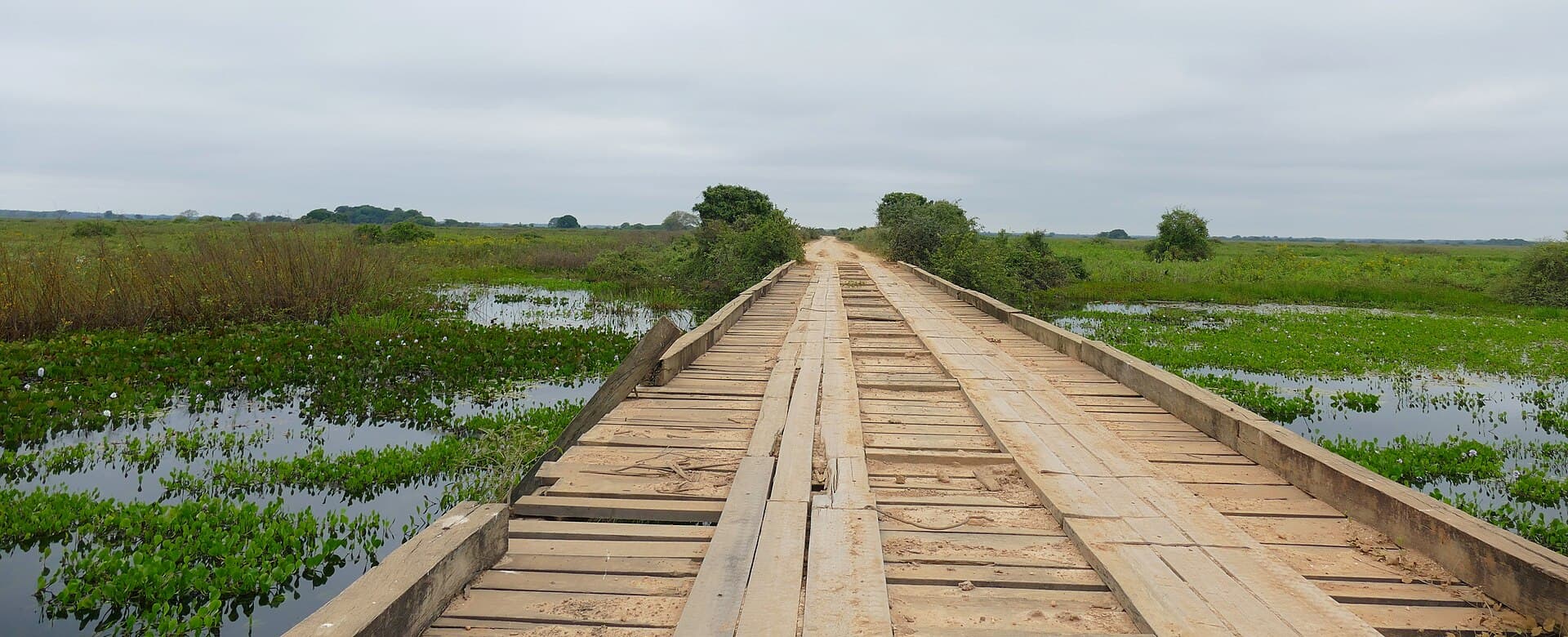
Everything starts in Cuiabá, the capital of Mato Grosso, which has direct flights from São Paulo in about two hours and twenty minutes, plus connections from Brasília and Belo Horizonte. From Cuiabá it is roughly 245 kilometers to Porto Jofre: paved as far as Poconé, then the Transpantaneira, about 145 kilometers of raised dirt road running dead straight into the wetland and crossing more than a hundred wooden bridges. Allow four to five hours in the dry season.
Let someone else drive it. Nearly every lodge and operator includes the road transfer from Cuiabá, and we would take it. You are not missing anything by riding in the back: the Transpantaneira is one of the best wildlife corridors in the country, and a driver who works it daily will stop for the caiman, capybara, and hyacinth macaws you would blow past yourself. You also arrive able to go straight out on a boat rather than tired from five hours of ruts and bridge planks.
The alternative is an air taxi, which lands on the Porto Jofre airstrip in under an hour. It costs considerably more, but it turns a travel day into a morning.
Driving yourself only really makes sense on budget grounds. Turning up with your own transport lets you book a room and a boat directly rather than a bundled package, and that is where the saving sits. If you go that way, take a high-clearance vehicle, because the bridges are wooden, single-lane, and in varying states of repair, and fill your tank in Poconé, because there is no fuel along the Transpantaneira.
One more thing worth knowing: there is no mobile phone signal at Porto Jofre, so tell people at home they will not hear from you, and sort out anything time-sensitive before you leave Cuiabá.
What is a jaguar safari day actually like?
Boats leave Porto Jofre early, and the standard day is either a full day on the water, commonly six to eight hours with lunch served aboard, or a split of a morning and an afternoon outing with the hot middle of the day spent back at the lodge. Boats are small and open, typically carrying somewhere between four and a dozen people, and the good operators keep numbers low so everyone gets a clear side.
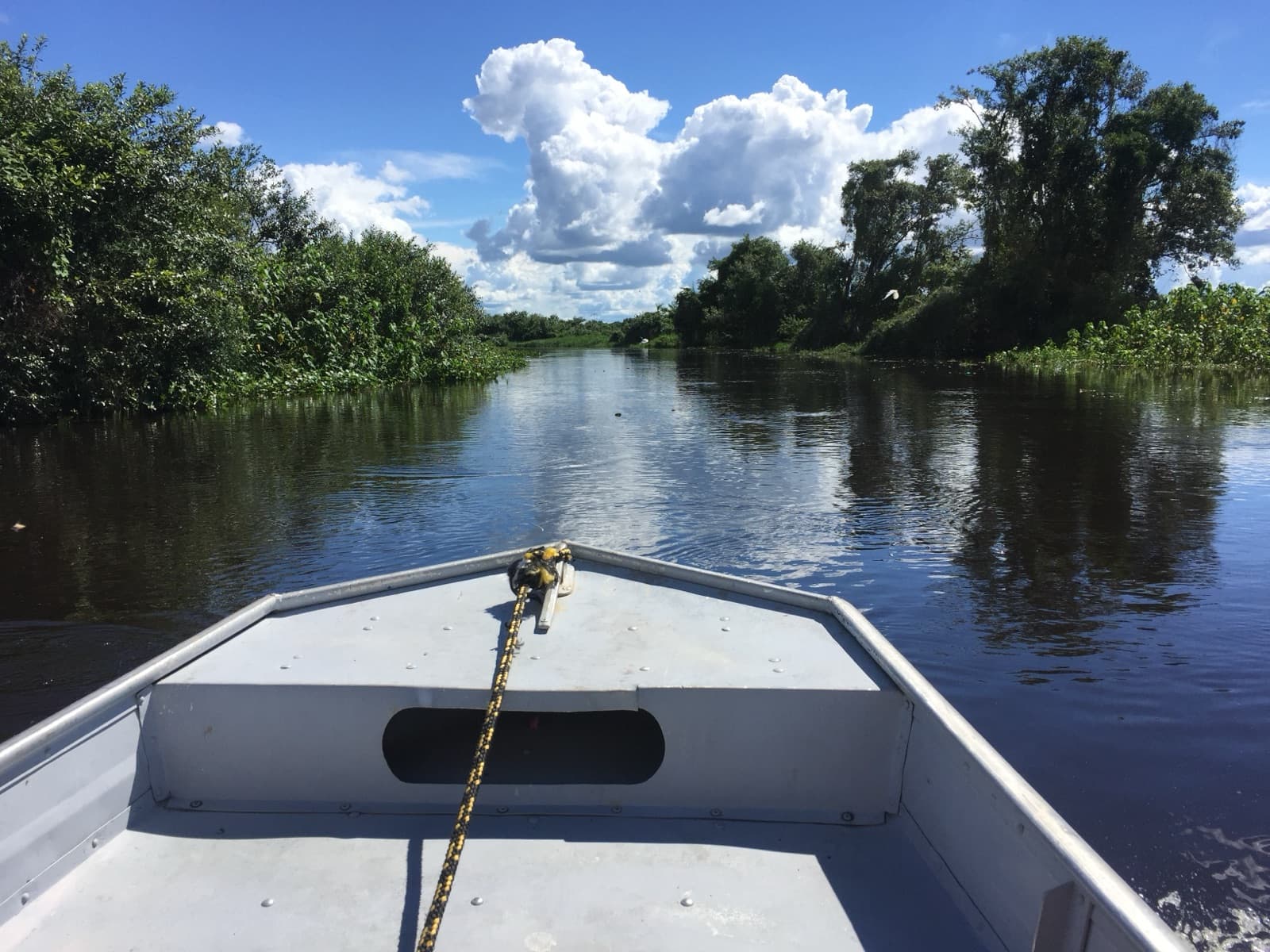
Finding the cats is a collective effort. Guides work the radio constantly, and when someone spots a jaguar the nearby boats converge. That is where the rules come in: since 2011, a Mato Grosso state resolution has governed how big cats are watched here, capping observation at 20 minutes per sighting, requiring boats to hold a safe distance, and prohibiting anything that alters the animal's behavior, including feeding or baiting and any noise-making device. Cameras, binoculars, and scopes are fine. A guide who ignores those limits is not giving you a better trip, they are burning the thing that makes the place work.
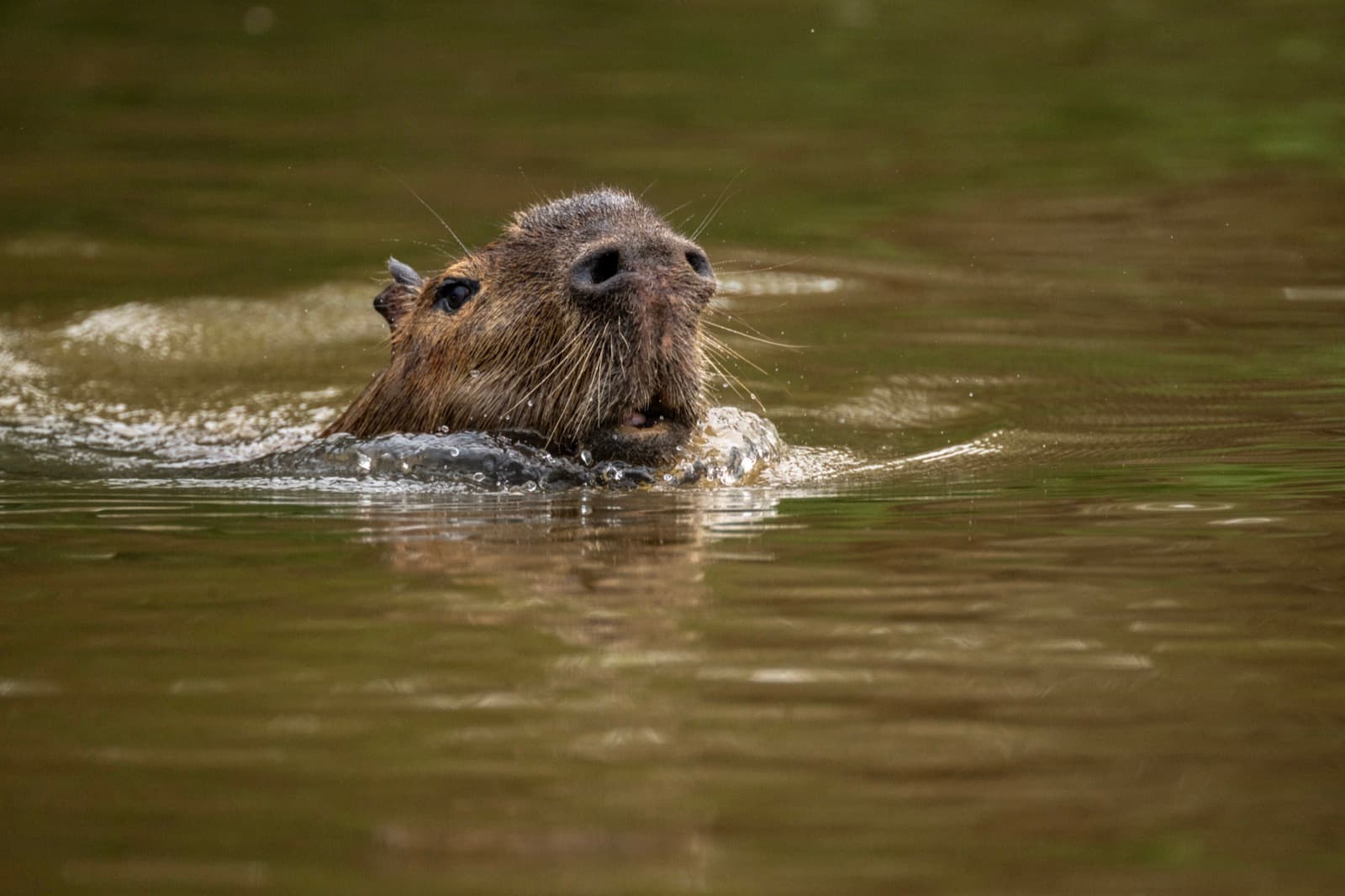
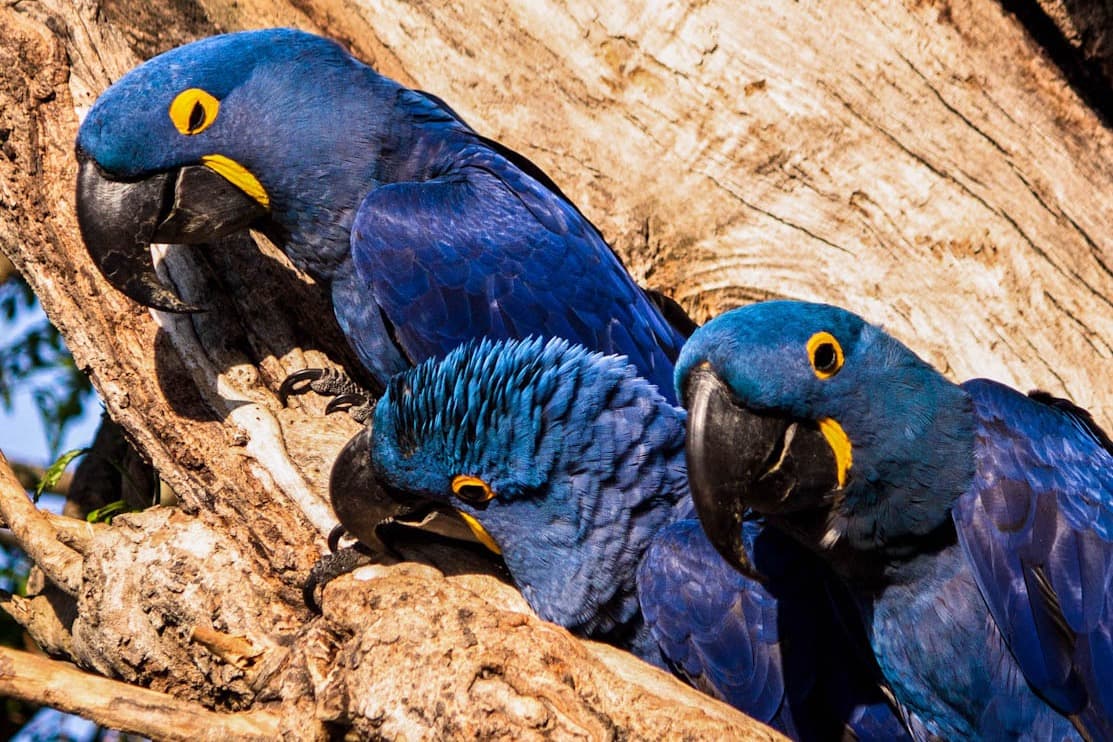
Jaguars are the headline, but the supporting cast is genuinely spectacular: giant otters, capybara families, caiman by the hundred, hyacinth macaws, jabiru storks, and the occasional tapir or anteater. Bring binoculars even if you are not a birder.
What does a Pantanal jaguar tour cost?
More than most people expect, and the honest starting point is that operators rarely publish rates. Most quote on request, which makes comparison shopping slow.
For the way most international visitors do it, an all-inclusive package from Cuiabá covering transfers, lodging, full board, guide, and boat safaris, packages advertised online in July 2026 ran roughly 1,800 to 2,600 US dollars per person for four days and three nights. When you compare quotes, look past the headline at the two numbers that decide the trip: hours on the water per day, and how many people share your boat.
Two places we would point you toward, at opposite ends of that range.
For the comfortable version, Santa Rosa Pantanal Hotel sits right on the São Lourenço River at the end of the Transpantaneira, with its own dock, a pool, and a restaurant. It is not cheap, and that is rather the point: they handle the transfer, the boats, the guiding, and the food, so you turn up and go looking for jaguars. If you would rather not assemble a trip out of parts, book here and stop thinking about it.
For the budget end, book a guide rather than a hotel. Pantanal Nature, run out of Cuiabá by Ailton Lara, has been guiding the northern Pantanal since long before the company took its current shape in 2007, and their four-day, three-night jaguar trip is the one we would put a first-timer on. It runs out of Pantanal Jaguar Camp, a small full-board camp that is plain by design: simple rooms, a shared dining room under the trees, and the money spent on boat hours instead of thread count. As of August 2026 it lists air-conditioned rooms with private bathrooms; it was tented on raised platforms in earlier years, so confirm what you are actually booking.
Doing it entirely yourself is possible but fiddly. Some Porto Jofre pousadas publish camping rates that include full board: in July 2026, one listed R$860 (about US$170) a night for two people in a provided tent, or R$660 (about US$130) if you bring your own. What those rates do not include is the boat, which is the expensive part and is chartered separately with fuel and a piloteiro (boatman). Access to the park itself runs through authorized operators, with the conservation fees bundled into what you pay them.
For a sense of what the same money buys elsewhere in Brazil, and for the cash-versus-card question out in the wetland, see our guide to paying and tipping in Brazil. Carry more cash than you think you need: this is not a card-everywhere part of the country.
Should you go north or south?
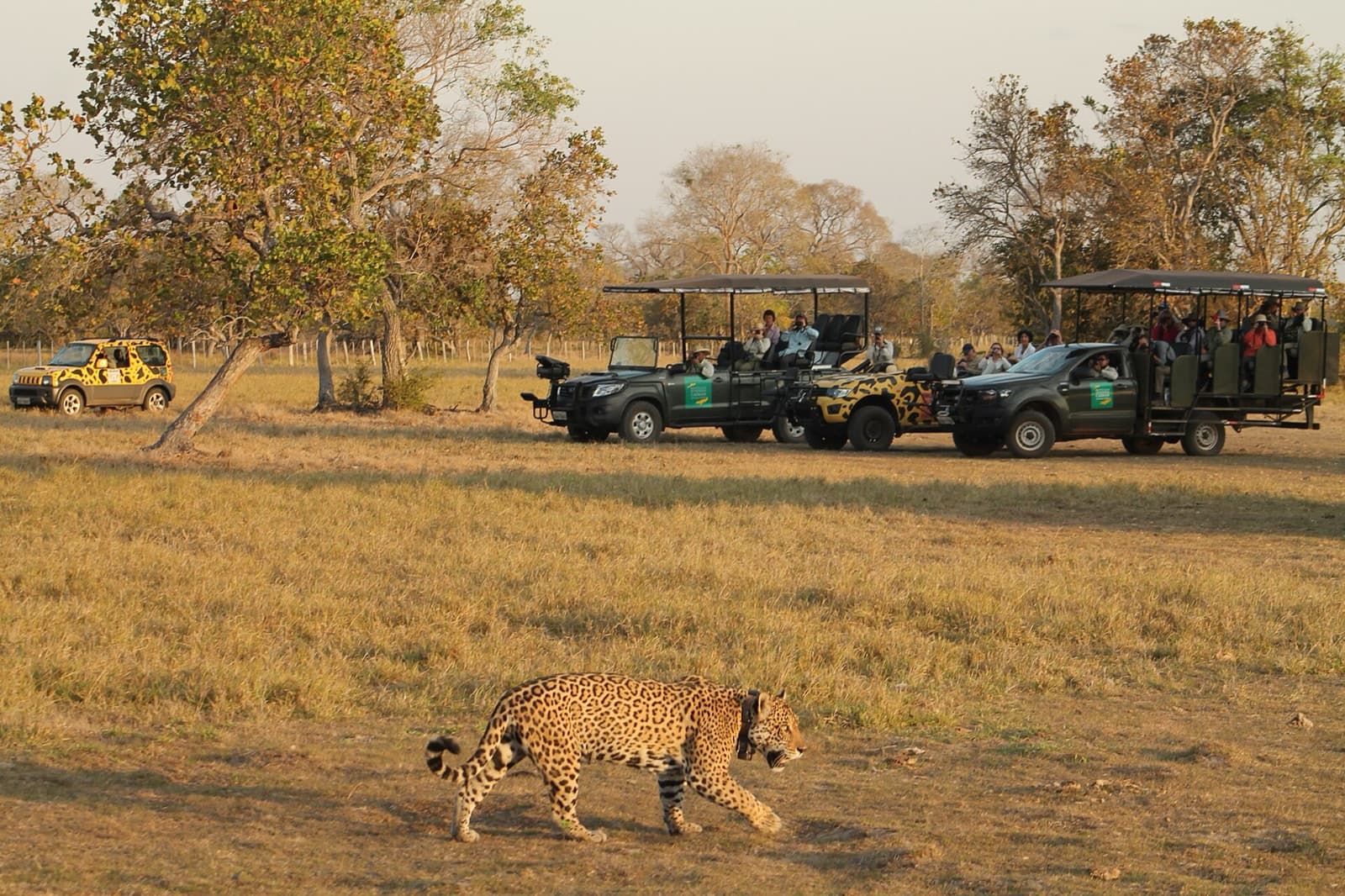
Porto Jofre and the northern Pantanal are the boat trip described above, and they are the highest-probability option for actually seeing a jaguar. But there is a second, quite different version in the southern Pantanal, reached from Campo Grande in Mato Grosso do Sul: private reserves running land-based safaris in open vehicles, where jaguars have been habituated through long-term research work by the Onçafari project. Caiman, a reserve in the municipality of Miranda about three and a half hours by road from Campo Grande, is the best-known of these and advertises a 98 percent sighting rate on its game drives.
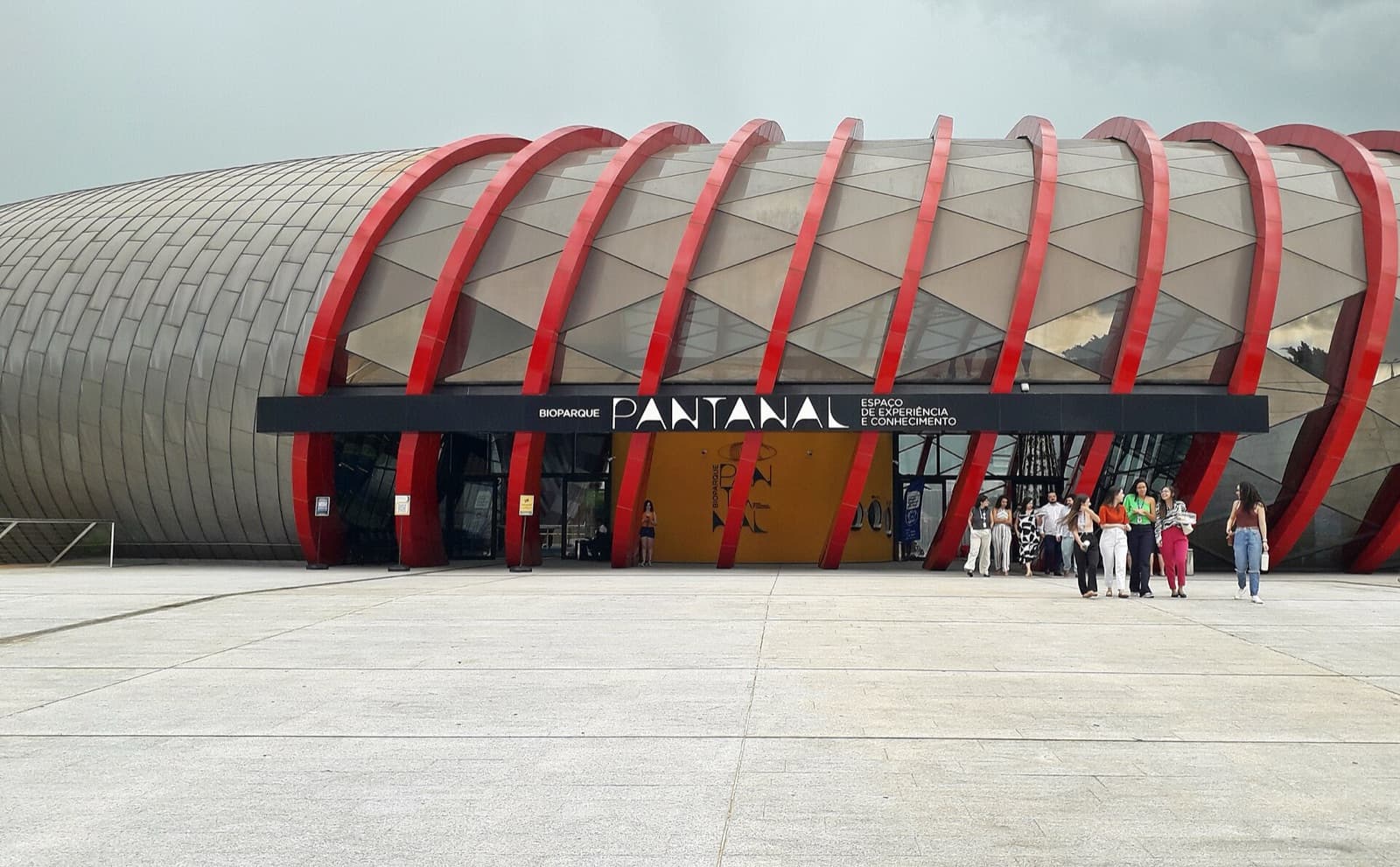
The south also gives you something to do on either side of the safari, which the north does not. Bioparque Pantanal sits in Campo Grande itself, a freshwater aquarium built around the species of the wetland and billed as the largest of its kind in the world. Entry is free, but you have to book a slot in advance on its website, and it opens Tuesday to Saturday, mornings and afternoons, closing Sundays and Mondays. It is a genuinely good half day before or after you head out to a reserve, and you come out knowing what you are looking at on the game drives.
Which one to choose:
- Northern Pantanal (Porto Jofre): best sighting odds, boats, wide-open river views, more operators at more price points. Our pick if seeing a jaguar is the main event.
- Southern Pantanal (Caiman and neighbors): vehicle safaris, more comfort, a conservation project you can visit, Bioparque Pantanal on the way through Campo Grande, and a shorter, easier journey in. Better if you want a broader wildlife-and-lodge experience.
What should you know before you go?
- Vaccines and health. A yellow fever vaccination is recommended for travelers to Mato Grosso and Mato Grosso do Sul, and the Mato Grosso side of the Pantanal is a malaria area. See a travel clinic about a month ahead.
- Sun and heat. Open boats, dry season, equatorial sun. Long sleeves, a brimmed hat, high-factor sunscreen, and more water than feels necessary.
- Insects. Repellent for the lodge and the road, though the open river is often mercifully breezy.
- Book early. The season is short and Porto Jofre has a small number of beds. Lodges fill months ahead for the July to October window.
- Camera advice. A long lens earns its weight here, 400mm or more, and light fades fast at dusk. If you photograph a jaguar clearly, consider sending the shots to the Jaguar Identification Project, whose catalogue is built largely from tourist photographs.
- Offline everything. Download maps and anything you need to read before you leave Cuiabá.
There is something quietly wonderful about the fact that the world's best place to watch jaguars is not a secret, not a wilderness expedition, and not off limits. It is a dirt road, a few lodges, and a fleet of small boats where the animals decided we were tolerable. Go in the dry months, give it three nights, keep a respectful distance, and let the river do the work. When one finally steps out of the grass and looks straight at your boat, you will understand why people come back.
Want more practical tips for Brazil? Join our newsletter and get notified of our latest posts.