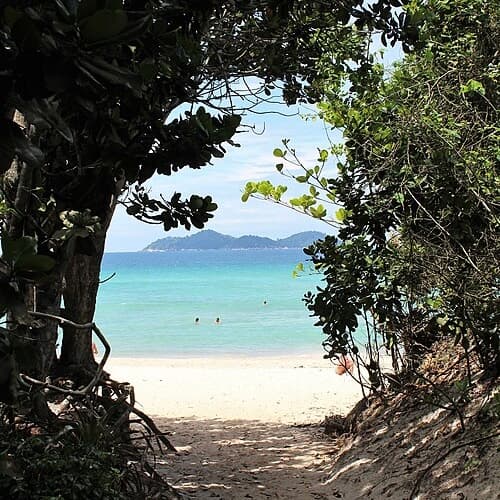
Salvador: Travel Guide for First-Time Visitors
Salvador was Brazil's first capital, and almost five centuries later it is still the city where the country's African heart beats loudest. Music leaks out of ordinary street corners, the food tastes like nowhere else in Brazil, and the historic center is a UNESCO World Heritage site painted every color at once. It is also a city that asks a little more of you than the postcard suggests: hotter, hillier, more intense, and rougher around the edges. We think that trade is absolutely worth it, and this guide is about making it work on a first visit.
Below is how the city is organized, when to go, where to sleep, what to actually do in the historic center, which beaches deserve your time, what to eat (a lot), and how to handle safety without letting it run your trip. One thing is deliberately missing: Carnival. Salvador throws the biggest street party on the planet, and it changes every rule about where to stay and how much things cost, so it has its own guide.
TL;DR
Salvador splits into an upper and a lower city, linked by the Lacerda Elevator; most sights sit up top
Stay in Barra (beach, walkable) or Rio Vermelho (food, nightlife), not inside the Pelourinho
Go between September and March; April to July is the rainy stretch
The famous Sao Francisco church is closed for restoration after a 2025 ceiling collapse, until around 2029
Eat acarajé from a street stand in Rio Vermelho and at least one long moqueca lunch
Walk within neighborhoods, Uber between them, and keep your phone off the street
Best day trips: Praia do Forte and a schooner day on the bay; give Morro de Sao Paulo its own nights
How is Salvador laid out?
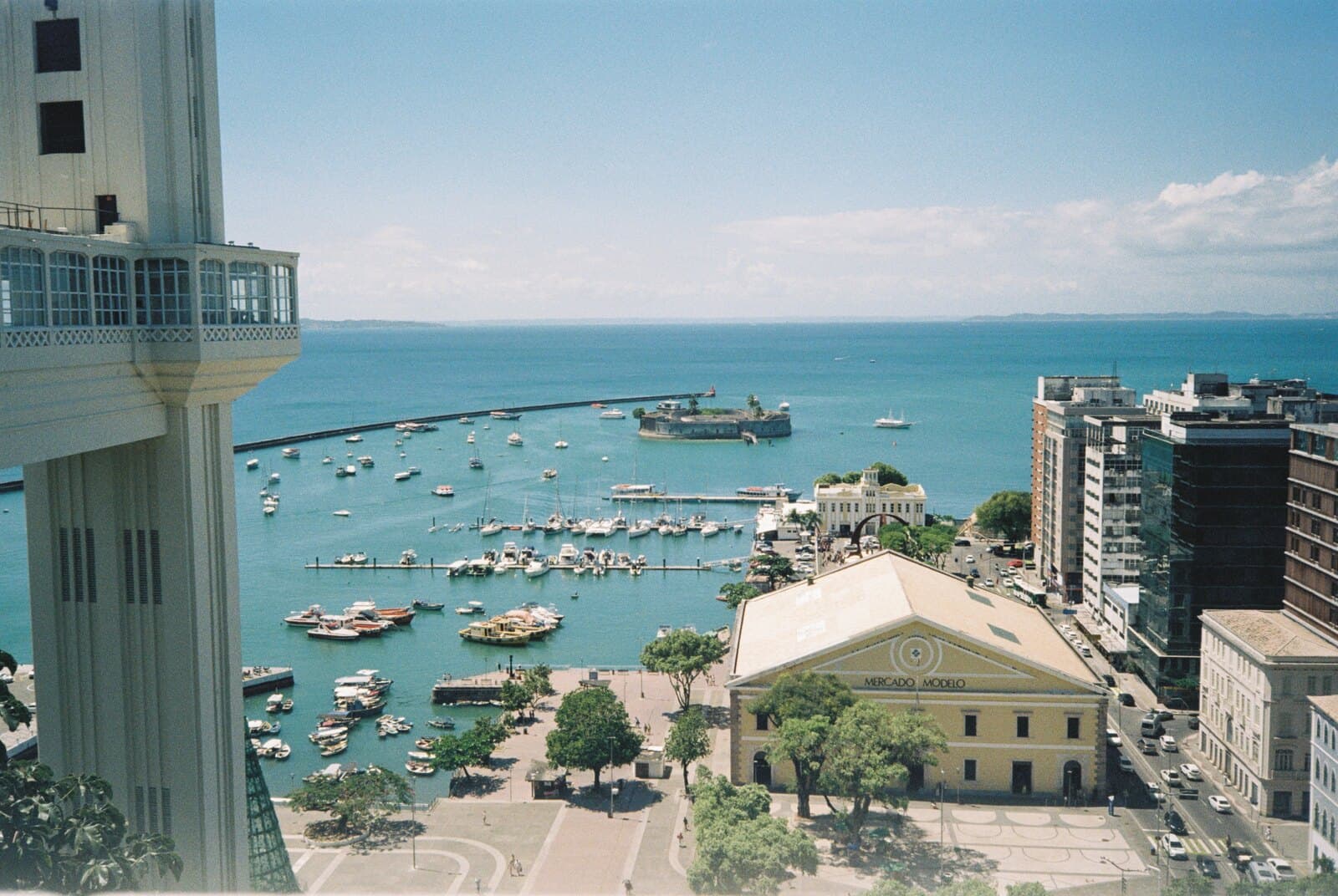
Salvador sits on a peninsula between the Atlantic and the Baía de Todos os Santos, the huge bay that gave Bahia its name. The old city is stacked in two levels: the Cidade Alta (upper city), home to the Pelourinho and most of the sights, rides an escarpment about 70 meters above the Cidade Baixa (lower city), where you find the port, the Mercado Modelo, and the working downtown. Connecting them is the Elevador Lacerda, an art deco elevator that has been hauling people up and down the cliff since 1873. It reopened in 2025 after a full renovation, the ride takes under a minute, and it costs R$1 (about US$0.20) as of 2026. The view over the bay from the top, with the yellow Mercado Modelo and the fort floating offshore, is the city's best free orientation lesson.
From the historic center, the visitor's city runs south and then east along the water: through Campo Grande and the leafy Corredor da Vitória to Barra, the corner where the bay meets the open ocean at a lighthouse, then along the coast through Ondina to Rio Vermelho, the bohemian food and nightlife neighborhood, and onward to Itapuã and the far beaches out toward the airport. Those few kilometers hold almost everything in this guide.
One more thing you should know before arriving, because it shapes everything you will see and eat: Salvador is a city of about 2.4 million people, roughly eight in ten of whom identify as Black or mixed race, and it is often described as the largest Afro-Brazilian city in the world. Capoeira, candomblé, acarajé, and the drum-driven music that conquered Brazil were not imported here for tourists. This is where they live.
When is the best time to visit Salvador?
The temperature barely moves all year, with highs roughly between 26 and 30°C, so the decision is really about rain and crowds. The drier, brighter months run from September to March, and that is when we would plan a first trip. September and October are the sweet spot where the good weather overlaps with shoulder-season prices, which is the same conclusion our best time to visit Brazil guide reaches for the classic first-trip circuit. April to July is the rainy stretch, and we would avoid it: showers are heavy even if rarely all-day, and Salvador with grey skies loses a lot of its glow.
Summer doubles as festival season, which is either a bonus or a warning depending on your taste for crowds. The Lavagem do Bonfim, a procession of white-clad worshippers washing the steps of the Bonfim church, lands on a Thursday in January (January 14 in 2027). The Festa de Iemanjá fills Rio Vermelho on February 2, when the whole city queues to send flowers out to sea for the goddess of the waters. And then comes Carnival, when the city triples in intensity and price. Book far ahead for any of them.
How many days do you need?
Three full days is the honest minimum: one for the historic center, one for Barra and a beach, one for Rio Vermelho, Bonfim, and serious eating. A fourth or fifth day buys you a day trip or, better, slack to redo whatever you liked most. If Morro de São Paulo is on your list, treat it as its own two-plus-night stop, not a day trip; the crossing is too long to enjoy it in one day.
How do you get to Salvador (and into the city)?
Salvador's airport is well connected to every Brazilian hub plus a handful of international routes, and it sits about 29 km from the beach neighborhoods. The practical way in is Uber or taxi: figure around 40 minutes to Barra and about R$50 (about US$9.60) on a normal Uber fare as of 2026, more with surge pricing or late at night. There is a metro station at the airport, but the system's two lines serve commuter corridors rather than Barra, Rio Vermelho, or the Pelourinho, so with luggage we would skip it.
Once you are in town, the pattern is simple: walk within a neighborhood, Uber between neighborhoods. Rides across the tourist strip are short and cheap, drivers are used to visitors, and it is the right call at night, every time. The Lacerda Elevator (plus its cousin funiculars) handles the vertical trips between the upper and lower city. City buses exist and are cheap, but between crowding and route confusion, we do not recommend them for a first visit. Boats to the bay islands and to Morro de São Paulo leave from the Terminal Náutico in the lower city, right by the Mercado Modelo.
Where should you stay in Salvador?
- Barra: our pick for a first visit. It has actual swimmable beaches, the lighthouse and its sunset lawn, a long list of restaurants, and streets that stay lively into the evening. You can walk to the sand with just a towel and ride ten to twenty minutes to everything else.
- Rio Vermelho: for travelers who live at night. This is the food and bar neighborhood, where the squares fill with tables from Thursday on. The seafront here is scenic rather than swimmable, so you will ride to the beach, but you will never hunt for dinner.
- Santo Antônio Além do Carmo: the charming one. Just beyond the Carmo end of the historic center, its colonial houses hide Salvador's prettiest boutique pousadas, many with bay views. It is quiet at night, which is either the appeal or the problem, and we would Uber back to the door after dark rather than stroll in.
- Where we would not stay: inside the Pelourinho itself, which empties and gets sketchy after the day visitors leave, and the Comércio business district in the lower city, which is dead outside working hours. Ondina and the Corredor da Vitória are fine compromise hotel strips if you find a good deal.
During Carnival the geography of a good bed changes completely; our Salvador Carnival guide covers that separately.
What should you not miss in the historic center?
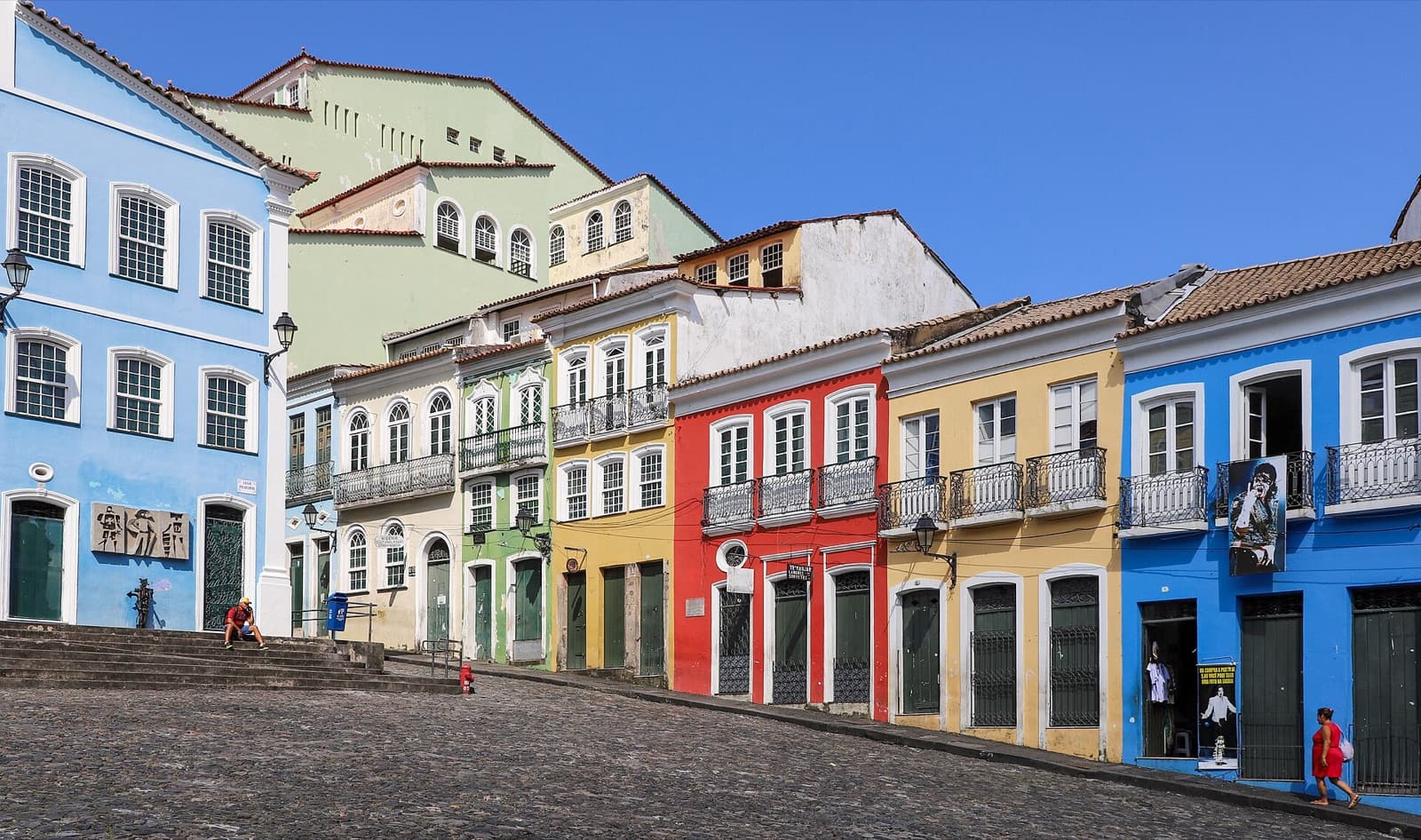
The Pelourinho, a UNESCO World Heritage site since 1985, is the colonial core: steep cobbled streets, pastel facades, churches on every other corner, drums echoing off the stone. Yes, it is the touristy part of town, and yes, it is still absolutely worth a full day.
First, one honest heads-up. The Igreja de São Francisco, the "golden church" whose baroque interior was the center's single most famous sight, has been closed since early 2025, when part of its ceiling collapsed and killed a visitor. The restoration is funded and underway, with reopening currently projected around 2029. If a tour listing still promises you that golden interior, it is out of date.
There is plenty left. Our shortlist:
- Get lost between the squares. The Terreiro de Jesus (with the old cathedral), the Cruzeiro de São Francisco, and the sloping Largo do Pelourinho form a compact triangle you will cross a dozen times. On the Largo, step into the sky-blue Igreja do Rosário dos Pretos, built over most of the 18th century by a brotherhood of enslaved and freed Black Bahians who could only work on their own church in their scarce free hours. Knowing that changes how the whole neighborhood reads.
- The juice with the queue in front of it. Suco de Limão com Coco do Milton is a green and white cart parked in front of the steps of the Fundação Casa de Jorge Amado, and it has been there since 2000 selling exactly one thing: suco de limão com coco, lime juice blended with dry coconut in place of water. The coconut takes the bite out of the lime, which is the whole trick. Seu Milton is there daily from about 10am to 6pm, a cup costs around R$15 (about US$2.90) as of 2026, and on a hot afternoon on those cobbles it is the best decision in the historic center.
- Museu Afro-Brasileiro (MAFRO). In Brazil's first medical school building on the Terreiro de Jesus, with a room of Carybé's carved panels of the orixás that alone justifies the ticket (R$10 (about US$1.90), open weekdays 9am to 5pm as of 2026).
- Casa do Carnaval. The city's carnival museum, and genuinely fun even months from the party: R$20 (about US$3.80), Tuesday to Sunday 9am to 5pm, free on Wednesdays as of 2026.
- Balé Folclórico da Bahia. A 55-minute burst of orixá dances, capoeira, and samba de roda at the small Teatro Miguel Santana, and our favorite single hour of culture in the city. The company performs Mondays, Wednesdays, and Fridays at 7pm, tickets are R$120 (about US$23) as of 2026, and its English-language agenda page carries the current dates and the addresses to reserve through. Book ahead, because the theater is tiny.
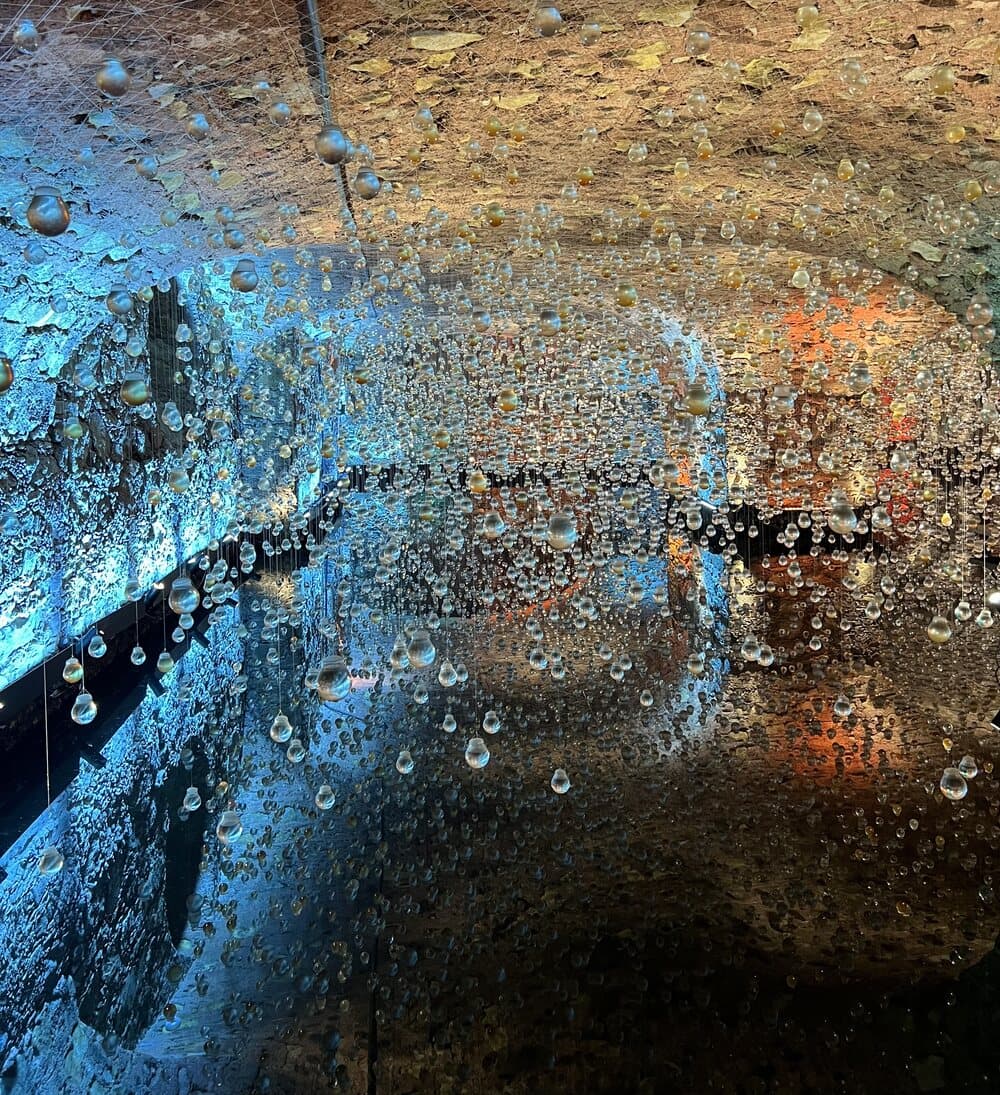
- Ride the Lacerda Elevator down to the Mercado Modelo, then keep going down. Upstairs the old customs house is the one-stop souvenir run: cachaça, lace, fitas, art, with prices negotiable within reason, so keep it friendly. The better half is underneath, where the market's old storage vaults now hold the Galeria Mercado: Rubem Valentim's white geometric altars to the orixás, Mário Cravo Jr.'s "Cabeças de Tempo" carved from timber salvaged after the 1984 fire that gutted the building, and Vinicius S.A.'s "Lágrimas", fifteen thousand reused lightbulbs hung in a glowing cloud. Entry is R$20 (about US$3.80) and free on Wednesdays as of 2026, Tuesday to Sunday with shorter Sunday hours.
- Feira de São Joaquim. Fifteen minutes further along the bay, this sprawling working market sells everything from herbs and clay pots to candomblé goods, and it was getting a major renovation in stages as of 2026. It is raw, loud, and real; go in daylight, ideally with a guide or at least humility, and ask before photographing people.
- Igreja do Bonfim. A short ride north in the lower city, Salvador's beloved church is where the famous fitas come from: tie one around your wrist with three knots, one wish per knot, and let it fall off on its own. Entry is free, it is open daily, and on Fridays the faithful arrive dressed in white. The railings wrapped in thousands of ribbons are worth the detour alone.
- Capoeira at the Forte da Capoeira. The star-shaped Forte de Santo Antônio Além do Carmo now houses the schools of some of the art's great masters, with rodas and open trainings on several evenings a week. Watching a real roda here, drums and call-and-response and all, beats any staged show; check the current schedule at the gate.
- Or get into the roda yourself. An hour-long beginner class runs at the school Mestre Bimba registered in 1937, the first capoeira academy officially recognized in Brazil, at a time when the art itself had only just stopped being a crime. It is bookable on GetYourGuide and taught in English, and the reason we send people to this one is the order it puts things in: you hear where capoeira came from and why it was outlawed before you attempt a single kick. Learning the movements with that in your head is a different experience from learning them cold. No experience needed, and expect to sweat.
Which beaches are worth your time?
Quick orientation: beaches on the bay side are calm and good for swimming, beaches on the open ocean have waves and currents, and everything in town gets packed on summer weekends. Vendors will offer you grilled cheese, shrimp, and cold beer all day; that is not a nuisance, it is the system, and it works.
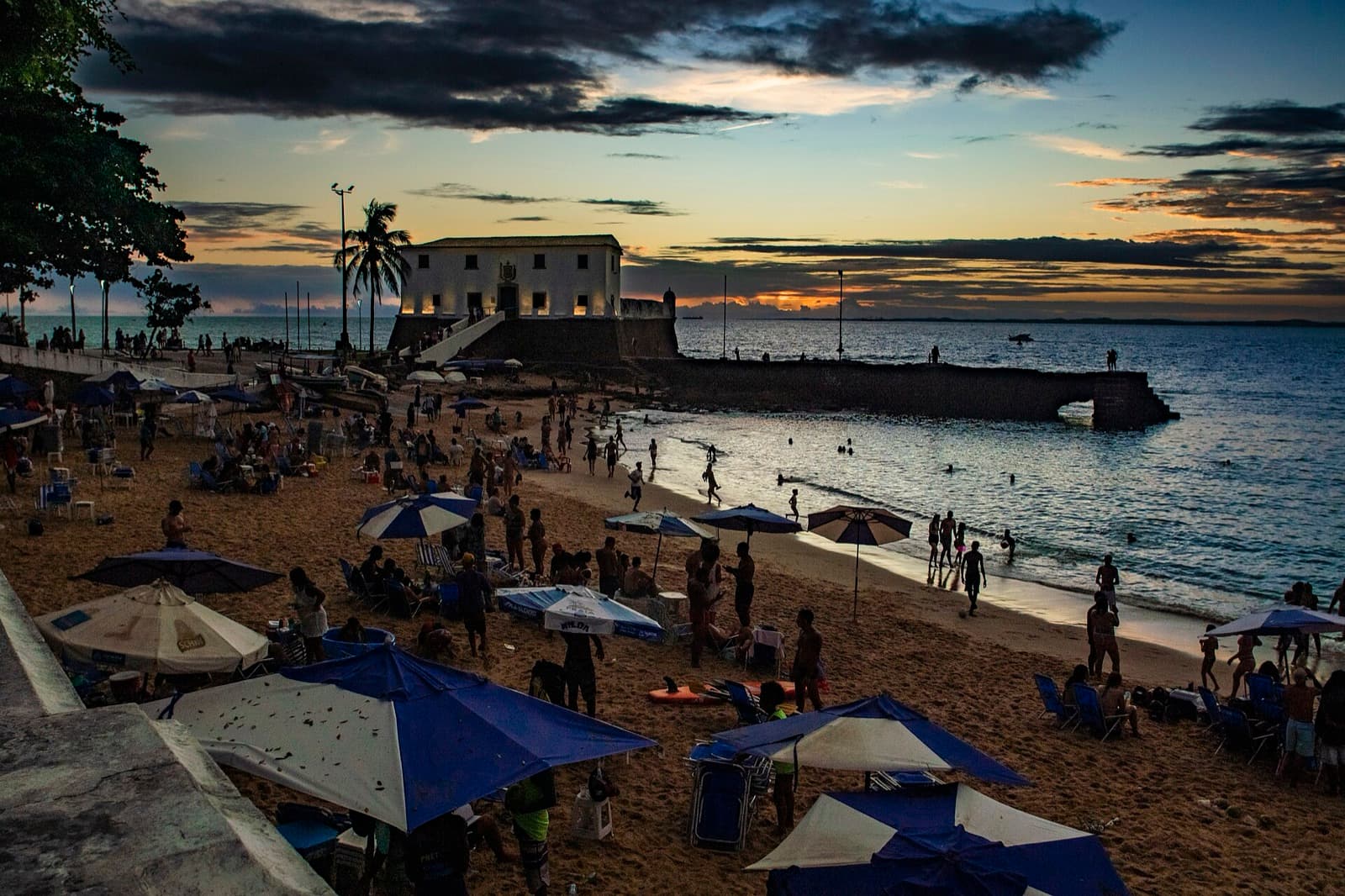
- Porto da Barra: a small, calm bay beach framed by a little white fort, and one of the few city beaches in Brazil where the sun sets over the water. Go in the morning for space or at the end of the day for the show; it is shoulder to shoulder on weekends. Mornings are also when the water comes alive here: the outfits along the seafront rent kayaks and stand-up paddleboards by the hour, and the long canoas havaianas you paddle as a crew of six go out early too. The bay is flat and sheltered at this end, which makes it a forgiving place to try any of it for the first time. Take nothing to the sand you would mind losing.
- Farol da Barra: around the corner at the lighthouse, more hangout than swimming spot. The fort at its base houses the Museu Náutico da Bahia (R$20 (about US$3.80), open daily 9am to 6pm as of 2026), and at dusk the lawn and rocks fill with people watching the sunset.
- Itapuã: the beach Dorival Caymmi and Vinicius de Moraes put into song, 30 to 60 minutes from the center depending on traffic. Coconut groves, fishing boats, weathered kiosks, and a looser, more local vibe than Barra. It is also Salvador's rowing beach: a cluster of canoa havaiana clubs sits along Rua da Música and Rua do Teatro, a block from the sand, and most of them take visitors for a lesson or a dawn paddle if you message ahead. It is a lovely way to see the coast from the other side.
Can you dive in Salvador?
You can, and it is the most underrated day in this guide. The Baía de Todos os Santos gives you the three things diving needs at once, which almost nowhere on the Brazilian coast manages: water that stays calm, a temperature you can sit in for an hour without a thought, and enough visibility to actually see what you came for. The bay is also full of wrecks, because ships have been sinking at the mouth of this harbor for four centuries.
Beginners go to the Porto da Barra and Boa Viagem areas, down in the Cidade Baixa. The sites there sit around 100 meters off the beach and no deeper than 12 meters, sheltered and shallow enough that a first-ever dive with no certification is a reasonable thing to do on a holiday morning. From there it scales as far as you want to take it: the ferry Agenor Gordilho and the tug Vega lie off Boa Viagem, the Bretagne and the Germânia have been a few hundred meters off the Farol da Barra since the end of the 19th century, and the serious sites run up to 15 km offshore and 40 meters down. Dive Bahia (@divebahia), based at Porto da Barra, is one of the established names and runs the whole ladder from try-dives to certification courses, in English.
What should you eat in Salvador?
Bahian food is its own cuisine, built on dendê (red palm oil), coconut milk, seafood, and chile, with West African roots it never tried to hide. It is rich; pace yourself the first day and your stomach will thank you.
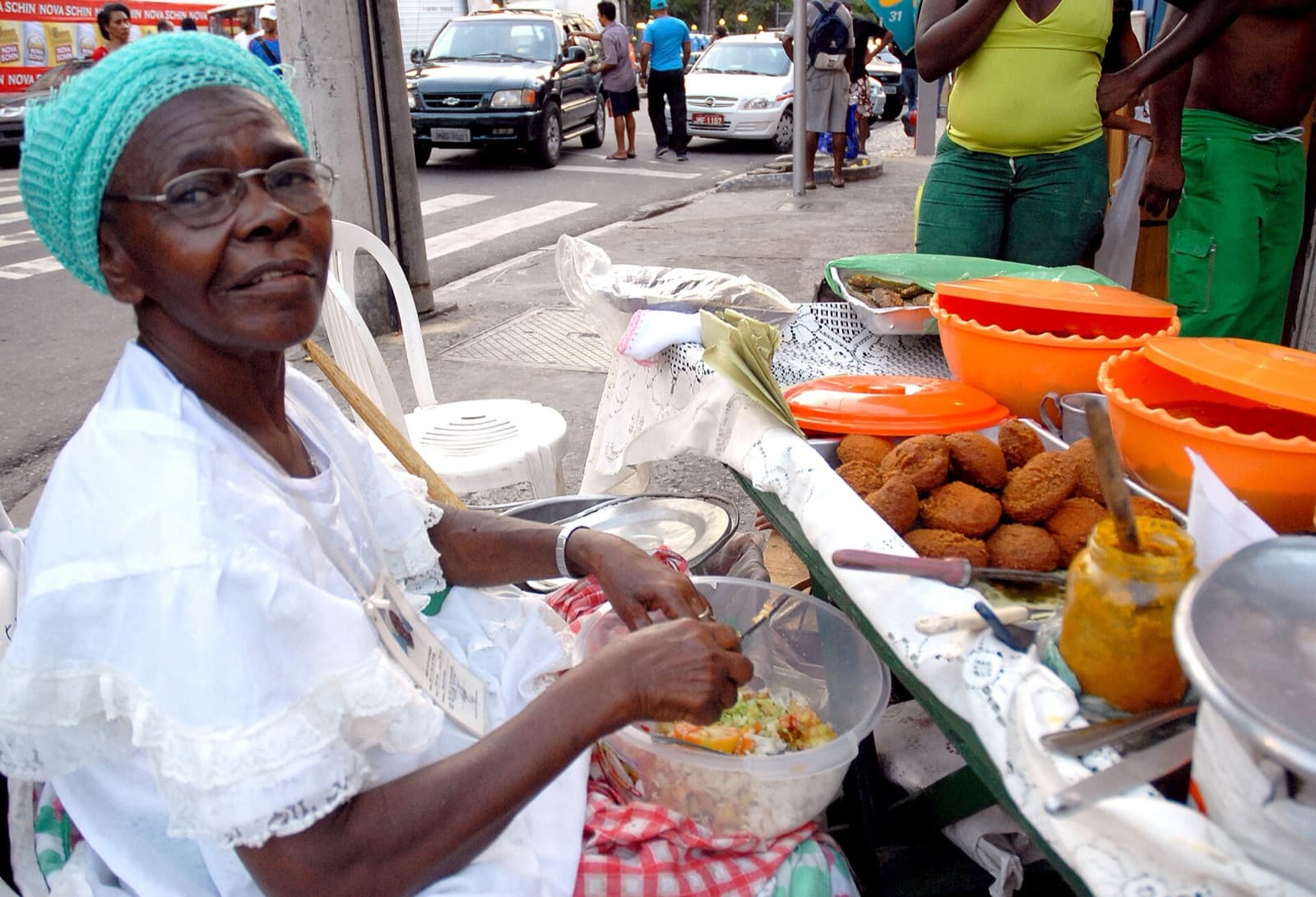
Start with the icon. Acarajé is a black-eyed pea fritter fried in bubbling dendê, split open and loaded with vatapá (a creamy paste of bread, shrimp, and nuts), caruru (okra stew), tomato salad, and dried shrimp. You buy it in the late afternoon from a baiana de acarajé, a woman in white at her street stand, and the ordering script is simple: "um acarajé com tudo" (one with everything). She will ask about pimenta; answer honestly, because the pepper sauce is serious. The most famous stand in town is Acarajé da Dinha on the Largo de Santana in Rio Vermelho, frying since the 1940s; the line moves fast and eating one standing in that square, beer in hand, is a complete Salvador experience.
Then plan at least one long moqueca lunch. Bahia's signature seafood stew arrives bubbling in a clay pot, orange with dendê and coconut milk, with rice, farofa, and pirão to stretch it. Our two favorite rooms for it:
- Paraíso Tropical (Cabula): chef Beto Pimentel cooks moquecas brightened with fruit from his own sprawling orchard, and lunch here (Tuesday to Sunday, roughly noon to 5pm) is worth the 20 to 30 minute ride from the tourist strip. Go very hungry.
- Dona Mariquita (Rio Vermelho): a lunch spot devoted to Bahia's heritage recipes, the dishes of street festivals and candomblé kitchens, served roughly noon to 5pm daily. The menu doubles as a history lesson.
- Bar da Mônica (Gamboa de Baixo): the one you will still be describing to people at home. It sits on a pier in the Gamboa de Baixo community, tucked under the Contorno road, and the only way in is by water: small boats run across from the little beach below the MAM, the modern art museum at Solar do Unhão. What is waiting is a table almost in the bay, a moqueca that fully earns the crossing, and steps down into the water, so lunch quietly turns into a beach afternoon. It opens daily from mid-morning to around 6pm and it is no secret at all, with locals and visitors filling it, so go early. Worth every bit of the effort.
Two more moves we recommend. For a first-day crash course, the Restaurante Escola Senac on the Largo do Pelourinho lays out a buffet of around 40 Bahian classics; in 2026 it runs about R$85–R$95 (about US$16–18) per person depending on the day, and tasting everything once makes the rest of the week's menus legible. And for dessert loyalty, the Sorveteria da Ribeira, scooping since 1931 on the Ribeira waterfront past Bonfim, where the tapioca flavor is the classic and a scoop costs around R$16 (about US$3.10) as of 2026; pair it with your Bonfim visit, since they share the same peninsula.
Street stands and beach vendors are cash-first, so keep small bills on you; our guide to paying and tipping in Brazil covers the rest.
Where do you go at night?
Rio Vermelho is the default answer. From Thursday night on, its squares, especially the Largo de Santana and the Largo da Mariquita, turn into one big open-air bar: tables on the cobbles, acarajé stands doing midnight business, live music somewhere within earshot. You do not need a venue plan; pick a full square and orbit. If you are in the neighborhood earlier, the Casa do Rio Vermelho, where Jorge Amado and Zélia Gattai lived for decades, is a lovely hour (R$20 (about US$3.80), Tuesday to Sunday 9am to 5pm, free on Wednesdays as of 2026).
Two special evenings worth planning around. On Saturdays, the JAM no MAM brings jazz over samba and axé grooves to the courtyard of the Museum of Modern Art at the Solar do Unhão, a 17th-century estate on the bay that reopened after a long restoration; doors around sunset, tickets R$5–R$40 (about US$1.00–7.70) in 2026, held roughly twice a month in the second half of the year, so check the current agenda. The sunset over the bay before the first note is half the ticket. And in the weeks before Carnival, Olodum's Tuesday-night rehearsals take over the Pelourinho (the tradition known as Terça da Bênção), with gates around 7pm; if your trip lands in January or February, do not miss it.
Whatever the plan, the ride home is an Uber, door to door.
Is Salvador safe?
The honest version: Salvador has serious crime statistics, but the trouble that actually reaches visitors is overwhelmingly theft, and theft is largely avoidable with discipline. Millions of people visit every year and go home with nothing worse than sunburn. The rules are the same ones we give for Rio, applied a notch more strictly:
- Phones are the target. Keep yours in a front pocket, use it against walls rather than mid-sidewalk, and never at the curb;
- Take nothing valuable to the beach: a bit of cash, sunscreen, done;
- The Pelourinho is patrolled and fine in daylight, and there is a dedicated tourist police base in the historic center. But do not drift into visibly empty side streets, and take the elevator between the upper and lower city rather than walking the steep connecting lanes;
- The lower city empties after business hours and on weekends; visit it by day;
- At night, Uber door to door, even for short hops;
- The standard hustle around the churches and the Pelourinho is the gift that is not a gift, and it comes in three flavors: a Bonfim ribbon knotted onto your wrist, white body paint brushed onto your arm, and a warm invitation to pose for a photo in traditional dress or with props. In each one the price is named only once it is too late to say no, and it can be outrageous; there have been arrests in the Pelourinho for exactly this. The traditions behind all three are real and worth paying for, so the answer is not suspicion, it is agreeing the price out loud before anyone touches you or your camera;
- Save the numbers from our emergency numbers in Brazil guide before you land.
None of this should keep you home. It is city sense, applied consistently, in exchange for one of the most rewarding cities in the Americas.
What day trips make sense from Salvador?
- Praia do Forte: the easy classic, about 78 km north, an hour and a half by bus, transfer, or rental car. A pretty (if polished) beach village built around the headquarters of the Tamar sea-turtle project, where the tanks and rescue turtles make it the best family outing on this list.
- A schooner day on the bay: boat tours leave the Terminal Náutico by the Mercado Modelo most mornings for a lazy loop to Ilha dos Frades and Itaparica, with swimming stops and lunch ashore. Book a day ahead at the terminal and read the weather before you commit.
- Morro de São Paulo: the famous car-free island village, reached by catamaran from the same terminal in around two and a half to three hours, at roughly R$150 (about US$29) each way in 2026, plus the island's entry tax, still R$70 (about US$13) as of August 2026: the rise to R$90 (about US$17) that was due that month has been suspended indefinitely while the new arrivals building is finished, so budget for the higher figure in case it lands while you are booking. It is gorgeous, and it is not a day trip: give it at least two nights, and skip it entirely on a short itinerary. Fair warning, the open-sea stretch of the crossing can be genuinely rough.
Salvador is not a city you tick off; it is a city you tune into. Give it a few days, eat what the baianas hand you, learn three words of the music, tie the ribbon and make your wishes, and somewhere between a drum line in the Pelourinho and a bay sunset with sand still on your feet, you will understand why Brazilians talk about this place the way they do. Go, and let Salvador set the rhythm.
Want more practical tips for Brazil? Join our newsletter and get notified of our latest posts.