Paraty and Angra dos Reis: How to Plan Your Costa Verde Trip
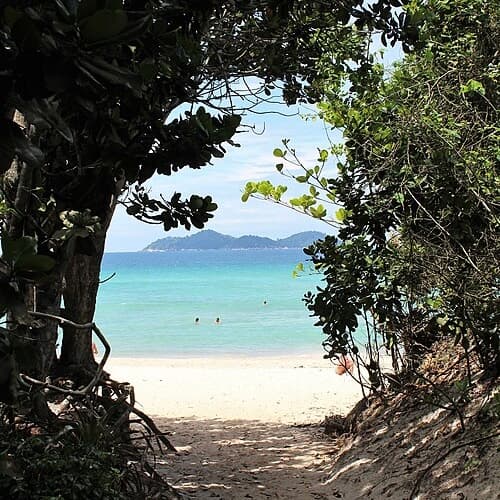
Between Rio de Janeiro and São Paulo, the coast bends into a stretch of forested mountains, hidden coves, and island-filled bays that Brazilians call the Costa Verde, the Green Coast. Its two most famous mainland names, Paraty and Angra dos Reis, sit an hour and a half apart and often get planned as a pair, but they are very different stops.
Paraty is the destination, a preserved colonial port town where the streets themselves are the attraction. Angra dos Reis is a gateway, a working city you pass through for a boat day on its bay or a crossing to Ilha Grande. Below we cover how to get there, what to do in Paraty, which beaches are worth the effort, and when to go.
TL;DR
Paraty is the destination: give it 2 to 3 nights for the historic center, a boat day, and Trindade's beaches
Angra dos Reis is a boat-tour day or your crossing point to Ilha Grande, not a base
No flights here: it is a Costa Verde bus from Rio (about 3 hours to Angra, 4.5 to 5 to Paraty) or a slow, scenic drive
Like everywhere on this coast, April to June and October to November are the sweet spot
The classic route is Rio, then Ilha Grande, then Paraty, in either direction
Paraty or Angra dos Reis: which one should you visit?
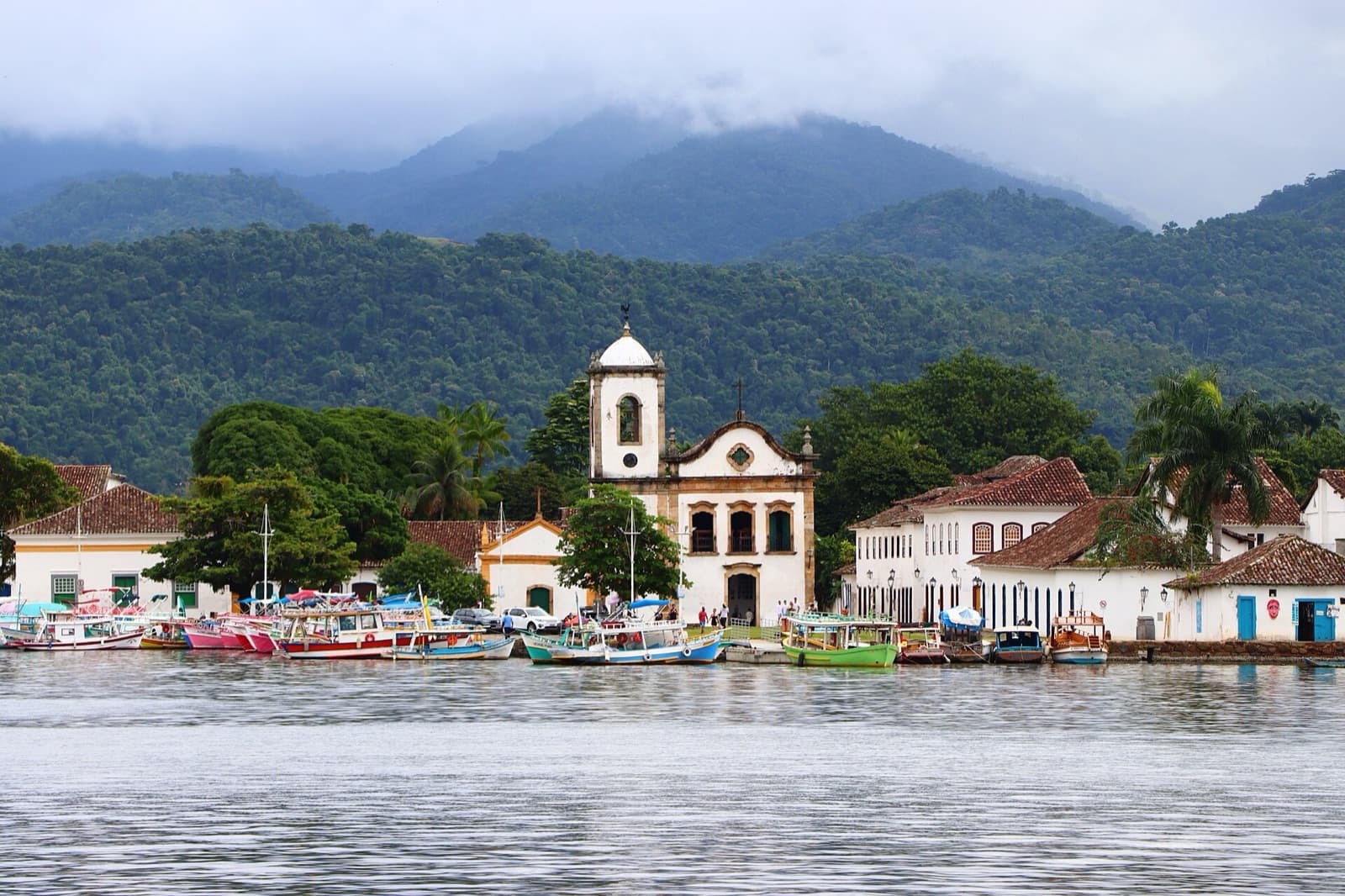
If you only have room for one base, make it Paraty. It is one of the best-preserved colonial towns in Brazil, and it earns its keep even on a rainy day: cobbled streets, 18th-century churches, cachaça distilleries, good restaurants, and boat tours leaving from the pier a few steps from the center. In 2019, UNESCO inscribed "Paraty and Ilha Grande: Culture and Biodiversity" as Brazil's first World Heritage site listed for both its culture and its nature, and the town wears that status without feeling like a museum.
Angra dos Reis is a working port city with a shipyard, traffic, and not much charm, so we do not recommend staying there. Its draw is the bay in front of it, which locals say holds 365 islands, one for each day of the year. Shared escuna (schooner) tours leave the waterfront daily from around R$70 (about US$14) per person in 2026 and spend five to seven hours stopping at spots like the Ilhas Botinas, twin islets with a few palms each, and the beaches of Gipóia island.
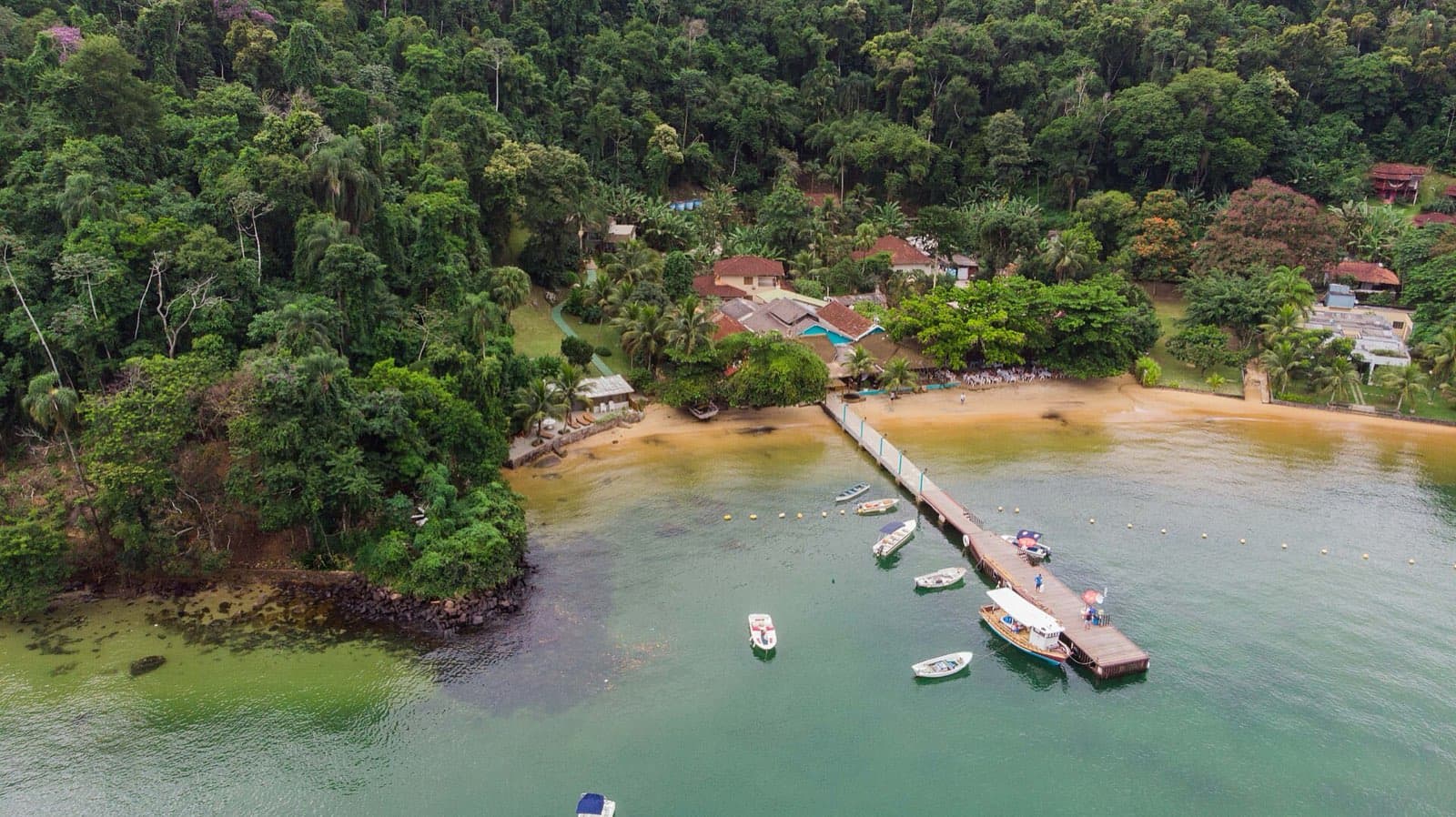
Angra is also one of the crossing points to Ilha Grande, though from Rio the boats from Conceição de Jacareí are usually quicker; our Ilha Grande guide compares the options. And if car-free villages, jungle trails, and clear water are what you are really after, the island itself might be the better base.
How do you get to Paraty and Angra dos Reis?
There are no commercial flights on this coast, so everyone arrives by road, almost always from Rio de Janeiro or São Paulo.
From Rio de Janeiro
Costa Verde Transportes runs frequent daily buses from the Novo Rio bus station, roughly from early morning to evening. Count on about 3 hours to Angra dos Reis and 4.5 to 5 hours to Paraty, with comfortable air-conditioned buses. In 2026, a one-way ticket to Paraty costs around R$80–R$130 (about US$16–26) depending on the departure. Buy a day or two ahead on busy weekends; seats do sell out.
From São Paulo
Reunidas Paulista connects the Tietê bus terminal to Paraty in about 6 hours, from around R$105 (about US$21) one way in 2026. It is a long ride, but it drops you right at the small Paraty bus station, a ten-minute walk from the historic center.
Driving the Rio-Santos
The BR-101 coastal highway, the famous Rio-Santos, is one of Brazil's great road trips: the forest drops straight into the sea for kilometers at a time. It is also slow, winding, and badly lit, and after heavy summer rain, stretches occasionally close because of landslides. If you rent a car, do this drive in daylight and give it the whole day without guilt.
Between the two towns
Local Colitur buses link Angra dos Reis and Paraty in around two and a half hours, stopping along the coast. By car or transfer, it is closer to an hour and a half.
What should you do in Paraty?
Get lost in the historic center. The center is closed to cars, and its giant irregular cobblestones set the pace: you walk slowly, and that is the point. Whitewashed houses with doors and window frames in blues, yellows, and reds, churches from the 1700s, and small studios and shops fill a grid of streets that has barely changed since Paraty was the port at the end of the Caminho do Ouro, the Gold Route. The wealth that built the town came at a brutal price: the same port that shipped gold to Portugal received the enslaved Africans forced to mine it, a history the town's museums and guides now confront directly. If you would like a local guide to walk you through it, this historic center walking tour on GetYourGuide runs for 90 minutes in English and ends with a tasting of cachaça Gabriela, a Paraty specialty.
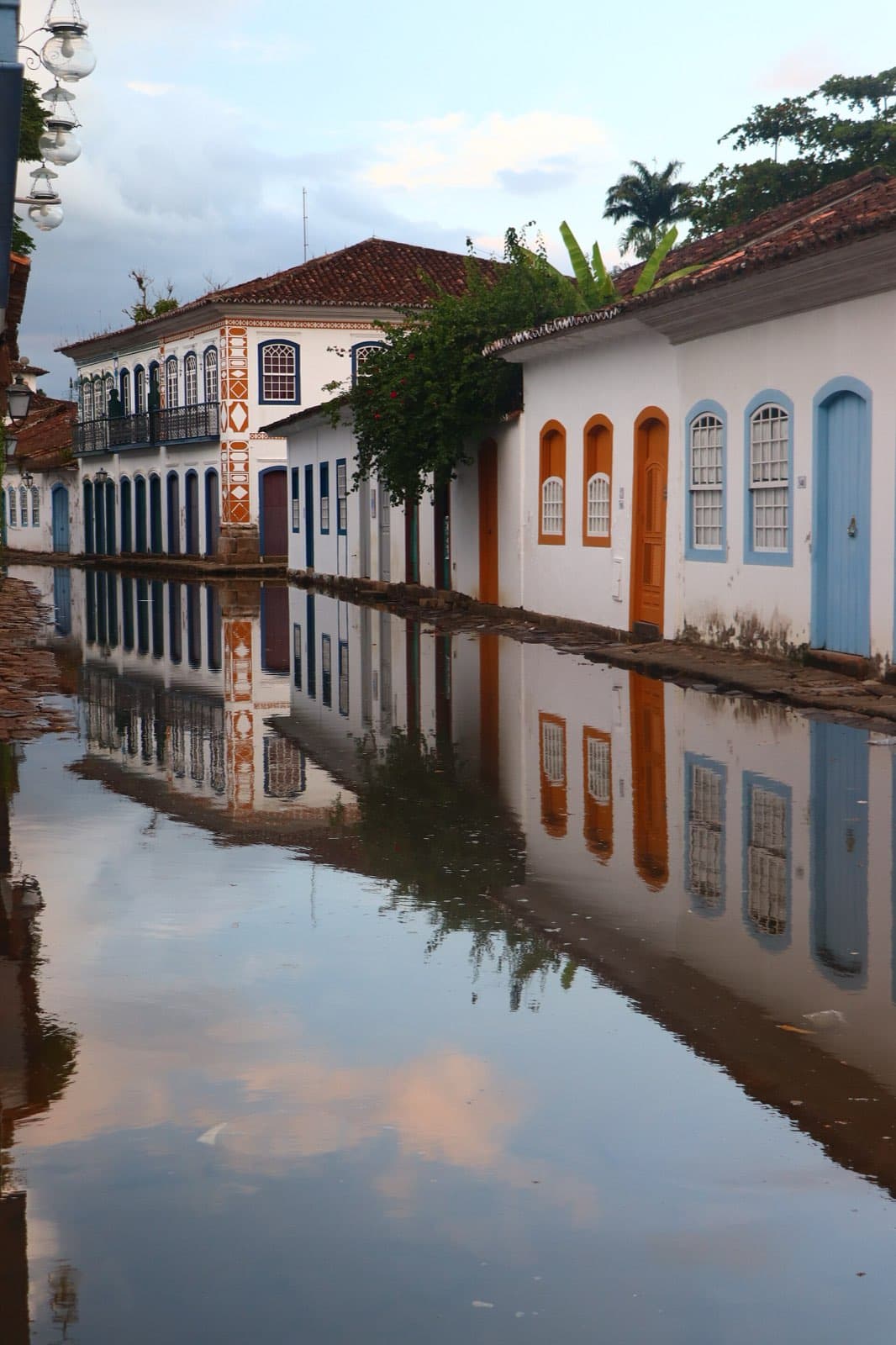
Catch the flooded streets if you can. Paraty's colonial engineers built the center low on purpose, so that spring tides, especially around the full and new moon, push seawater through openings in the seawall and into the streets, rinsing them clean. When it happens, the water sits ankle-deep over the cobblestones and turns the whole town into a mirror. Check a tide table when you arrive; locals and hotel staff always know if a flood is due that week.
Spend a day on a schooner. The classic Paraty boat day is a shared escuna tour of the bay: five to six hours, three or four swimming stops at islands and beaches you cannot reach by road, and snorkeling in calm, clear water. In 2026, shared tours run around R$60–R$120 (about US$12–24) per person depending on the boat and season, with lunch on board sold separately. Private motorboats cost several times that and are worth it mainly for groups.
Drink the town's namesake. Paraty is one of the historic homes of Brazilian cachaça. At the trade's peak in the 19th century, the region had by some counts more than 250 sugar mills and stills, and the town's name became the drink itself: until the middle of the 20th century, ordering a parati in a Brazilian bar simply meant asking for a shot of cachaça. A handful of artisanal alambiques (distilleries) still produce and welcome visitors, including Maria Izabel, a small producer on the edge of the bay, and Engenho D'Ouro, which pairs its tastings with the waterfalls of the Paraty hills on popular jeep tours. If you want the full party, the Festival da Cachaça takes over town from August 20 to 23 in 2026.
Try a Gabriela. Nearly every producer in town bottles its own cachaça Gabriela, sweetened and spiced with clove and cinnamon, and named after Jorge Amado's novel Gabriela, Cravo e Canela (Gabriela, Clove and Cinnamon). It is also the base of the Jorge Amado, a passion fruit and lime cocktail created in Paraty; our guide to Brazilian cocktails beyond the caipirinha has more on it.
Know the FLIP dates. FLIP, the Festa Literária Internacional de Paraty, is Brazil's most important literary festival, and in 2026 it runs from July 22 to 26. It is a wonderful, buzzing week, but rooms book out months ahead and prices spike, so either plan around it or plan for it.
Which beaches around Paraty are worth it?
Here is the honest part most brochures skip: the beaches in Paraty town itself are forgettable. Praia do Pontal and Jabaquara, just across the bridge from the center, are fine for a sunset stroll and a coconut, but the water is shallow and murky. The Paraty you came for is by boat, or south of town.
Trindade is the one to prioritize. It is a former fishing and caiçara village (the traditional coastal communities of this shore) backed by rainforest, about 40 minutes south of Paraty by car on a steep, winding road, or roughly 45 minutes on the local Colitur bus, which leaves the Paraty bus station about hourly and costs under R$10 (about US$2.00). Its string of beaches runs from Cepilho, loved by surfers, through the village beaches of Ranchos and Meio, to Cachadaço, a long wild stretch framed by giant boulders.
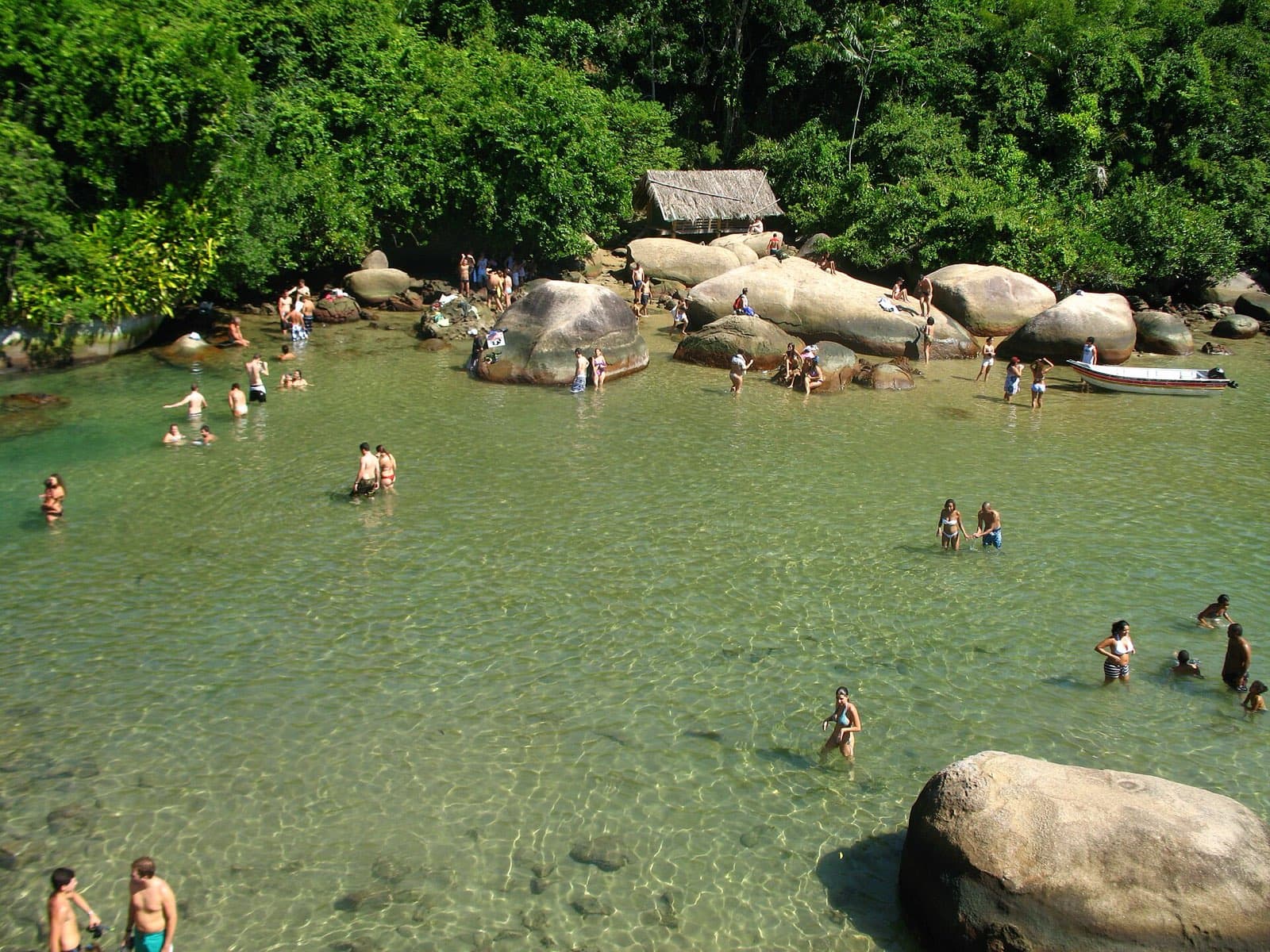
Trindade's signature spot is the Cachadaço natural pool, a calm, knee-to-waist-deep pool of clear water sheltered by a ring of rocks, full of small fish that will inspect your ankles. You reach it by a forest trail of about 30 minutes past Praia do Meio and Cachadaço beach, or by a five-minute boat hop from the village beaches for around R$10–R$20 (about US$2.00–4.00) per person. Go early: by late morning on summer weekends, the pool gets crowded.
Praia do Sono, further down the same coast, is the reward-for-effort option: a roadless beach with a small caiçara village, campsites, and simple restaurants. Take the Colitur bus toward Vila Oratório, then either hike the marked 3-kilometer trail (about an hour, with real ups and downs) or take the van-and-boat combination from the Laranjeiras condominium dock, around R$35 (about US$7.00) each way. Many people hike in and boat back.
If you have an extra day, agencies in Paraty also run kayak and boat trips into Saco do Mamanguá, a long, narrow, mountain-walled inlet often described as Brazil's tropical fjord. It is quieter than anything above, and paddling it is a beautiful half day. Wherever you go on this coast, carry some cash: boatmen, kiosks, and trail-head vans do not always take cards.
When should you go, and how many days do you need?
The Costa Verde runs on the same calendar as Ilha Grande, and the same honest warning applies: this is one of the greenest stretches of the Brazilian coast, and all that green is paid for in rain. When the weather turns, boat tours cancel, trails get slippery, and the schooner day you planned evaporates. Build slack into the schedule.
- April to June and October to November are the sweet spot: decent odds of sun, warm sea, lower prices, and streets that belong to the town instead of the crowds.
- December to March is high season: hot, festive, and crowded, with sudden storms. Réveillon and Carnival fill every pousada on the coast at peak prices.
- July to September is mild and quieter, with a real chance of grey days in the mix. In Paraty specifically, remember that FLIP (July 22 to 26 in 2026) and the Festival da Cachaça (August 20 to 23 in 2026) briefly flip the town back to peak demand.
- Any long weekend around a Brazilian public holiday fills this coast fast, since it is within driving distance of the country's two biggest cities. Check the holiday calendar before you lock dates, and see our best time to visit Brazil guide for the bigger seasonal picture.
As for time: give Paraty two to three nights, which fits an evening or two in the historic center, a schooner day, a Trindade or Praia do Sono day, and an alambique visit. Angra needs no nights at all: do the boat tour as a day trip, or just pass through on the way to Ilha Grande. The classic first-timer route is Rio, then Ilha Grande, then Paraty (or the reverse), which comfortably fills a week to ten days including the city.
Are Paraty and Angra dos Reis safe?
Paraty feels like what it is: a small tourist town whose economy depends on visitors leaving happy. The historic center is busy and calm day and night, and walking back to your pousada after dinner is a normal thing to do. The standard advice still applies: keep your bag on your lap in bars and restaurants rather than on the chair or the floor, be extra aware of pickpockets during packed events like FLIP and the festivals, and never leave phones and wallets unattended on a beach towel. In Trindade and Praia do Sono, the risks are mostly practical: strong surf at some beaches (Cepilho especially is for surfers, not swimmers), trails you should not start late in the day, and patchy phone signal, so download offline maps.
Angra dos Reis is a mid-size working city with the problems of one: you will be fine around the waterfront and boat terminals in daylight, but it is not a city to wander at night.
On both ends of the coast, the biggest real risks are the cheerful ones: sunburn on a boat deck, underestimating a trail in flip-flops, and the winding coastal road in the rain. Respect those three and this is one of the easier corners of Brazil to travel.
The Costa Verde works best when you accept its pace. Paraty's cobblestones physically force you to slow down, the tide decides when the streets become mirrors, and the weather, not your itinerary, decides which day is boat day. Give it enough time, keep your plans loose, and let the coast hand you its good days when it is ready. When it does, on a schooner deck between islands or on a flooded street at full moon, you will understand why Brazilians have been coming back here for three hundred years. Enjoy it slowly!
Want more practical tips for Brazil? Join our newsletter and get notified of our latest posts.